
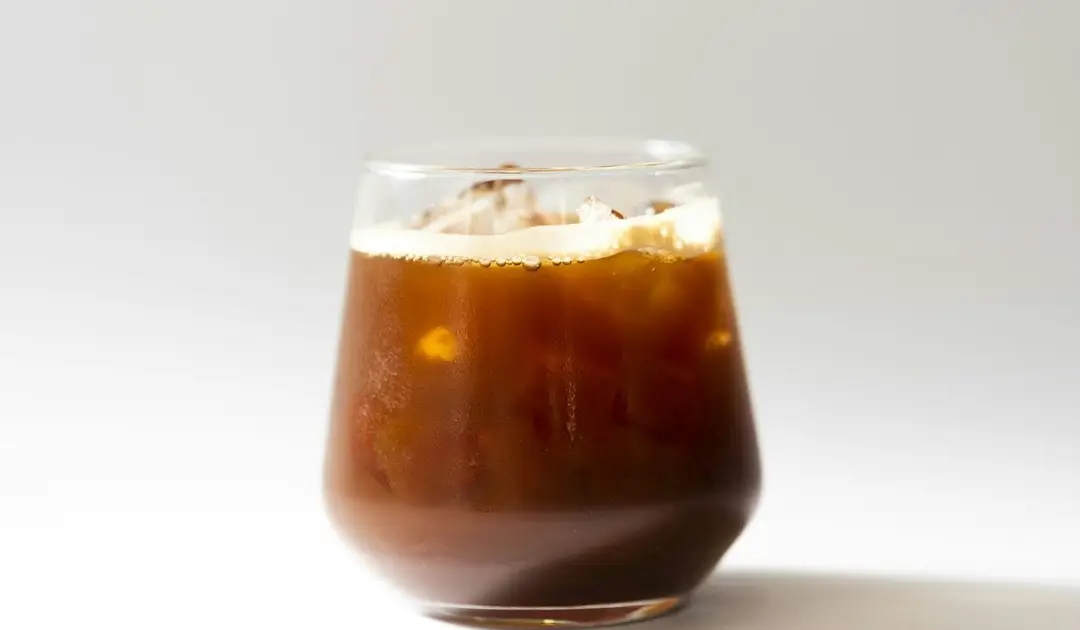
Cold brew is coffee made by steeping coarse ground beans in cold or room-temperature water for 12 to 24 hours, then filtering out the grounds. No heat is involved. The slow steep gives a smooth, sweet, low-bitterness coffee that is usually made as a strong concentrate and diluted.
This guide covers how cold brew is made, how it tastes, how it differs from iced coffee and nitro, how much caffeine it carries and how to buy or store it. If you want to make your own, our full cold brew recipe has the ratios and the method.
The short answer: what is cold brew coffee?
- Method: coarse grounds steeped in cold or room-temperature water.
- Time: 12 to 24 hours.
- Ratio: about 1 part coffee to 4 parts water for a concentrate, or 1 to 8 for a ready-to-drink batch.
- Served: over ice, usually diluted with water or milk.
- Taste: smooth, sweet and low in bitterness.
- Keeps: 7 to 14 days in the fridge.
How cold brew is made
Coarse grounds go into a jar, pitcher or dedicated cold brew maker with cold water, then sit for 12 to 24 hours in the fridge or on the counter. After that the coffee is strained through a fine sieve and a filter, leaving a dark liquid that tastes nothing like hot coffee. Starbucks says it steeps its cold brew for 20 hours, which sits in the middle of the range.
You can make it with no special gear. If you brew it often, a purpose-made pitcher saves effort, and we compare them in our best cold brew makers roundup. There is also a quick route using instant coffee and cold water, covered in how to make coffee with cold water.
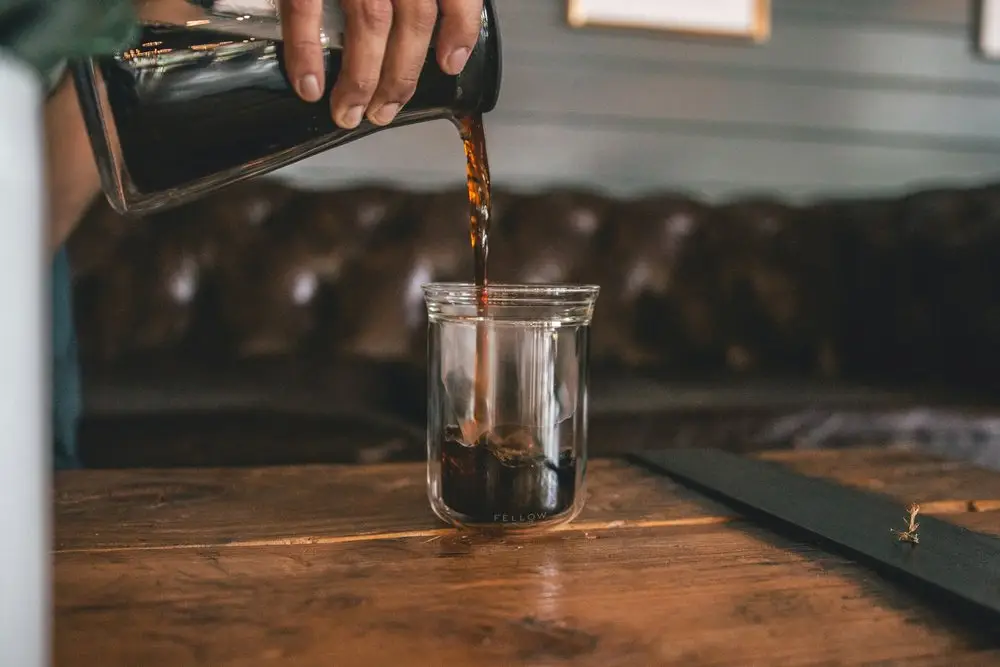
There are three easy ways to make it at home:
- Jar and sieve: coffee and water in any large jar, then strain through a fine sieve and a filter. The cheapest route.
- French press: steep in the press, then plunge to strain. Our French press guide covers the press itself.
- Cold brew maker: a pitcher with a built-in filter, which makes straining tidy and is worth having if you brew weekly.
How cold brew tastes
Cold brew tastes smooth, sweet and chocolatey, with much less of the bright, sharp edge you get in hot coffee. Cold water pulls out fewer of the compounds that make hot coffee taste bitter and acidic, and the long steep extracts the heavier, sweeter flavors instead.
The acidity point is worth being precise about. One 2018 study from Thomas Jefferson University, published in Scientific Reports, found the pH of cold and hot brews was similar, but the hot brew contained more total acid. That fits what you taste: cold brew is softer, even if it is not dramatically lower on the pH scale. For more on choosing beans and brews with less bite, see low acid coffee.
Cold brew vs iced coffee
| Cold brew | Iced coffee | |
|---|---|---|
| Temperature | Cold or room temperature | Brewed hot, then chilled |
| Brew time | 12 to 24 hours | 3 to 5 minutes |
| Grind | Coarse | Medium |
| Caffeine (8 oz) | 100 to 200 mg | 80 to 120 mg |
| Taste | Smooth, sweet, low bitterness | Bright, more acidic |
The two are often confused because both arrive over ice. Our iced coffee vs cold brew guide goes through when to pick which, and how to make iced coffee covers the quicker hot-brew-then-chill method.
Cold brew vs nitro cold brew and espresso
Nitro cold brew is regular cold brew infused with nitrogen gas and served from a tap, which gives it a creamy, cascading texture and a foamy head with no dairy. The caffeine is the same as the cold brew it starts from. We compare the two in nitro cold brew vs cold brew.
Espresso is a different animal: hot, pressurized and brewed in seconds. If you are deciding between a strong cold brew and a shot, our cold brew vs espresso guide sets out the taste, caffeine and cost.
Cold brew caffeine
A glass of diluted cold brew usually holds about 100 to 200 mg of caffeine per 8 oz, against roughly 95 mg for a typical cup of hot coffee. How strong it is depends on the ratio. Undiluted 1 to 4 concentrate can carry about twice the caffeine of a regular cup, which is why it is normally cut with water or milk. Bottled products vary widely, so check the label. Our overview of how much caffeine is in a cup of coffee compares it with other drinks.
Concentrate, ready-to-drink and how to dilute it
| Form | What it is | How to drink it |
|---|---|---|
| Concentrate | Steeped at about 1 to 4, strong and dark | Dilute 1 to 1 with water or milk, then add ice |
| Ready to drink | Steeped at about 1 to 8, or diluted at bottling | Pour over ice |
| Bottled cold brew | Sold chilled in shops | Check the label for sugar and use-by date |
| Cold brew bags | Coarse grounds pre-portioned in a filter bag | Steep in a jar like tea |
To dilute a concentrate, start from these ratios:
| Concentrate | Water or milk | Result |
|---|---|---|
| 1 part | 1 part | Standard, close to a strong regular cup |
| 1 part | 2 parts | Milder, easy to drink over lots of ice |
| 1 part | 1/2 part | Strong, best with milk |
Taste as you go. Concentrates differ a lot between homemade and bottled, so treat the ratios as a starting point.
Common cold brew mistakes
- Grinding too fine: it turns cloudy, bitter and slow to filter. Use a coarse grind, like sea salt.
- Steeping too long: past about 24 hours it can turn woody. Taste at 12 hours and again at 18.
- Using too little coffee: a weak ratio gives thin, watery cold brew. Stick to 1 to 4 for concentrate.
- Starting with stale beans: a long steep will not rescue flat coffee. Fresh medium or dark roast gives the best result.
Best beans, storage and who it suits
Medium and dark roasts with chocolate, nutty or caramel notes work best, because they stay sweet and full through a long steep. Our best cold brew coffee beans roundup picks out the ones that hold up. Keep it in an airtight jar in the fridge and it lasts 7 to 14 days, with concentrate keeping longer than diluted brew.
Cold brew is a good fit if you want a smooth iced coffee and do not mind planning ahead, and it suits anyone who finds hot coffee sharp or bitter. It is not the best choice if you want the bright, fruity notes of a light roast, because the cold steep tends to mute them.
Ways to drink it
- Over ice with milk: dilute the concentrate 1 to 1 and add a splash.
- With sweet cream: the vanilla-flavored version is in our vanilla sweet cream cold brew recipe.
- Seasonal: our pumpkin cream cold brew adds a pumpkin cream foam.
- With cold foam: see how to make cold foam for the topping.
The bottom line
Cold brew is coffee steeped cold for 12 to 24 hours, which makes it smooth, sweet and easy to keep in the fridge. Make a concentrate, dilute it to taste and it is ready when you are. There are more drinks in our coffee drinks section.
Frequently Asked Questions About Cold Brew Coffee
It is coffee made by steeping coarse grounds in cold or room-temperature water for 12 to 24 hours and filtering them out. It is smooth, sweet and low in bitterness.
It can be. Cold brew is usually made as a concentrate, and a diluted glass can hold 100 to 200 mg of caffeine per 8 ounces, against about 95 mg for a typical cup of hot coffee. How strong it is depends on the ratio.
Iced coffee is hot coffee that is chilled and poured over ice. Cold brew is never heated and steeps for 12 to 24 hours, which gives it a smoother, sweeter taste.
It tastes less acidic. One study found the pH of hot and cold brews was similar, but hot brew had more total acid, which is why cold brew tastes softer.
Cold brew lasts about 7 to 14 days in the fridge in an airtight container. Concentrate keeps longer than diluted cold brew.
Nitro cold brew is regular cold brew infused with nitrogen gas, which gives it a creamy texture and a foamy head without dairy. The caffeine is the same as the cold brew it starts from.
 Austin Barker
Founder & Lead Editor
Seven years behind a bar before starting Brewing Coffees. Writes most of the equipment coverage and tests every machine on this site in an ordinary home kitchen.
Austin Barker
Founder & Lead Editor
Seven years behind a bar before starting Brewing Coffees. Writes most of the equipment coverage and tests every machine on this site in an ordinary home kitchen.