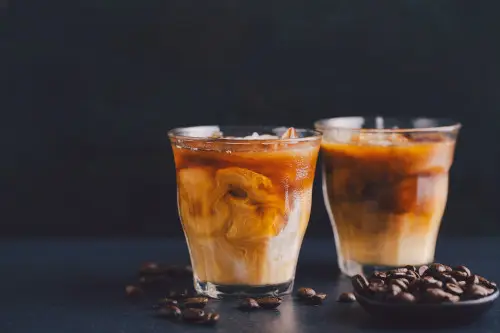
Cold brew is forgiving, but the beans matter more than most people think. The slow, cold extraction amplifies sweetness and reduces acidity, which means earthy, chocolatey, and nutty notes come forward while bright or fruity notes get muted. Pick the wrong beans and a 16-hour steep amplifies that mistake. For more on gentler cups, see low acid coffee.
The best coffee beans for cold brew are dark-roasted, 100% Arabica, and coarsely ground. Stone Street Cold Brew Reserve is the top pick for most people, purpose-built for cold brew, pre-ground coarse, Colombian single origin, and consistently well-reviewed.
Below are five of the best options on the market right now, covering everything from convenient pre-ground coarse blends to bold single origins and high-caffeine options.
What Makes a Good Cold Brew Coffee Bean?
Cold brew steeps ground coffee in cold or room-temperature water for 12–24 hours. The long contact time and absence of heat extract coffee differently than any hot method, lower acidity, more sweetness, less bitterness. Understanding what that means for bean selection makes a real difference.
Roast Level
Medium to dark roasts are the standard choice for cold brew. Cold brewing naturally suppresses acidity and bitterness, so the chocolatey, nutty, and caramel notes in darker roasts come through clearly. Light roasts can work, they often produce a surprisingly bright, fruity cold brew, but they need a longer steep (18–24 hours) to develop enough body. For most home brewers, a dark roast is the easier starting point. Learn more about how roast affects beans in our guide to coffee bean types.
Grind Size
Always use a coarse grind for cold brew. Fine or medium grinds over-extract during the long steep and produce a bitter, astringent result. If you’re buying pre-ground, look for “coarse ground” or “cold brew ground” on the label. Stone Street and Bizzy, two of our picks below, both sell pre-ground coarse specifically optimised for cold brew. Curious about grinding at home? We’ve covered your options.
Whole Bean vs. Pre-Ground Coarse
Whole beans give you freshness and full control over grind size. Pre-ground coarse is more convenient and eliminates the guesswork, useful if you don’t own a burr grinder. Both work well for cold brew. For reference on ratios, a standard cold brew concentrate uses about 1 cup of coarse grounds per 4 cups of cold water.
Quick Picks: Best Cold Brew Beans at a Glance
| Pick | Product | Roast | Format | Best For |
|---|---|---|---|---|
| 🥇 Best Overall | Stone Street Cold Brew Reserve | Dark | Coarse ground | Convenience + quality |
| 🌿 Best Organic | Bizzy Organic Smooth & Sweet | Medium | Coarse ground | Organic buyers, milder flavor |
| ☕ Best Dark Blend | Koffee Kult Dark Roast | Dark | Whole bean | Bold multi-origin blend |
| 🗺️ Best Single Origin | Volcanica Sumatra Mandheling | Dark | Whole bean | Earthy, complex, low acid |
| ⚡ Best High-Caffeine | Death Wish Dark Roast | Dark | Whole bean | Maximum caffeine cold brew |
The 5 Best Coffee Beans for Cold Brew
1. Stone Street Cold Brew Reserve, Best Overall
- Origin: Colombia (single origin)
- Roast: Dark
- Format: Pre-ground coarse (cold brew ready)
- Size: 1 LB
Stone Street’s Cold Brew Reserve is the most straightforward recommendation on this list. It’s specifically designed for cold brew, Colombian 100% Arabica, dark roasted, and pre-ground to a coarse consistency that’s optimised for long cold steeps. You don’t need to own a grinder or worry about getting the grind size wrong. Just measure and steep.
The flavor profile delivers what you’d expect from a good Colombian dark roast: notes of toasted chocolate and mild nuts, with a smooth, low-acid finish. It’s a dependable everyday cold brew bean rather than a single-origin showpiece, ideal if you’re making cold brew concentrate by the jar each week and want consistency without fuss.
2. Bizzy Organic Cold Brew Coffee, Best Organic
- Origin: Central & South America blend
- Roast: Medium
- Format: Pre-ground coarse (micro-sifted)
- Size: 1 LB
Bizzy is one of the few brands built entirely around cold brew, every product they make is specifically ground and blended for the cold steep. The Smooth & Sweet blend is USDA certified organic, 100% Arabica, and micro-sifted to remove fine particles that would otherwise muddy a cold brew. Medium roast means you get a slightly brighter, lighter cup than Stone Street’s dark roast.
If you prefer a less intense cold brew, something you can drink straight rather than diluting as a concentrate, this is a better pick than the darker options. It’s also a good choice if you care about organic sourcing and want a bean that produces a clean, easy-drinking result. Worth knowing: Bizzy also offers a Dark & Bold blend if you want to stay organic but go darker.
3. Koffee Kult Dark Roast Whole Bean, Best Dark Blend
- Origin: Colombia, Sumatra, Guatemala, Brazil blend
- Roast: Dark
- Format: Whole bean
- Size: 32 oz (2 LB)
Koffee Kult’s flagship dark roast is a four-origin blend, Colombia, Sumatra, Guatemala, and Brazil, that adds more depth than a single-origin dark roast typically delivers. The Colombian and Brazilian beans contribute sweetness and body; the Sumatra adds an earthy backbone; and the Guatemalan brings subtle dark chocolate notes. Cold brewing draws all of that out in a smooth, layered concentrate.
It comes whole bean, so you’ll need a grinder. Set it to coarse, the same setting you’d use for a French press, maybe one step coarser. At 32 oz, the bag gives you more value per ounce than the 1 LB options, which works well if cold brew is a weekly ritual. Small-batch roasted in Florida and nitrogen-sealed for freshness.
4. Volcanica Sumatra Mandheling Dark Reserve, Best Single Origin
- Origin: Sumatra, Indonesia (single origin)
- Roast: Dark
- Format: Whole bean
- Size: 16 oz (1 LB)
Sumatra Mandheling is one of the most beloved cold brew origins, earthy, full-bodied, low-acid, and naturally suited to the long cold steep. Volcanica’s Dark Reserve version is USDA organic, Fair Trade certified, and wet-hulled in the traditional Indonesian style that gives Sumatran coffee its distinctive heavy body and deep, complex flavor. Expect notes of dark chocolate, cedar, and a mild herbal earthiness.
Cold brew amplifies Sumatra’s sweetness and suppresses the earthy roughness that can come through in a hot espresso extraction. The result is one of the most interesting single-origin cold brews you can make at home. It comes whole bean and needs a coarse grind. A good pick if you want to move beyond commodity blends and explore what a specific origin tastes like in cold brew.
5. Death Wish Coffee Dark Roast, Best High-Caffeine
- Origin: Fair Trade Arabica & Robusta blend
- Roast: Dark
- Format: Whole bean
- Size: 16 oz (1 LB)
Death Wish Coffee blends Arabica and Robusta beans to push caffeine content significantly higher than a typical single-origin bag. Cold brew already concentrates caffeine by design, steep 1 cup of grounds in 4 cups of water and dilute at serving. Use Death Wish beans and that concentrate hits even harder. If you’re replacing your morning espresso machine with a cold brew ritual, this is how you keep the caffeine parity.
Flavor-wise it’s a bold, dark, intense cup, not particularly nuanced, but that’s not the point. USDA organic, Fair Trade certified, and widely available. Grind coarse and steep for 16–18 hours. The whole bean format means you can also dial grind size to taste. A word of caution: if you’re caffeine-sensitive, this is not your everyday cold brew bean. But if you need the kick, nothing on this list competes.
Cold Brew Basics: Roast, Grind, and Steep Time
Even the best beans won’t save a bad cold brew recipe. A few fundamentals make the difference between a concentrate worth drinking and one you’ll pour down the sink.
- Grind coarse, always. The same setting you’d use for a French press, or one notch coarser. Fine grinds over-extract and turn bitter during the long steep.
- Use cold or room-temperature water. Cold water (fridge temp) gives a cleaner, slightly more subtle flavor. Room temperature is slightly faster, 12 hours instead of 18–24. Both work.
- Standard ratio: 1:4. One cup of grounds to four cups of water for a concentrate. Dilute 1:1 with water or milk when serving, or drink straight if you prefer it strong.
- Steep 12–24 hours. Dark roasts are usually ready at 12–16 hours. Light roasts need longer, 18–24 hours, to develop enough body without going acidic.
- Strain well. Use a fine-mesh strainer or cheesecloth. Coffee grounds left in the concentrate keep extracting and turn it bitter over time.
Cold Brew Equipment: What You Need to Brew at Home
Great beans are only half the equation, you also need a reliable way to steep and filter them. Cold brew requires a coarse grind and an extended steep (12–24 hours in the fridge), which means you need a container that holds the grounds and filters them cleanly without leaving sediment in your final cup.
The simplest option is a dedicated cold brew maker with a built-in mesh filter. The OXO Brew Cold Brew Coffee Maker (affiliate link) is a popular choice, it uses a perforated rainmaker lid to distribute water evenly over the grounds and has a built-in filter, making it straightforward to brew a clean, smooth concentrate. Its 32 oz capacity gives you enough concentrate for around 6–8 servings.
If you prefer a lower-budget approach, a large mason jar with a fine mesh strainer or a nut milk bag works perfectly well, the yield is the same, just with a bit more hands-on filtering at the end. Either way, use a coarse grind (similar to French press) and aim for a 1:4 or 1:5 coffee-to-water ratio by weight for a concentrate you can dilute to taste.
If you brew French press too, those beans often overlap, see our best French press beans, or our beginner shortlist for a low-risk first bag. Ready to brew? Our step-by-step cold brew guide dials in ratios. The same beans work for nitro cold brew too, see our nitro cold brew vs. cold brew breakdown for what actually changes. There is more to read on buying coffee beans.
Final Thoughts
For most people, Stone Street or Bizzy is the right starting point, both are purpose-built for cold brew, pre-ground coarse, and easy to use without any equipment beyond a mason jar. If you want more complexity or specific flavor profiles, Koffee Kult’s four-origin blend and Volcanica’s Sumatra single origin are worth the extra step of grinding your own. And if caffeine is the priority, Death Wish exists for a reason.
Cold brew is a great way to use quality beans you might otherwise reserve for espresso, the long steep is forgiving of small grind variations and extracts naturally sweet, low-acid flavors that are easy to drink. Once you find a bean you like, scaling up to a large batch is straightforward. New to it? What cold brew coffee is explains the method and the taste.
Frequently Asked Questions About Cold Brew Coffee Beans
Medium to dark roasts are the most popular for cold brew. The cold extraction process suppresses bitterness and acidity, which allows the chocolatey and nutty notes of darker roasts to shine. Light roasts can also work, they produce a brighter, fruitier cold brew, but they need a longer steep of 18–24 hours.
Both work well. Whole bean gives you freshness and control over grind size. Pre-ground coarse (like Stone Street or Bizzy) is more convenient and eliminates the guesswork. The key is that the grind must be coarse, fine or medium grinds over-extract and produce a bitter result during the long steep.
The standard range is 12–24 hours. Dark roasts are usually ready at 12–16 hours. Light roasts need 18–24 hours to develop enough body. Steeping in the fridge produces a cleaner, more subtle flavor; room temperature is slightly faster. Don’t exceed 24 hours, over-steeping makes the concentrate bitter and astringent.
A standard cold brew concentrate uses 1 cup of coarse grounds per 4 cups of cold water. This produces a concentrate you dilute 1:1 with water or milk when serving. If you prefer to drink it straight (not as a concentrate), use 1 cup of grounds per 6–8 cups of water.
Yes, any coffee bean can technically be used for cold brew. But some work much better than others. Dark and medium roasts with bold, chocolatey, or nutty flavor profiles are most naturally suited to the cold extraction process. Avoid very light roasts unless you’re willing to experiment with 20+ hour steeps.
Use a coarse grind for cold brew, similar to what you would use for a French press. A coarse grind slows the extraction during the long steep, producing a smooth, less bitter result. Grinding too finely will over-extract the coffee and make it harsh or muddy. It also makes filtering harder. If you are buying pre-ground coffee specifically for cold brew, look for bags labelled ‘coarse grind’ or ‘cold brew grind’.
Cold brew concentrate stored in a sealed container in the fridge keeps well for up to 2 weeks. Diluted cold brew (ready-to-drink strength) is best consumed within 5–7 days. Over time the flavour mellows and can develop off-notes, so fresher is always better. Keep it in a glass jar with a lid rather than an open container for the best shelf life.
 Megan Cunningham
Contributor
Tests everything in an ordinary kitchen on affordable gear.
Megan Cunningham
Contributor
Tests everything in an ordinary kitchen on affordable gear.