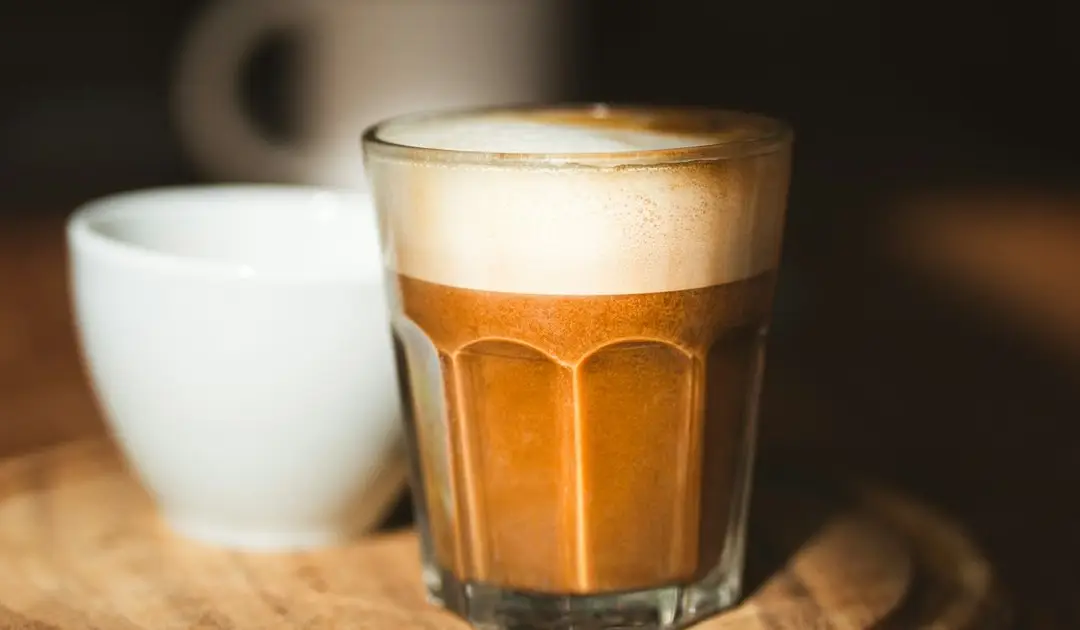
Cafe con leche is Spanish for coffee with milk: strong coffee, usually espresso, mixed with about the same amount of hot milk. It is the everyday breakfast coffee of Spain and much of Latin America, and it sits between a cortado and a latte, with more milk than the first and more coffee than the second.
This guide covers what goes in it, how the Spanish and Cuban styles differ, how it compares with a latte and a cafe au lait, and how to make it at home. If you are weighing it against a French drink, our cafe au lait vs latte guide is the closest comparison we have.
The short answer: what is cafe con leche?
- Coffee: strong, usually espresso, or a moka pot brew.
- Milk: hot, steamed or scalded, about equal to the coffee.
- Ratio: roughly 1 to 1, though some make it stronger.
- Foam: little or none.
- Sugar: often stirred in.
- Size: about 6 to 8 oz, served in a glass or cup, often with toast.
Spanish vs Cuban cafe con leche
| Spanish style | Cuban style | |
|---|---|---|
| Coffee | Espresso | Strong, sweet cafe cubano from a moka pot |
| Milk | Steamed, about 1 to 1 | Hot or scalded milk |
| Sweetness | Sugar on the side | Sugar in the coffee |
| Served with | Pastry or toast at breakfast | Buttered Cuban toast, often dunked |
The Cuban version starts from a sweetened cafecito, and we explain how that is made in our Cuban coffee guide. In other parts of Latin America the coffee and the sweetness vary, and some households use drip or instant coffee with hot milk and sugar.
Cafe con leche vs latte, cafe au lait and cortado
| Drink | Coffee | Milk | Coffee to milk | Foam |
|---|---|---|---|---|
| Cafe con leche | Espresso | Hot, lightly steamed | About 1 to 1 | Little |
| Latte | Espresso | Steamed | 1 to 3 or more | Thin layer |
| Cafe au lait | Drip or French press | Scalded | About 1 to 1 | None |
| Cortado | Espresso | Warm | 1 to 1, in a smaller cup | None or thin |
Cafe con leche is bigger than a cortado and more coffee-forward than a latte. If you want the exact difference in sizes, see cortado vs latte, and our guide to what a cortado is covers the small version of the same idea. Cafe au lait is the French cousin, made with drip or French press rather than espresso.
How to make cafe con leche at home
Use equal parts strong coffee and hot milk. This makes one large cup.
- 1/2 cup (120 ml) strong coffee, such as two shots of espresso or moka pot coffee
- 1/2 cup (120 ml) whole milk
- Sugar, to taste
- Make the coffee. Espresso is standard, and a moka pot gives a close match.
- Heat the milk on the stove or in a microwave until it steams but does not boil, roughly 150 to 160°F (65 to 70°C).
- Combine them in a large glass or cup. Pour the coffee into the milk, or the milk into the coffee.
- Stir in sugar if you like, and serve right away with toast.
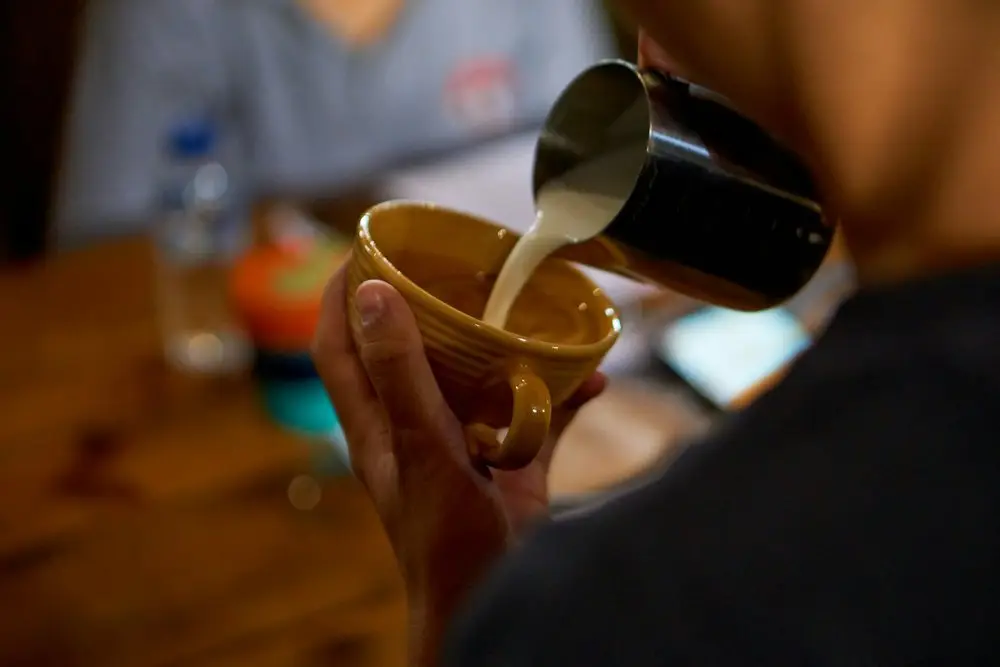
If you have an espresso machine, a splash of steamed milk with a little foam works too, and how to make espresso at home covers pulling a proper shot. If you do not, our moka pot guide covers the stovetop route, and how to froth milk explains a lighter foam if you want one.
Which coffee and milk to use
A dark roast, ground fine, gives the strong base that cafe con leche is built on, because the milk mellows it. Whole milk gives the creamiest cup, and oat milk is the best plant-based swap for texture. Our best espresso beans roundup lists blends that stand up to milk, and the best latte coffee beans guide covers the milk-friendly ones.
Variations
- Cortadito: the Cuban version with a small splash of milk. See Cuban coffee.
- Cafe bombon: espresso and sweetened condensed milk in equal parts, popular in parts of Spain.
- Iced cafe con leche: pour the coffee and cold milk over ice. Our iced latte guide covers the method.
- Cinnamon or vanilla: a pinch stirred in, common in home versions.
Cafe con leche without an espresso machine
You do not need espresso. A moka pot gives a strong, similar base, and a French press works if you brew it double strength: use about twice the usual amount of coffee for the water, so it can stand up to the milk. Then combine it with hot milk in equal parts. Instant coffee dissolved at double strength also works in a pinch. Our French press guide covers the brew, and the best instant coffee roundup covers the instant route.
Common cafe con leche mistakes
- Boiling the milk: it forms a skin and tastes flat. Heat it until it steams and stop there.
- Making the coffee too weak: the milk drowns it. Brew it stronger than you would drink black.
- Adding cold milk: it cools the drink fast. Use hot milk so it stays warm to the last sip.
- Adding sugar last without stirring: it sinks. Stir it in while the drink is hot.
What it tastes like
Cafe con leche tastes creamy, mellow and coffee-forward. Because the milk is about equal to the coffee, you taste both, and the heat and a little sugar make it feel like breakfast. It is less intense than a cafecito and more coffee-like than a latte.
Caffeine in cafe con leche
The caffeine comes from the coffee, and the milk adds none. A version made with two shots of espresso has about 126 mg, using the 63 mg per shot average from our espresso caffeine guide. A latte with the same shots has the same caffeine, as we explain in latte caffeine.
The bottom line
Cafe con leche is strong coffee and hot milk in roughly equal parts, a big, creamy, comforting cup. Brew strong, heat the milk and keep it simple. For more milky coffee drinks, see our coffee drinks section.
Frequently Asked Questions About Cafe con Leche
It is Spanish for coffee with milk. It is made from strong coffee, usually espresso, and hot milk in roughly equal amounts.
No. A latte has much more milk, usually three or more parts to one, and a thin layer of foam. Cafe con leche is closer to half coffee and half milk, so it tastes stronger.
Cafe au lait is made with drip or French press coffee and scalded milk, and comes from France. Cafe con leche is usually made with espresso and hot milk, and comes from Spain and Latin America.
About equal parts coffee and hot milk, so roughly 1/2 cup of each. Some people use less milk for a stronger drink.
It has the caffeine of the coffee in it, and the milk adds none. A version made with a double shot has about 126 mg.
Yes. Use strong moka pot coffee or a strong French press brew in place of espresso, and heat the milk on the stove or in a microwave.
 Megan Cunningham
Contributor
Tests everything in an ordinary kitchen on affordable gear.
Megan Cunningham
Contributor
Tests everything in an ordinary kitchen on affordable gear.