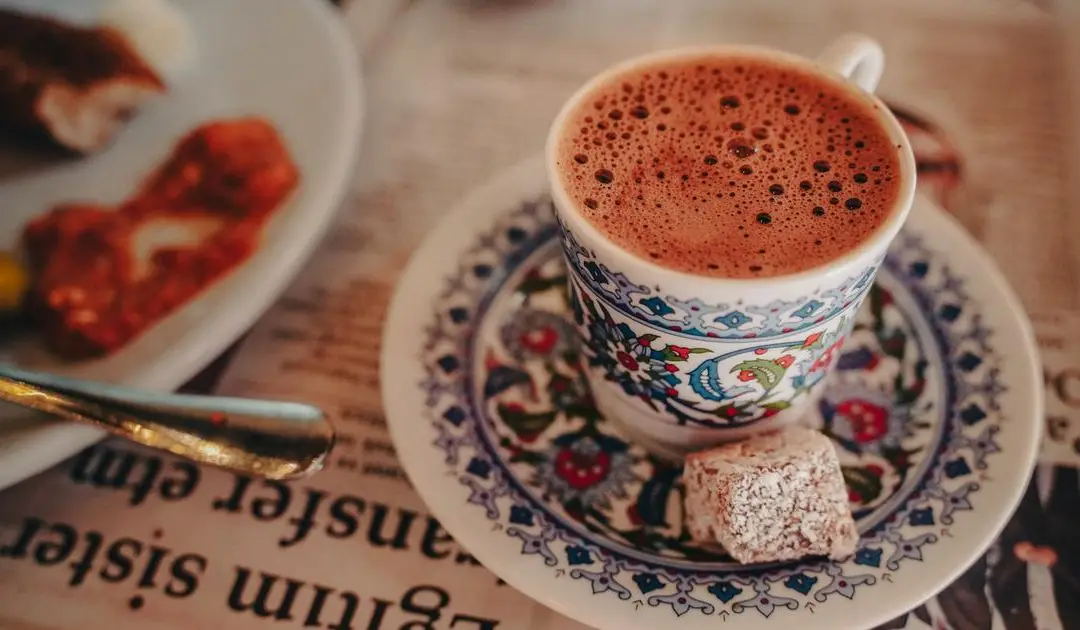
Turkish coffee is coffee ground to a powder, simmered slowly with water (and usually sugar) in a small long-handled pot called a cezve, then served unfiltered in a small cup with a layer of foam on top. It is a method as much as a drink: the fine grounds stay in the cup, the foam is the goal, and the result is thick, strong and lightly sweet.
This guide covers what makes it Turkish coffee, the gear you need, a step-by-step recipe, the sugar levels, how to drink it and why it has UNESCO recognition. If you are comparing it with its neighbor from the Gulf, our Arabic vs Turkish coffee guide goes through the differences.
The short answer: what is Turkish coffee?
- Grind: extra fine, close to powder.
- Pot: a cezve, which some countries call an ibrik.
- Method: heated slowly and lifted off the heat as the foam rises, never boiled hard.
- Served: unfiltered, in small cups, with a glass of water.
- Sugar: added to the pot before heating, not at the table.
- Taste: strong, thick and slightly sweet, with a silty finish.
The name describes the method, not the bean. Any good coffee can be made this way, provided it is ground fine enough.
What you need
- A cezve: a small copper, brass or steel pot with a narrow neck, a long handle and a pouring lip. The narrow neck helps build foam. Buy a size that matches your cups.
- Extra fine coffee: Turkish grind is finer than espresso. Ask a roaster for it or buy it pre-ground.
- Cold water: filtered if your tap water tastes of anything.
- Sugar: optional, but traditional.
- Small cups: demitasse cups of about 2 to 3 oz.
- A stove: gas or electric on low heat, or a small electric Turkish coffee maker.
The grind is the part most people underestimate. A drip grind gives a thin, gritty cup with no foam. If you want to grind your own, you need a grinder that reaches powder fine, so check the finest setting on any grinder you are considering, including the ones in our best manual coffee grinders roundup.
How to make Turkish coffee, step by step
The ratio is 1 heaping teaspoon of coffee (about 7 g) for every 2.5 to 3 oz (75 to 90 ml) of cold water. Measure the water with the cup you will serve in, one cup per serving.
- Add cold water to the cezve, using your serving cup to measure.
- Add the coffee and the sugar, if you use it, and stir once until the coffee is wet and mixed in.
- Heat on low. Do not stir again. This takes 3 to 5 minutes, and a slow heat gives a better foam.
- Watch the surface. As it warms, foam gathers and starts to rise. Lift the cezve off the heat before it boils.
- Repeat once or twice if you like a thicker foam: settle it, return it to the heat and lift it again as it rises.
- Spoon a little foam into each cup, then pour the rest slowly so the foam stays on top.
- Wait a minute for the grounds to settle before you drink.
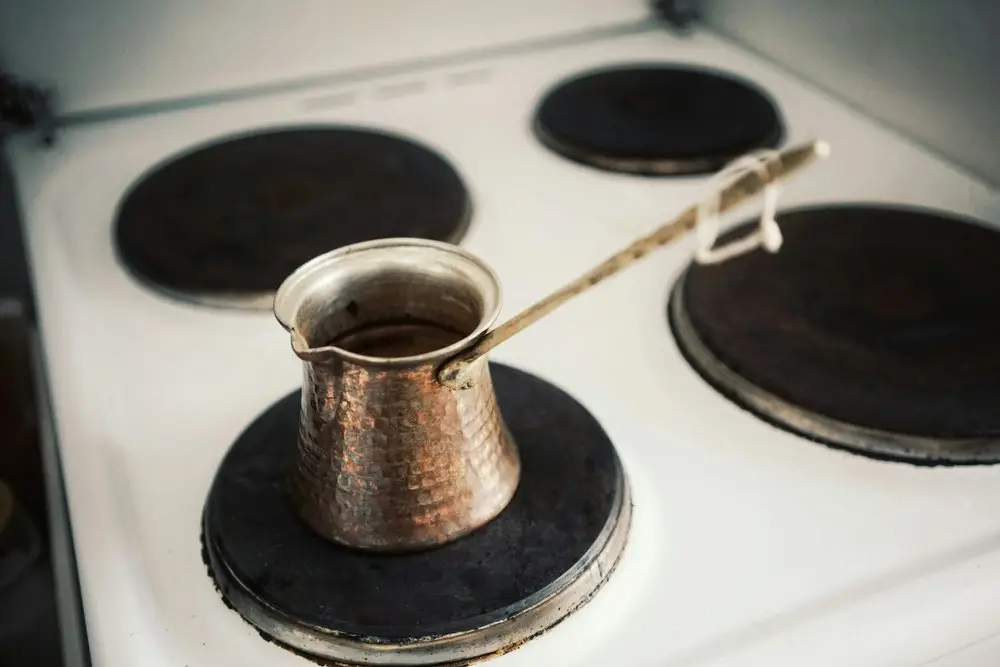
Boiling hard is the classic mistake. It destroys the foam and makes the coffee bitter, so keep the heat low and stay by the stove.
Sugar levels
| Style | Sugar per cup | What you get |
|---|---|---|
| Plain (sade) | None | Strong, bittersweet, the purest taste of the coffee |
| A little (az sekerli) | About 1/2 teaspoon | Rounds the edge without tasting sweet |
| Medium (orta) | About 1 teaspoon | The most common order, balanced |
| Sweet (sekerli) | About 2 teaspoons | Dessert-like, and good with strong flavors |
Sugar goes into the cezve at the start, because once the foam forms you cannot stir it without breaking the foam and stirring up the grounds. If you are making coffee for guests, ask each person for their level before you begin.
How to serve and drink it
Turkish coffee comes in a small cup with a glass of cold water and often a piece of Turkish delight or another sweet. The water is for cleansing the palate before you start. Sip slowly, because it is hot and strong, and stop before the last mouthful, where the grounds sit. Some people turn the empty cup over onto the saucer and read the patterns the grounds leave behind, a tradition many people still enjoy.
Making it without a cezve
No cezve? A small, narrow saucepan works, ideally one with a pouring lip. Use the same ratio, keep the heat low and lift the pan as the foam rises. A wide pan spreads the foam thin, so serve it a little sooner. Electric Turkish coffee makers also exist, and many switch off at the right point, which removes the guesswork.
Turkish coffee vs Arabic coffee, espresso and Vietnamese coffee
Arabic coffee is lighter in roast, brewed in a different pot and usually flavored with cardamom, and our comparison guide covers the full contrast. Espresso is ground coarser than Turkish coffee, forced through a puck under pressure and filtered, so it is cleaner and thinner. Our espresso vs coffee guide explains that difference. Vietnamese coffee is another strong, sweet drink but uses a drip filter and condensed milk, which we cover in Vietnamese coffee. For where Turkish coffee sits next to every other drink on a menu, see our guide to coffee drink types.
Which beans to use
Arabica coffee ground fresh works best, and a light to medium roast keeps the flavor clear. Dark roasts taste heavier and more bitter once they are simmered. The finest grind loses flavor quickly, so buy small amounts or grind just before you brew, and store the beans well. Our guide to coffee bean types explains Arabica and Robusta, our light vs dark roast guide explains how the roast changes the cup, and how to store coffee beans covers keeping them fresh. Some people crush a cardamom pod into the pot for a spiced cup.
Caffeine in Turkish coffee
A serving is small, about 2 to 3 oz, so the total caffeine is usually less than a mug of drip coffee. It is strong for its size because the powder-fine grind extracts a lot, and it lands in roughly the same range as a shot of espresso, which averages about 63 mg in our espresso caffeine guide. The exact figure depends on the coffee, the grind and how much you pour off.
Common Turkish coffee mistakes
- A grind that is too coarse: the coffee comes out thin and gritty and will not foam.
- Stirring after the heat is on: this knocks out the foam before it forms.
- Heating too fast or letting it boil: the foam collapses and the taste turns bitter.
- Pouring in a rush: a fast pour breaks the foam. Pour slowly down the side of the cup.
- Using a pot that is too big: a cezve that is much larger than your batch gives a thin layer that will not foam.
Why it has UNESCO recognition
In 2013 UNESCO added Turkish coffee culture and tradition to its Representative List of the Intangible Cultural Heritage of Humanity. The listing recognizes the preparation method and the social role of the drink, which is a symbol of hospitality and a fixture of coffee houses and family visits. In many families the bride prepares coffee for the groom’s family when they visit before a wedding, and the way it is made is part of the ritual.
The bottom line
Turkish coffee is powder-fine coffee heated slowly in a cezve, served unfiltered with a foam cap. Grind fine, heat low, lift it before it boils and let the grounds settle. If you want to see where it fits among other drinks, browse our coffee drinks section.
Frequently Asked Questions About Turkish Coffee
Turkish coffee is a method of making coffee rather than a type of bean. Powder-fine coffee is simmered in a cezve with water and often sugar, then served unfiltered with a layer of foam.
Turkish coffee is simmered without pressure and is never filtered, so the powder stays in the cup. Espresso is forced through a puck of ground coffee under pressure and is filtered.
A cezve is best because its narrow neck helps build foam, but a very small saucepan works if you watch it closely. You will get less foam.
Use about 1 heaping teaspoon, roughly 7 g, of extra fine coffee for every 2.5 to 3 ounces (75 to 90 ml) of cold water. Add sugar to taste before heating.
No. The grounds settle at the bottom of the cup, so let it rest for a minute and stop sipping when you reach the sludge.
It tastes stronger because it is thick and unfiltered and the fine grind extracts a lot. A cup is small, though, so the total caffeine is usually less than a mug of drip coffee.
 Austin Barker
Founder & Lead Editor
Seven years behind a bar before starting Brewing Coffees. Writes most of the equipment coverage and tests every machine on this site in an ordinary home kitchen.
Austin Barker
Founder & Lead Editor
Seven years behind a bar before starting Brewing Coffees. Writes most of the equipment coverage and tests every machine on this site in an ordinary home kitchen.