
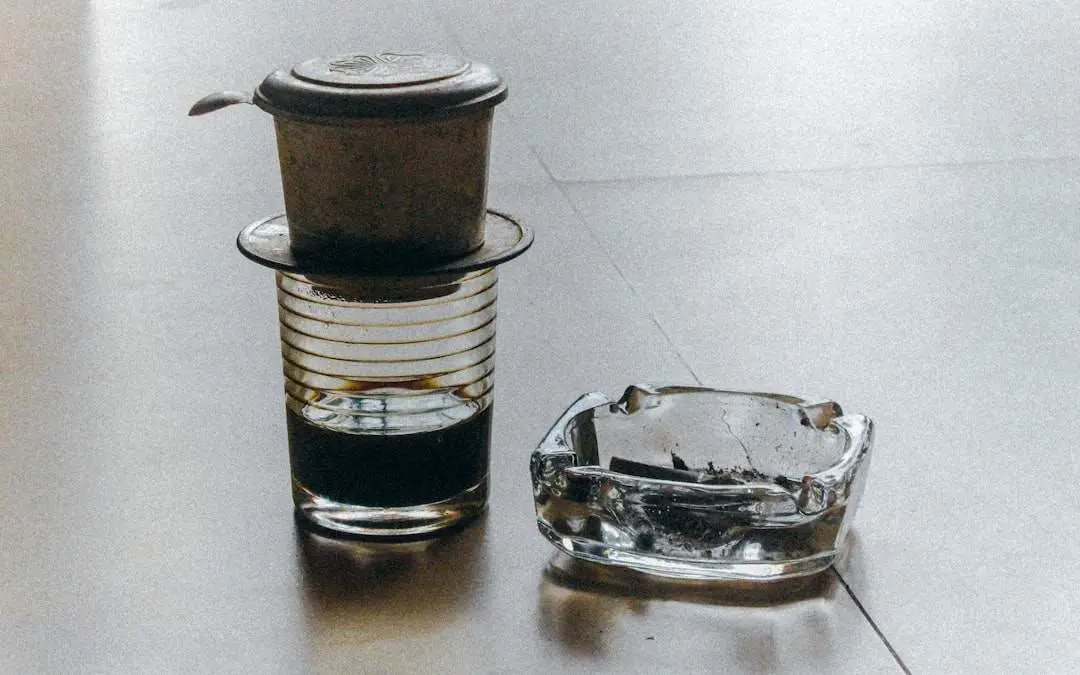
Vietnamese coffee is built around three things: robusta beans, a slow metal drip filter called a phin, and sweetened condensed milk instead of dairy and sugar. The result is a small, intensely strong, syrupy-sweet cup that’s brewed differently from almost any other coffee tradition. We’ve covered another Old World brewing style in Arabic vs. Turkish coffee, Vietnamese coffee is a different tradition entirely, built on its own equipment and ingredients.
What Makes Vietnamese Coffee Different?
Vietnam is the world’s largest producer of robusta beans, and roughly 95% of the country’s coffee crop is robusta rather than arabica. Robusta carries roughly double arabica’s caffeine content and a bolder, more bitter, earthier flavor, the entire Vietnamese coffee tradition is built around that boldness, from the dark roast to the condensed milk that balances it out.
You’ll sometimes see claims that Vietnamese coffee is always roasted with butter. That’s a real, traditional practice in parts of Vietnam, a small amount of butter or margarine is stirred through the beans near the end of roasting to round out robusta’s bitterness with a caramel-like depth, but it’s a regional and small-batch technique, not something every Vietnamese roaster does or something that defines the category as a whole.
Why Condensed Milk Instead of Regular Milk?
It goes back to the French colonial era, when coffee was introduced to Vietnam in the 1850s. Vietnam had essentially no dairy farming industry at the time, and any fresh milk that was available spoiled quickly in the tropical climate. Shelf-stable sweetened condensed milk solved both problems, and because its sweetness balances dark-roast robusta’s bitterness so well, it became the cultural standard even after fresh milk became more widely available.
How to Brew Vietnamese Coffee with a Phin Filter
A phin is a small metal drip filter that sits directly on top of a cup or glass, no paper filter, no electricity, just gravity.
What You’ll Need
- A phin filter (a stainless steel one like the Nguyen Coffee Supply Original Phin Filter works well)
- Vietnamese or other dark-roast robusta coffee, ground medium to medium-coarse, a similar grind to what you’d use for a pour-over, maybe slightly coarser
- Sweetened condensed milk
- Water just off the boil, around 195–205°F
Steps
- Spoon 1–3 tablespoons of condensed milk into your cup, depending on how sweet you like it, 1 for regular sweetness, 2 for sweet, 3 for very sweet.
- Add about 2 tablespoons (14g) of ground coffee to the phin’s chamber and set it on top of the cup.
- Pour a small amount of hot water to bloom the grounds, let it sit for 30 to 60 seconds.
- Press the perforated disc down gently and fill the chamber with the remaining hot water.
- Let it drip, a full phin typically takes 4 to 7 minutes.
- Once it’s done dripping, remove the phin and stir the coffee into the condensed milk.
Hot vs. Iced Vietnamese Coffee
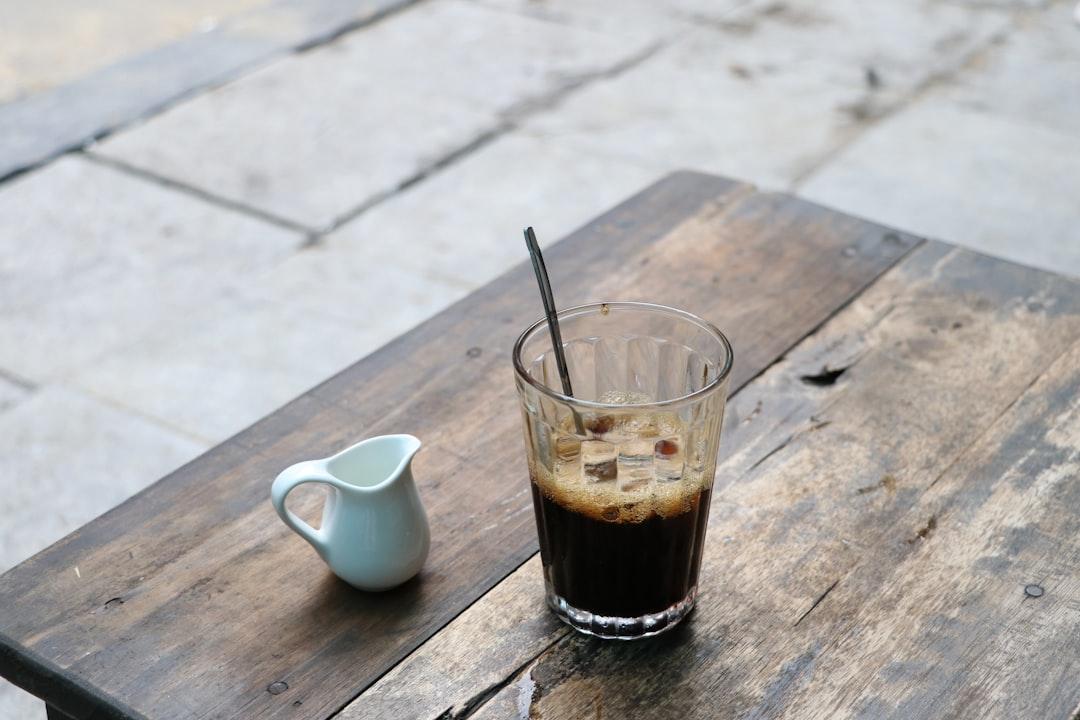
The brew itself doesn’t change, only what happens after. Cà phê sữa nóng (hot milk coffee) is served as-is, straight from the phin. Cà phê sữa đá (iced milk coffee), the more internationally famous version, is poured over a glass of ice after brewing. Plain black coffee without condensed milk, served either way, is called cà phê đen. For where this fits among other global styles, see our full coffee drink types guide.
Cà Phê Trứng (Vietnamese Egg Coffee)
This Hanoi specialty whips egg yolk with sweetened condensed milk into a thick, pale foam, almost like a light custard or meringue, that’s spooned over hot, strong phin-brewed coffee rather than stirred in. The yolk’s fat mellows robusta’s tannic bitterness and gives the drink a rich, dessert-like top layer.
It was invented in 1946 by Nguyễn Văn Giảng, a bartender in Hanoi, during a wartime milk shortage. With fresh milk scarce, he substituted whipped egg yolk and sugar to top strong coffee instead, the substitution worked so well it became its own drink. Giảng later opened his own shop, and Café Giảng still operates in Hanoi today, run by his descendants.
What Is “Weasel Coffee”?
“Weasel coffee” (cà phê chồn) refers to beans traditionally processed after passing through the digestive tract of the Asian palm civet, a real but rare and expensive niche category. Most commercial “weasel” coffee sold today, including Trung Nguyen’s well-known Legendee line, actually uses a proprietary enzymatic process to mimic that flavor profile rather than genuine civet processing. It’s a premium curiosity, not what typical Vietnamese households drink day to day.
Can You Make Vietnamese Coffee Without a Phin Filter?
Yes, a French press is the closest substitute, since both methods rely on extended contact time between grounds and water and work well with a similar grind. It won’t replicate the phin’s slow-drip character exactly, but a French press brewed strong and mixed with sweetened condensed milk gets you most of the way there. For a general sense of how ratios shift between brewing methods, see our coffee-to-water ratio guide.
Watch: Brewing Vietnamese Coffee with a Phin Filter

A good burr grinder makes dialing in the right phin grind size much easier. For how Vietnamese coffee’s caffeine punch compares to espresso, see our espresso caffeine breakdown.
There is more to read on coffee drinks.
Frequently Asked Questions About Vietnamese Coffee
Yes, it’s typically brewed from robusta beans, which carry roughly double the caffeine of the arabica beans used in most American coffee, and the slow phin drip produces a concentrated brew.
Yes, a French press is the closest substitute, since both methods use extended grounds-to-water contact time. The result won’t be identical, but it’s a workable stand-in with sweetened condensed milk added.
Vietnamese iced coffee uses dark-roast robusta slow-dripped through a phin and mixed with sweetened condensed milk, producing a syrupy, intensely sweet result. Regular iced coffee typically uses arabica and dairy milk or sugar.
No, while the famous condensed-milk version is sweet, plain black Vietnamese coffee (cà phê đen) is traditionally drunk without any milk or sugar at all.
A Hanoi specialty combining whipped egg yolk and condensed milk into a custardy foam atop strong coffee, invented in 1946 by Nguyễn Văn Giảng during a wartime milk shortage. It’s still served today at Café Giảng, run by his family.
Overwhelmingly robusta, up to about 95% of Vietnam’s coffee crop, prized for its bold, bitter, high-caffeine character that stands up well to condensed milk’s sweetness.
No, weasel coffee is a rare, expensive category tied to civet-processed beans. Most commercial “weasel” coffee sold today uses an enzymatic process to mimic that flavor rather than real animal processing, and it isn’t what typical households drink.
 Megan Cunningham
Contributor
Tests everything in an ordinary kitchen on affordable gear.
Megan Cunningham
Contributor
Tests everything in an ordinary kitchen on affordable gear.