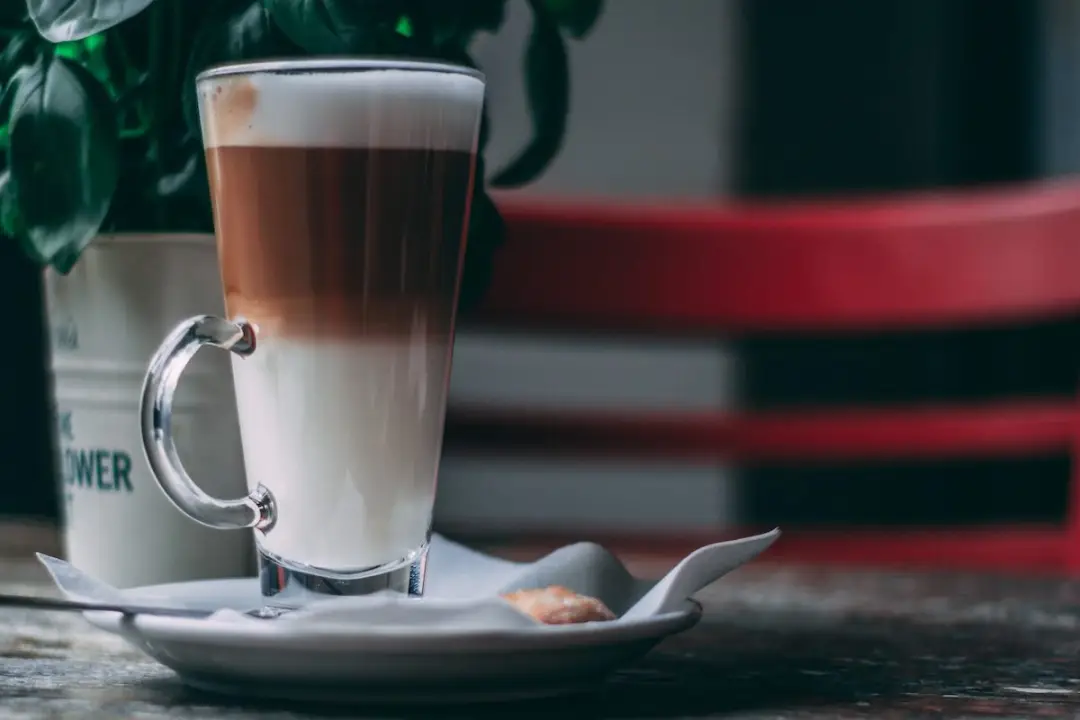
Lattes are one of the most popular coffee drinks in the world, and for good reason: they’re smooth, creamy, and endlessly customizable. But because the milk softens everything, it can be easy to underestimate just how much caffeine you’re getting. So, how much caffeine is in a latte?
A single-shot latte contains around 63mg of caffeine on average, though the range across major coffee chains runs from about 45mg to 118mg. A double-shot latte doubles that to roughly 126mg. The espresso is the only source of caffeine; the milk adds zero.
In this guide, we break down exactly what affects the caffeine in your latte, how it compares to other coffee drinks, and how many lattes you can safely drink in a day.
Caffeine in a Latte by Coffee Chain
The caffeine in a latte comes entirely from the espresso shot. Since espresso caffeine varies significantly by chain, so does your latte. Here’s what a single-shot latte looks like across major US coffee chains:
| Coffee Chain | Caffeine in Single-Shot Espresso |
|---|---|
| Starbucks | 75mg |
| Dutch Bros | 46.75mg |
| Tim Hortons | 45mg |
| Dunkin | 118mg |
These figures apply to lattes made with a single espresso shot. Ordering a larger size, like a Starbucks Grande or Venti, typically means two shots, so you’d double the numbers above.
Because the espresso is the only caffeine source in a latte, the milk size doesn’t change how much caffeine you get. A 12oz latte and a 20oz latte with the same number of shots have the same caffeine; the bigger cup just has more milk.
What Determines the Caffeine in a Latte?
A range exists rather than a single number because several factors affect how much caffeine ends up in your espresso shot. Here’s what matters most:

Bean Type
The type of coffee bean used has a significant impact on caffeine levels. There are four main cultivars: Arabica, Robusta, Liberica, and Excelsa. Of these, Robusta contains roughly twice the caffeine of Arabica. Most specialty espresso blends lean heavily on Arabica, but many commercial blends include some Robusta to boost caffeine and crema.
If you want to dig into the differences, our guide on coffee bean types covers how Arabica vs Robusta compare in caffeine, flavor, and more.
Roast Level
Lighter roasts tend to retain slightly more caffeine than dark roasts. Caffeine is a stable molecule and doesn’t break down dramatically with heat, but darker roasting removes more moisture from the bean, which can reduce the overall caffeine concentration by a small amount. The difference is modest, but if you’re sensitive to caffeine, a lighter roast espresso will generally be marginally stronger.
Coffee Grind Amount
More ground coffee in the portafilter means more caffeine extracted. A standard single espresso shot uses around 7 to 9 grams of ground coffee. Some cafes use larger baskets (18 to 21 grams for a double) to produce a denser, richer shot. More coffee = more caffeine, regardless of cup size.
Grind Size
Grind size affects extraction, which in turn affects how much caffeine ends up in your cup. A finer grind exposes more surface area to the hot water, extracting more caffeine in the same amount of brew time. A coarser grind extracts less. Espresso uses a fine grind by design, which is part of why it packs more caffeine per ounce than drip coffee even though the volume is much smaller. Our full guide to how much caffeine is in a cup of coffee compares every common drink.
Number of Espresso Shots
This is the single biggest factor. Every shot you add stacks directly on top of the previous one. A double-shot latte has double the caffeine of a single-shot. If you order a large latte at most chains, you’re almost certainly getting two shots. Check out our detailed guide on how much caffeine is in a shot of espresso to understand the base numbers.
Milk Type
Milk has no caffeine, full stop. Whole milk, skim milk, oat milk, almond milk, soy milk, coconut milk: none of them contribute a single milligram of caffeine to your latte. The espresso is the only caffeine source. Switching to oat milk doesn’t make your latte weaker; it just changes the flavor and texture. The milk does dilute the intensity of the espresso’s taste, which is why lattes feel milder than a straight shot, but the caffeine content stays exactly the same.
Latte Caffeine vs Other Coffee Drinks
Wondering how your latte stacks up against other drinks on the menu? Here’s a quick comparison. Keep in mind these are approximate figures, since exact caffeine varies by brand, roast, and preparation.
| Drink | Caffeine (approx) |
|---|---|
| Espresso (single shot) | ~63mg |
| Latte (single shot) | ~63mg |
| Latte (double shot) | ~126mg |
| Cappuccino (single shot) | ~63mg |
| Flat White (double shot) | ~130mg |
| Drip coffee (8oz) | ~95mg |
| Cold brew (8oz) | ~200mg |
| Chai Latte | ~50 to 70mg |
A few things worth noting here. A cappuccino and a single-shot latte have identical caffeine because they’re both built on one espresso shot. The difference is just the milk ratio and texture. A flat white typically packs more caffeine because it’s usually made with a double shot in a smaller cup. And cold brew? That can easily have two to three times the caffeine of your latte, so be careful if you’re switching.
Iced Latte Caffeine
An iced latte has exactly the same caffeine as a hot latte made with the same number of shots. The recipe is identical: espresso plus milk. The only difference is that the drink is served over ice instead of steamed. If you are tracking this because you are fasting, the milk matters more than the caffeine: see whether coffee breaks a fast.
A common misconception is that iced coffee drinks are somehow “weaker” or lower in caffeine. They’re not. If anything, iced lattes can feel stronger because the cold temperature doesn’t let the milk steam up and expand, so the ratio of espresso to liquid is sometimes slightly higher.
If you order an iced latte with two shots, you’re getting ~126mg of caffeine. Same as the hot version. The ice is just there to chill things down.
Does a Latte Have More Caffeine Than Regular Coffee?
No. A standard drip coffee (8oz) contains around 95mg of caffeine, which is more than a single-shot latte at ~63mg. If you’re comparing to a double-shot latte (~126mg), they’re closer, but a large drip coffee or a strong brew can still come out ahead.
This surprises a lot of people. Espresso feels stronger because it’s concentrated and small, but the total caffeine in a full cup of filter coffee is typically higher. Here’s the simple breakdown:
- Single-shot latte: ~45 to 118mg (depending on chain)
- Double-shot latte: ~90 to 236mg
- 8oz drip coffee: ~95 to 200mg (depending on brew strength)
So if you’re switching from drip coffee to lattes thinking you’ll get less caffeine, you might actually be getting less with a single-shot latte, but roughly the same or more with a double. It depends on your order.
How Many Lattes Can You Drink Per Day?
The US Food and Drug Administration recommends a maximum of 400mg of caffeine per day for healthy adults. That’s the point at which most people start to experience negative effects like jitteriness, increased heart rate, or disrupted sleep.
Using average caffeine figures, here’s what that looks like in lattes:
- Single-shot lattes (~63mg each): up to 6 per day before hitting the limit
- Double-shot lattes (~126mg each): up to 3 per day
- Starbucks Grande latte (2 shots, ~150mg): around 2 to 3 per day
A few important caveats. If you’re pregnant, the NHS and most health bodies recommend capping caffeine at 200mg per day. That means no more than 1 to 2 lattes, depending on the shots. And if you’re also drinking other caffeinated drinks (tea, energy drinks, soft drinks), those count toward your daily total too.
Everyone also metabolizes caffeine differently. Some people are highly sensitive and feel the effects of a single shot; others can drink three lattes and feel fine. If you’re sleeping poorly or feeling anxious after coffee, it’s worth cutting back even if you’re technically under 400mg.
Caffeine in a Latte by Size
Cup size is one of the biggest determinants of caffeine in a latte, because larger cups at chain coffee shops typically include an extra espresso shot. Here is how the caffeine stacks up across common latte sizes at Starbucks, one of the most standardised reference points:
| Size | Volume | Espresso Shots | Caffeine | Calories (2% milk) |
|---|---|---|---|---|
| Short | 8 oz | 1 shot | ~75 mg | ~100 kcal |
| Tall | 12 oz | 1 shot | ~75 mg | ~150 kcal |
| Grande | 16 oz | 2 shots | ~150 mg | ~190 kcal |
| Venti (hot) | 20 oz | 2 shots | ~150 mg | ~250 kcal |
| Venti (iced) | 24 oz | 3 shots | ~225 mg | ~280 kcal |
Notice that the hot Venti (20 oz) and the Grande (16 oz) have the same caffeine, both use 2 shots. The jump happens with the iced Venti, which adds a third shot. If caffeine management is important to you, a hot Grande and a hot Venti deliver the same caffeine at different calorie counts. Switching to skim or oat milk reduces the calories without touching the caffeine.
If you want to control your latte caffeine precisely at home, a machine with a programmable shot count makes it much easier. The Breville Bambino Plus lets you pull single or double shots automatically and steams milk to a consistent temperature, so your home latte caffeine is repeatable every time.
Wrapping Up
The caffeine in your latte is almost entirely determined by how many espresso shots are in it. A single-shot latte gives you roughly 45 to 118mg of caffeine depending on the chain, with 63mg being a good average to work with. Double that for two shots.
Milk doesn’t add any caffeine, regardless of whether it’s dairy or a plant-based alternative. And your iced latte? Same caffeine as the hot version.
If you want to explore more, check out our full guide on caffeine in a shot of espresso or see how your latte compares in our cappuccino vs latte breakdown.
Curious how decaf gets the caffeine out in the first place? See our breakdown of how decaf coffee is made, the four processes (Swiss Water, CO2, ethyl acetate, and methylene chloride) and how they compare on flavour and cost. For how much caffeine is left afterwards, see does decaf coffee have caffeine.
Explore more in our coffee drink guides, or read about 26 types of coffee drinks explained.
Frequently Asked Questions
Not really, compared to other coffee drinks. A single-shot latte has around 63mg of caffeine on average, which is less than a standard 8oz drip coffee (~95mg). A double-shot latte gets you to ~126mg, which is more in line with a strong cup of filter coffee. Whether that feels like “a lot” depends on your caffeine sensitivity.
No. A latte and a cappuccino made with the same number of espresso shots have identical caffeine content. Both are espresso-based drinks; the difference is in the milk ratio and foam texture, not the caffeine. A single-shot cappuccino and a single-shot latte both contain roughly 63mg of caffeine.
No. Milk does not reduce, absorb, or neutralize caffeine in any way. Adding more milk to your latte makes it taste milder and creamier, but the total caffeine in your cup stays exactly the same. The only way to reduce the caffeine in a latte is to use fewer espresso shots or choose a lower-caffeine bean.
The latte with the most caffeine is whichever one has the most espresso shots. Among major US chains, a Dunkin single-shot espresso contains 118mg of caffeine, making a Dunkin latte one of the highest-caffeine options. Starbucks espresso shots run about 75mg each, so a Starbucks Venti latte (3 shots) would give you around 225mg total.
Not always proportionally. At Starbucks, a Tall and Grande latte have different volumes (12 oz vs 16 oz) but the same number of shots at some sizes, while a Venti iced latte adds a third shot. The caffeine depends on shot count, not volume. A large latte with the same number of shots as a small one has identical caffeine, just more milk.
A decaf latte contains approximately 5 to 15 mg of caffeine per shot, compared to 63 to 75 mg in a regular shot. Decaffeination removes about 97% of the caffeine, so it is not completely caffeine-free. A double-shot decaf latte at Starbucks has roughly 10 to 30 mg of caffeine in total, much lower than a regular latte but not zero.
 Joel Lewis
Contributor
Italian espresso conventions, and what survives the trip to the US.
Joel Lewis
Contributor
Italian espresso conventions, and what survives the trip to the US.