
The main difference between a cappuccino and a latte is the milk ratio and foam thickness. A cappuccino has equal parts espresso, steamed milk, and foam, giving it a bold coffee flavor with a thick, velvety top layer. A latte is mostly steamed milk with a thin layer of foam, making it smoother and creamier.
Both drinks start with the same espresso base, so the caffeine content is identical when using the same number of shots. The real difference comes down to texture and taste. Cappuccinos feel lighter and more intense because the foam replaces much of the milk. Lattes feel heavier and more mellow because steamed milk dominates the cup.
Below, we break down everything you need to know about cappuccino vs latte, including how each drink is made, the difference between latte and cappuccino in calories and caffeine, and which one you should order based on your preferences. If you are weighing up the rest of the menu, our coffee drinks guides cover every espresso and milk drink.
Making one at home? The beans matter as much as the milk. See our picks for the best beans for a cappuccino and the best beans for a latte, or grab a versatile all-rounder like Lavazza Super Crema that works beautifully for both. Ready to upgrade the machine? See the best home cappuccino machines.
Cappuccino vs Latte: Side-by-Side Comparison
| Feature | Cappuccino | Latte |
|---|---|---|
| Espresso Shots | 1-2 | 1-2 |
| Milk Volume | ~60 ml (2 oz) steamed milk | ~180-240 ml (6-8 oz) steamed milk |
| Foam | Thick layer (~1/3 of drink) | Thin layer (~1 cm) |
| Serving Size | 150-180 ml (5-6 oz) | 240-360 ml (8-12 oz) |
| Taste | Strong, bold espresso flavor | Smooth, creamy, milk-forward |
| Caffeine | 63-126 mg | 63-126 mg |
| Calories | ~80-120 kcal (whole milk) | ~150-210 kcal (whole milk) |
What is a Cappuccino?
A cappuccino is a coffee drink of equal thirds. It is one-third espresso, one-third steamed milk, and one-third frothed milk.
Traditionally, a cappuccino is usually made using one shot of espresso. However, if you want an extra caffeine hit, you can, of course, add an additional espresso shot. If you enjoy the bold espresso character of a cappuccino, you might also like a cappuccino vs mocha comparison or want to explore how a cappuccino compares to a straight espresso.

How is a cappuccino made?
A cappuccino is made by pulling a shot of espresso into a cup, then frothing milk in a pitcher and pouring the milk on top of the espresso.
To froth milk for a cappuccino, pour the milk into your pitcher until it is approximately one-third full. You should not fill the pitcher any more than this, as you need to leave room for the milk to double in volume.
Next, insert the steaming wand from your espresso machine into the milk, holding it just below the surface of the milk.
As the milk begins to froth and increase in volume, adjust the height of the jug so that the steaming wand is consistently around half an inch below the surface of the milk.
Before turning off the steaming wand, dip it deeper into the milk a couple of times to create a consistent foam.
Stop when the milk is thoroughly frothed and has doubled in volume or when the temperature reaches 150°F.
Swirl the jug and then bang it on a table to get rid of the larger bubbles and ensure a smooth foam.
Finally pour the milk on top of the espresso.
You may be wondering where the layer of steamed milk comes from, as a cappuccino is one-third steamed milk but you’re just pouring foamed milk. The answer is that the steamed milk will separate from the foam after pouring to create your drink of three approximately equal thirds.
What is a Latte?
A latte is a coffee drink comprised of one-third espresso and two-thirds steamed milk. On top of the steamed milk, there is a layer of milk foam measuring just under half an inch (approximately 1cm) in thickness.
A latte can be made using either a single espresso or a double shot. If you are curious about how a latte stacks up against other milk-based drinks, check out our flat white vs latte guide. You can also learn more about how much caffeine is in a latte to understand exactly what you are sipping.

How is a latte made?
Like a cappuccino, a latte is made by pouring hot milk on top of an espresso. The difference is all about how the milk is steamed.
When making a cappuccino, you want the milk to double in size and create a lot of foam. However, for a latte, you want steamed milk, with only a small amount of foam to go on top.
Start by filling your milk pitcher until is approximately two-thirds full. Then, submerge the steaming wand deep into the milk and switch it on.
Stop when a head of foam begins to appear. The milk’s temperature should be around 150°F.
Finally, pour the milk on to the espresso shot. The steamed milk will pour out of the pitcher first, allowing you to then add the layer of milk foam on top of the latte.
The Difference Between a Cappuccino and a Latte
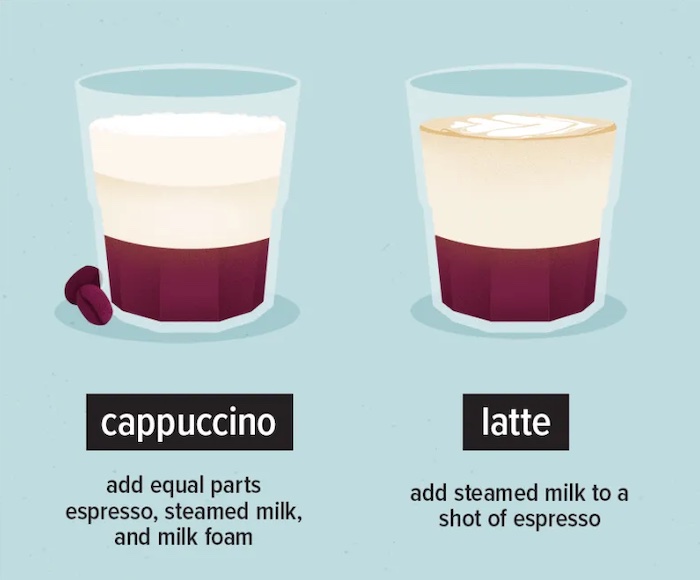
The difference between a cappuccino and a latte is that a cappuccino has much more foamed milk. A cappuccino is approximately one-third milk foam, whereas a latte has a thinner layer of milk foam, measuring less than half an inch, on top of steamed milk.
A cappuccino is one-third espresso, one-third steamed milk, and one-third frothed milk. A latte is one-third espresso and two-thirds steamed milk, with a thin layer of froth on top. The amount of caffeine in a shot of espresso stays the same regardless of which drink you choose, so the strength difference is purely about taste and texture.

What has more calories, a cappuccino or a latte?
When deciding which coffee drink type is healthiest, it’s usually best to start by considering how much milk is in each coffee. This is because most of the calories in a milky coffee are from the milk, not the espresso shot.
A latte will usually have more milk than a cappuccino. This is because the latte includes more steamed milk, whereas a cappuccino has more light and airy milk foam, and lattes are often served in larger sizes.
For this reason, the average latte has more calories than the average cappuccino. That said, a large cappuccino could contain more milk than a small latte, giving the cappuccino a higher calorie count.
How do you froth milk for a cappuccino vs a latte?
The key difference when frothing milk for a cappuccino vs a latte is the amount of froth you create.
When frothing milk for a cappuccino, you hold the steaming wand near the surface of the milk. This allows a lot of air into the milk and creates a thick froth.
When frothing milk for a latte, you hold the steaming wand deep under the surface of the milk. This allows less air into the milk and therefore creates less froth. Instead, you get steamed milk with only a small amount of froth.
What has more milk, a latte or a cappuccino?
Because it is made using more steamed milk, and because it is often served in larger sizes, a latte will generally have more milk than a cappuccino.
A cappuccino is often served in a smaller cup than a latte, and a higher proportion of that cup is airy milk foam, rather than dense steamed milk.
Which is stronger, latte or cappuccino?
When comparing caffeine content, a latte and a cappuccino are equal in strength as long as they contain the same number of espresso shots.
Both drinks can be made from either one shot of espresso or two. So to make either the latte or the cappuccino stronger, you would add a shot of espresso.
When comparing taste, assuming both drinks contain the same amount of espresso, the cappuccino will taste stronger than the latte. This is because the cappuccino has a smaller proportion of steamed milk, and the bitter flavor of the coffee will therefore be more noticeable.
Is cappuccino sweeter than a latte?
A cappuccino is less sweet than a latte. The sweetness of a coffee comes from the milk, which offsets the bitterness of the espresso. A cappuccino contains less steamed milk than a latte, which gives it a less sweet taste.
Cappuccino vs Latte: Caffeine and Calories
Because both a cappuccino and a latte are built on the same espresso base, they contain the same amount of caffeine. A single-shot version of either drink has roughly 63 mg of caffeine, while a double-shot version has around 126 mg. The caffeine in a shot of espresso does not change based on the milk preparation method.
Where the two drinks diverge is in calories. A standard cappuccino made with whole milk contains roughly 80 to 120 calories, depending on the serving size. A latte, which uses significantly more steamed milk, typically comes in at 150 to 210 calories.
If you are watching your calorie intake but still want a milk-based espresso drink, the cappuccino is the better choice. The thick foam gives you a satisfying mouthfeel without packing in as much milk. Switching to skim or oat milk will reduce the calorie count of either drink further.
Cappuccino vs Latte vs Flat White
The flat white is often confused with both the cappuccino and the latte. All three drinks use espresso and steamed milk, but the proportions and textures differ. Here is how they compare at a glance.
| Feature | Cappuccino | Latte | Flat White |
|---|---|---|---|
| Espresso Shots | 1-2 | 1-2 | 2 (ristretto) |
| Milk Texture | Thick, airy foam | Steamed milk, thin foam | Microfoam (velvety, no air) |
| Serving Size | 150-180 ml | 240-360 ml | 150-180 ml |
| Taste | Bold, foamy | Smooth, milky | Intense, silky |
| Calories (whole milk) | ~80-120 kcal | ~150-210 kcal | ~100-140 kcal |
The flat white sits between the two: it is smaller and stronger than a latte but uses microfoam instead of the thick froth found in a cappuccino. For a deeper dive, read our flat white vs latte and cappuccino vs flat white comparisons.
Which Should You Order?
Choosing between a cappuccino and a latte comes down to personal preference. Use the quick guide below to decide.
Order a cappuccino if you:
- Want a stronger, bolder coffee flavor
- Enjoy thick, creamy foam
- Prefer a smaller, more concentrated drink
- Are looking for a lower-calorie option
Order a latte if you:
- Prefer a smooth, milky drink
- Like to add flavored syrups (vanilla, caramel, hazelnut)
- Want a larger serving to sip over a longer period
- Find straight espresso too bitter
There is no wrong answer. Both drinks are built on the same espresso foundation, so you get the same caffeine boost either way. It all comes down to how much milk and foam you want in your cup. Explore our full list of coffee drink types to find more comparisons like this one.
Iced Cappuccino vs Iced Latte
Both cappuccinos and lattes can be made iced, and the key difference carries over from the hot versions, the cappuccino uses cold foam while the iced latte is mostly cold milk. An iced cappuccino is espresso poured over ice with cold-frothed foam on top. An iced latte is espresso over ice filled with cold milk, giving it a smoother, more diluted taste.
| Feature | Iced Cappuccino | Iced Latte |
|---|---|---|
| Milk texture | Cold foam on top, less liquid milk | Cold milk throughout |
| Coffee flavor | Stronger, espresso-forward | Smooth and milk-forward |
| Calories | Lower (less milk) | Higher (more milk) |
| Best for | Bold iced coffee fans | Those who prefer a creamy, mellow cold drink |
Cold foam is lighter and less stable than hot foam, so an iced cappuccino separates quickly, drink it promptly after it’s made. If you enjoy cold espresso drinks, a shaken espresso is another great option sitting somewhere between the two, served without any foam layer.
Cappuccino vs Latte at Starbucks
Starbucks uses its own sizing system and recipes that differ slightly from traditional coffee bar standards, so it helps to know what you’re actually ordering.
Starbucks cappuccino
A Starbucks cappuccino is made with espresso and thick milk foam with very little steamed milk. A tall (12 oz) has one shot; a grande (16 oz) has two. Despite the large cups, most of the volume is foam, so it tastes lighter and less milky than you might expect from a 16-ounce drink. It’s a much bolder, more concentrated experience than the latte at the same size.
Starbucks latte
The Starbucks latte is the chain’s most popular espresso drink and follows the traditional recipe most closely. A grande (16 oz) uses two espresso shots with around 10 oz of steamed milk and a thin foam layer on top. It’s the base for most of Starbucks’ flavored drinks, vanilla, caramel, and pumpkin spice all start here. For something between a cappuccino and a latte, try the Americano Misto, which uses hot water and steamed milk rather than straight milk.
Ordering tips at Starbucks
- Want something bolder? Order a cappuccino, same espresso but far less milk per cup.
- Adding syrups? Go with a latte, syrups blend much better into steamed milk than into foam.
- Watching calories? The cappuccino wins again, significantly less milk per serving.
- Going iced? Starbucks iced cappuccinos come with cold foam on top; iced lattes are blended with milk and have no foam layer.
Cappuccino vs Latte with Milk Alternatives
Switching to a plant-based milk affects both drinks, but it matters more for cappuccinos because thick, stable foam is central to the experience. Not all non-dairy milks froth as well as whole milk.
Oat milk (barista blend) is the best all-round alternative. It steams well, produces decent foam, and has a naturally sweet, creamy taste that pairs well with espresso. It works in both drinks. Soy milk foams better than most plant milks but can occasionally split against acidic espresso, barista-blend versions are more reliable. Almond milk produces thin, unstable froth, making it a poor fit for cappuccinos; it works better in lattes where the foam layer is minimal.
| Milk Type | Foams Well? | Best For | Taste Impact |
|---|---|---|---|
| Whole milk | Excellent | Both | Rich and creamy |
| Oat milk (barista) | Good | Both | Sweet and neutral |
| Soy milk (barista) | Moderate | Latte | Slightly beany |
| Almond milk | Poor | Latte only | Thin, nutty |
| Coconut milk | Moderate | Latte | Sweet and tropical |
If you find a standard cappuccino too dry, a wet cappuccino, made with more steamed milk and less foam than usual, is a good middle ground before committing to a full latte.
Making a Cappuccino or Latte at Home
Both drinks are straightforward to make at home once you have the right setup. The key piece of equipment is an espresso machine with a steam wand, you need this to both pull espresso shots and texture the milk. The main difference when making each at home mirrors the coffee shop version: froth the milk more aggressively (closer to the surface of the milk) for a cappuccino, and keep the wand deeper in the milk for a smoother, less airy texture for the latte.
The Breville Barista Express is one of the most popular home espresso machines for this purpose, it has a built-in burr grinder and a commercial-style steam wand, so you can go from whole beans to a finished cappuccino or latte in under three minutes. If space is a priority, the Breville Bambino Plus has an automated steam wand that textures milk to the right consistency at the press of a button, a genuinely useful feature when you are learning the difference between cappuccino foam and latte microfoam.
If you already have a coffee maker and just need to froth milk, a handheld milk frother is an inexpensive way to get started. It will not create the same velvety texture as a proper steam wand, but it works well enough to understand the difference between the two drinks while you decide whether a full espresso machine is worth the investment.
If you want even more body and richness than a latte without going as sweet as a flavoured drink, a breve uses steamed half-and-half in place of milk for a noticeably creamier, dessert-like cup.
If you prefer something caffeine-light and spiced, a chai latte is a popular cafe alternative worth trying alongside your regular latte order.
Our full guide to espresso drinks goes deeper.
FAQ – Cappuccino vs Latte
The main difference is the milk-to-foam ratio. A cappuccino is made with equal parts espresso, steamed milk, and thick foam. A latte uses the same espresso but fills the rest of the cup with steamed milk and only a thin layer of foam on top. This gives the cappuccino a stronger coffee taste and the latte a smoother, creamier flavor.
In terms of caffeine, no. Both drinks contain the same amount of espresso, so the caffeine content is identical. However, a cappuccino tastes stronger because it has less steamed milk to dilute the espresso flavor. The thicker foam layer also lets the coffee taste come through more prominently.
A latte is sweeter than a cappuccino. The sweetness in both drinks comes from the natural sugars in steamed milk, and a latte contains a larger proportion of steamed milk. If you prefer a less sweet, more coffee-forward drink, go with a cappuccino.
They have the same caffeine content when made with the same number of espresso shots. A single-shot cappuccino or latte has about 63 mg of caffeine. A double-shot version of either drink has about 126 mg. The type of milk or amount of foam does not affect caffeine levels.
A cappuccino is generally the lower-calorie option because it uses less steamed milk and more foam. A standard cappuccino with whole milk has about 80 to 120 calories, while a latte has about 150 to 210 calories. Choosing skim milk or a plant-based alternative reduces the calorie count of both drinks.
Yes, many coffee shops serve iced cappuccinos. The drink is made by pouring espresso over ice and adding cold milk with a layer of cold foam on top. The texture differs from a hot cappuccino because the foam is produced by frothing cold milk, which creates a lighter, less dense froth.
A dry cappuccino has more foam and less steamed milk than a standard cappuccino. The drink gets its name because the foam is drier and lighter compared to the wetter, denser texture of steamed milk. A wet cappuccino is the opposite, it uses more steamed milk and less foam, making it taste closer to a latte.
A macchiato is much smaller and more espresso-forward than a cappuccino. A traditional macchiato is just a shot of espresso with a small dollop of foam on top. A latte macchiato reverses this, it is mostly steamed milk with espresso poured through it. A cappuccino sits in the middle, using equal parts espresso, steamed milk, and foam in a 5–6 oz serving.
You can make a close approximation of both drinks without a dedicated espresso machine. A Moka pot or AeroPress can produce strong, concentrated coffee that works as an espresso substitute. To froth milk without a steam wand, use a handheld milk frother, a French press, or even a jar with a lid, shake it vigorously then microwave briefly to set the foam. The result won’t be identical to a café cappuccino or latte, but it comes close.
 Megan Cunningham
Contributor
Tests everything in an ordinary kitchen on affordable gear.
Megan Cunningham
Contributor
Tests everything in an ordinary kitchen on affordable gear.