

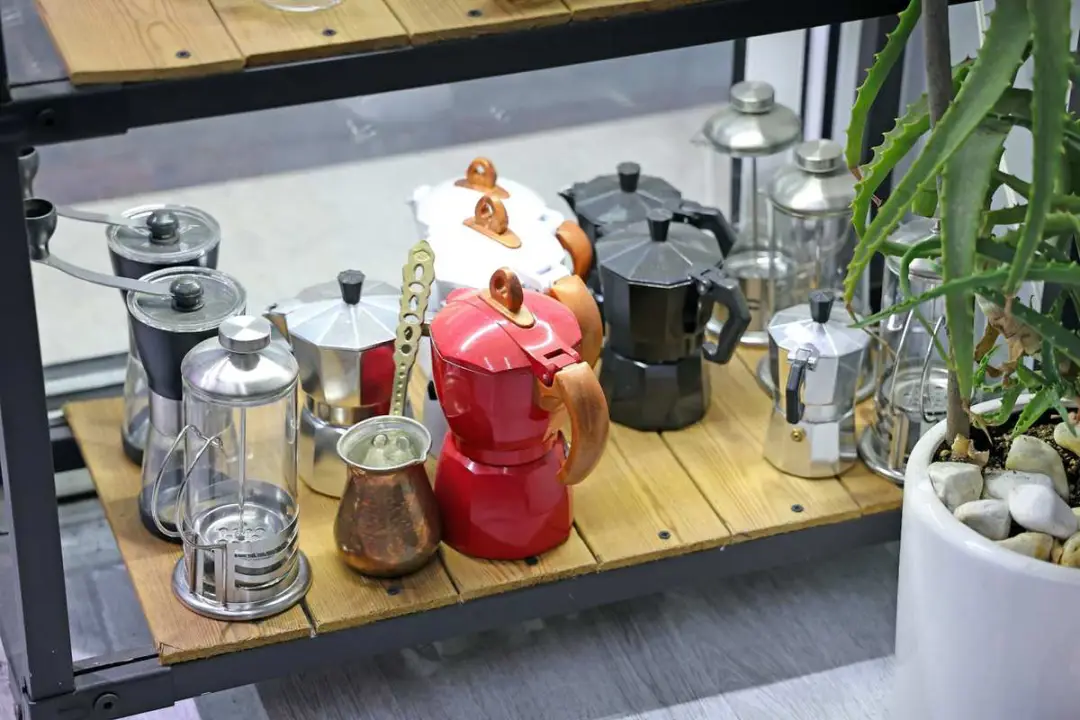
A moka pot makes strong, concentrated coffee on your stovetop in about 5 minutes, no electricity required, no pods, no $500 espresso machine. Water boils in the bottom chamber, steam pressure pushes the water up through ground coffee in the middle filter, and the brewed coffee collects in the top chamber. The result isn’t technically espresso, but it’s the closest thing you can get on a $40 piece of aluminium.
This guide walks through the moka pot method step-by-step, the right grind, the right amount of coffee, when to take it off the heat, and how to avoid the burnt, bitter mess that’s the most common beginner mistake. By the end, you’ll be making rich Italian-style coffee at home with one of the most iconic pieces of kitchen equipment ever designed. For how it compares with the other methods, see how to make coffee.
The short answer: moka pot in 5 steps
- Fill the bottom chamber with pre-boiled water up to the safety valve.
- Add finely-ground coffee to the filter basket, level, don’t tamp.
- Assemble and place on medium-low heat with the lid open.
- Wait for the gurgle. When you hear a steady gurgle and the top chamber is full, take it off the heat immediately.
- Cool the bottom with a wet towel to stop extraction, then pour.
That’s the entire process. Most “burnt moka pot” mistakes come from leaving it on heat too long or using boiling-water-start instead of pre-boiled.
What you need
- A moka pot, Bialetti Moka Express is the original (the 3-cup is the most common; 6-cup for two people). Around $35.
- Finely ground coffee, finer than drip, coarser than espresso. About the size of table salt.
- A burr grinder for fresh grinding (see our best coffee grinder)
- Filtered water, tap is fine if it tastes good
- A kettle for pre-boiling
- Fresh whole-bean coffee, medium to medium-dark works best; see our best espresso beans
For sizing: “cup” on a moka pot means 50ml (~1.7 oz), much smaller than a US cup. A 3-cup moka pot makes about 5 oz of total coffee. A 6-cup makes about 10 oz. Buy bigger than you think you need.
Moka pot grind size
Medium-fine, finer than drip, coarser than espresso. About the texture of table salt. If your grind is too coarse, water passes through too quickly and the cup is weak. Too fine, and the grounds choke the filter, water can’t get through and pressure builds up dangerously (the safety valve will release steam if this happens).
| Brew method | Grind size |
|---|---|
| Espresso | Very fine (powder) |
| Moka pot | Medium-fine (table salt) |
| Pour over | Medium-fine |
| Drip / drip coffee maker | Medium |
| French press | Coarse |
If you’re using pre-ground espresso, that’s slightly too fine for moka pot, it’ll work but the cup may taste bitter. Drip-grind pre-ground is slightly too coarse but produces drinkable coffee.
Step-by-step: how to brew with a moka pot
- Pre-boil water in a kettle. This is the single most important tip, starting with hot water reduces total time on the stove, which reduces burnt-coffee taste.
- Fill the bottom chamber with the just-boiled water up to (but not over) the safety valve. The valve is the small brass pressure release on the side.
- Add finely-ground coffee to the filter basket. Level it with your finger, DO NOT tamp. Tamping creates too much resistance and the water can’t flow through cleanly.
- Assemble carefully, the bottom chamber is hot from the just-boiled water, use a towel to handle it. Screw the top tightly onto the bottom.
- Place on medium-low heat with the lid open. Don’t crank the heat to maximum, moka pot does its best work at moderate temperatures.
- Wait for the gurgle. The first sign of brewing is steam coming through the centre column. Then coffee starts pouring into the top chamber, it should be slow and steady, not violent.
- Listen for the change. When the gurgle turns to a hiss or a faster sputter, the bottom chamber is nearly empty. Take it off the heat IMMEDIATELY.
- Cool the bottom by wrapping a wet towel around it (or running it under cold tap water for 5 seconds). This stops extraction and prevents the last bit of coffee from going bitter.
- Stir the top chamber gently with a spoon to integrate the layers, then pour and drink.
Total time from cold start: about 8 minutes. With pre-boiled water: about 4-5 minutes.
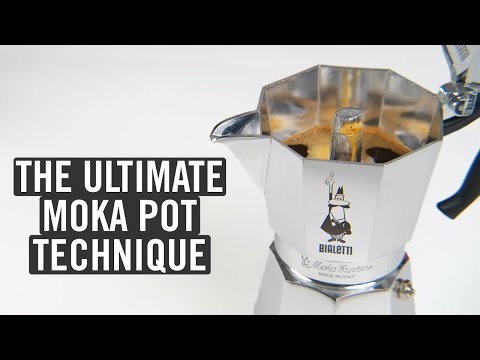
Watch: James Hoffmann’s moka pot technique
Hoffmann’s “The Ultimate Moka Pot Technique” is the canonical moka pot tutorial. He walks through the pre-boiled water trick, the right grind, and exactly when to take it off the heat.
Is moka pot coffee actually espresso?
No, but it’s closer than any other stovetop method. Real espresso requires 9 bars of pressure forced through finely-ground, tightly-packed coffee. A moka pot generates about 1.5 bars, not enough for true espresso extraction. The cup that comes out is concentrated, intense, and bold, but it doesn’t have the same crema or syrupy mouthfeel that defines espresso.
For real espresso at home, you need an espresso machine, see our best espresso machine guide and our how to make espresso at home walkthrough. But for $40 (the price of a moka pot) vs $500+ (entry-level espresso machine), moka pot is by far the better value if you want strong concentrated coffee without making a serious gear investment.
For a head-to-head, see our espresso vs coffee guide. For how moka compares to AeroPress (the other pressure-driven home brewer), see our AeroPress vs Moka Pot comparison.
Common moka pot mistakes
| Problem | Cause | Fix |
|---|---|---|
| Burnt, bitter coffee | Left on heat too long or heat too high | Take off heat at first hiss; use medium-low heat |
| Watery, weak coffee | Grind too coarse, water too low | Grind finer (table salt); fill to safety valve |
| Coffee won’t come up | Grind too fine, tamped too hard | Coarser grind; don’t tamp the filter basket |
| Sour, under-extracted | Heat too low | Increase to medium heat |
| Boiled-water taste | Tap water with high mineral content | Filter water |
| Coffee tastes metallic | New aluminium pot (first 10 brews are awful) | Brew 10 throwaway batches first; pots get better with use |
The metallic-taste-from-new-aluminium issue is real and undertalked. Brand-new Bialetti pots taste terrible for the first 10 batches, the aluminium “seasons” with use. Don’t throw away your moka pot after the first cup; brew through a cheap bag of beans for the first 10 batches and watch the cup quality dramatically improve.
Cleaning and maintenance
- Rinse with hot water after every brew, don’t use dish soap (it leaves a film). The “seasoned” coffee oil layer is what makes a moka pot taste better over time.
- Dump spent grounds immediately while still hot, they’re much easier to knock out.
- Disassemble for drying, don’t store with the chambers screwed together (traps moisture).
- Check the rubber gasket monthly, replace it ($5) when it gets dry, cracked, or stops sealing tightly.
- Stovetop type matters, original Bialetti aluminium pots don’t work on induction. Bialetti makes induction-compatible stainless steel models if you have an induction range.
The bottom line
The moka pot is the most underrated piece of coffee gear in any kitchen. $40 gets you a 90-year-old Italian design that makes concentrated coffee in 5 minutes with no electricity and no pods. The cup isn’t real espresso, but it’s the closest substitute under $500. Pre-boil your water, use a medium-fine grind, take it off the heat at the first hiss, and you’ll have rich Italian-style coffee at home. For a moka pot drink with a tradition behind it, try Cuban coffee, or make a cafe con leche with moka pot coffee and hot milk.
For other brewing methods, see our guides on pour over, French press, cold brew, espresso at home, and AeroPress.
Moka pot vs AeroPress is a common debate, our side-by-side breakdown covers the trade-offs. If you want the real thing, see how to make espresso at home, and for a gentler immersion brew, our French press guide is the place to start. We have more on espresso drinks.
FAQs About Using a Moka Pot
Medium-fine, finer than drip, coarser than espresso. About the size of table salt. Too coarse and the cup is weak; too fine and the grounds choke the filter (potentially triggering the safety valve). If you’re using pre-ground espresso, it’s slightly too fine but will work. Pre-ground drip is slightly too coarse but produces drinkable coffee.
Pre-boiled water reduces the total time the moka pot sits on heat, which reduces the burnt, bitter taste that comes from over-extraction. Starting with cold water means 4-6 minutes of the bottom chamber slowly heating up; pre-boiled cuts that to about 60 seconds. The technique was popularised by James Hoffmann and has become the standard for serious moka pot users.
No. Real espresso requires 9 bars of pressure. A moka pot generates about 1.5 bars. The cup that comes out is concentrated and bold but lacks the crema and syrupy mouthfeel of true espresso. That said, moka pot is the closest stovetop substitute and costs $40 vs $500+ for a real espresso machine. For real espresso, see our best espresso machine guide.
Two likely causes: (1) left on heat too long after the gurgle started, or (2) heat was too high. Take the moka pot off the burner at the first hiss/sputter, this signals the bottom chamber is nearly empty and the remaining liquid is mostly steam. Cool the bottom with a wet towel immediately. Use medium-low heat, not full power.
Bigger than you think you need. ‘Cup’ on a moka pot means 50ml (1.7 oz), not a US cup. A 3-cup moka pot makes about 5 oz of coffee total, one large American mug. A 6-cup makes about 10 oz, two mugs. The 6-cup Bialetti is the right pick for most home use. Brewing a smaller volume than the pot is designed for produces inferior cups; don’t try to make 3-cup output in a 6-cup pot.
No, rinse with hot water only. The thin layer of coffee oils that builds up inside an aluminium moka pot is part of how it ‘seasons’ over time, similar to a cast-iron pan. Dish soap strips this layer and makes the next few brews taste worse. Just knock out the spent grounds, rinse all parts with hot water, dry separately. If you genuinely need to deep-clean (e.g. after months of neglect), use diluted vinegar instead of soap.
 Austin Barker
Founder & Lead Editor
Seven years behind a bar before starting Brewing Coffees. Writes most of the equipment coverage and tests every machine on this site in an ordinary home kitchen.
Austin Barker
Founder & Lead Editor
Seven years behind a bar before starting Brewing Coffees. Writes most of the equipment coverage and tests every machine on this site in an ordinary home kitchen.