The best espresso beans aren’t necessarily the most expensive ones, they’re the ones suited to high-pressure extraction. Medium-dark to dark roasts with chocolate, caramel, or nutty notes generally pull better as espresso than light, fruity beans. The carbon dioxide from fresh roasting also matters: most beans need 7–14 days of rest after roasting before they pull cleanly.
This guide covers the four best coffee beans for espresso that we would recommend to most home baristas, across price tiers and flavour profiles. All four are available on Amazon US, all four have been roast-validated against the espresso machines in our best espresso machine guide.
The 4 Best Coffee Beans for Espresso at a Glance
- Best overall: Lavazza Super Crema
- Best for specialty drinkers: Stumptown Hair Bender
- Best dark roast espresso: Peet’s Major Dickason’s
- Best high-caffeine espresso: Death Wish Espresso Roast
Below, we break down each pick, who it’s for, what it does well, and where it falls short. We’ve also included a buying guide and side-by-side comparison further down to help you choose.
What to look for in espresso beans
- Roast level: Medium-dark to dark. Light roasts CAN be used as espresso but require dialed-in technique. For learning the craft, start medium-dark.
- Arabica vs Robusta blend: 100% Arabica gives more complex flavour. Arabica-Robusta blends produce thicker crema and a more “classic Italian” mouthfeel, fans of espresso bar coffee usually prefer the blend.
- Roast date: Bag should show a roast date, not just “best by.” Use beans 7-30 days after roast date, they need to release CO2 before brewing cleanly.
- Whole bean, always: Pre-ground espresso loses freshness within days. Grind fresh, every brew.
- Flavour notes: Chocolate, caramel, nut, brown sugar = espresso-friendly. Floral, citrus, fruit = harder for espresso (but possible with good technique).
Best overall: Lavazza Super Crema
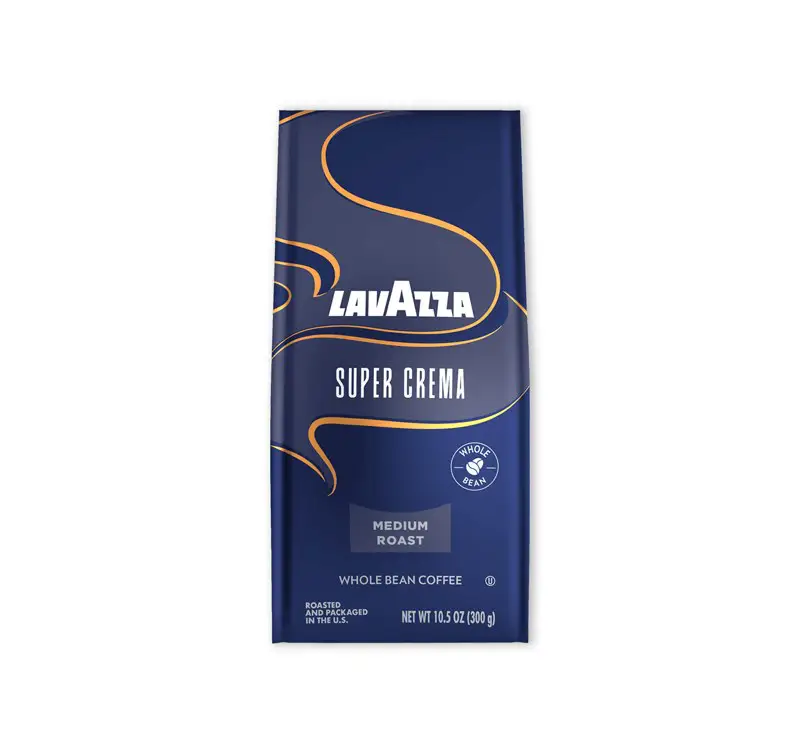
The Lavazza Super Crema (2.2 lb) is the espresso bean most home espresso machines were dialed in for during testing. Medium espresso roast, Arabica-Robusta blend, with flavour notes of hazelnut and brown sugar. The Robusta in the blend produces the thick crema that “Super Crema” is named for. Around $30 for 2.2 lb (~$0.30 per shot).
The Super Crema is the right bean for new home baristas. It’s forgiving, it pulls well even when your technique isn’t perfectly dialed. The crema is photographable from your first shot. And at this price point, you’re not afraid to waste shots learning. Italian-roasted to a consistency that hasn’t changed in decades, which is exactly what you want when you’re trying to learn variables.
Best for specialty drinkers: Stumptown Hair Bender
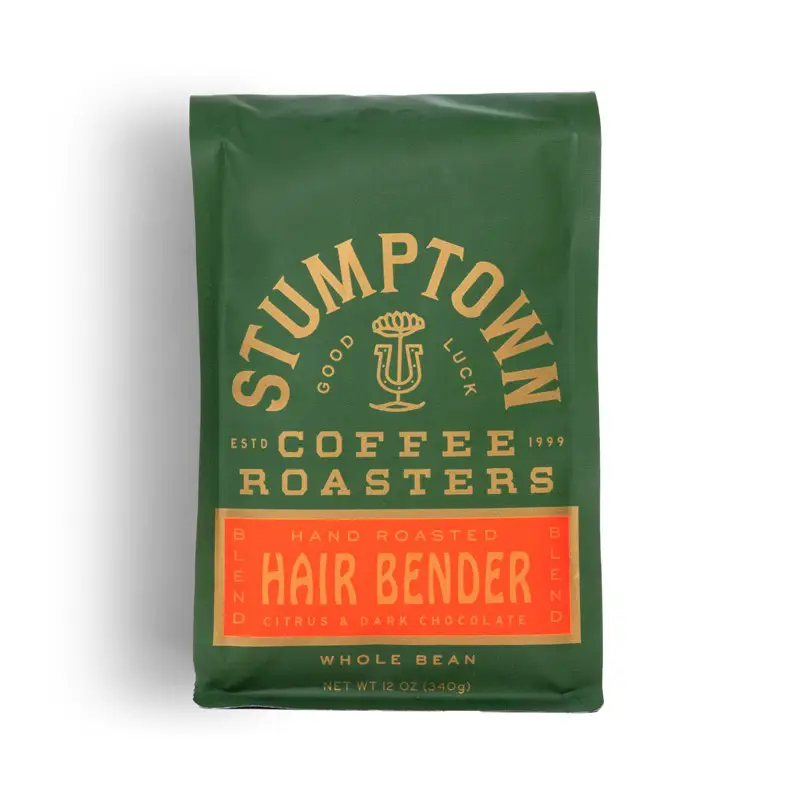
The Stumptown Hair Bender (12 oz) is the third-wave specialty coffee community’s standard espresso recommendation. Medium roast, 100% Arabica blend with notes of sweet citrus, dark chocolate, and raisin. Designed specifically to perform as espresso, sweet, full-bodied, with balanced acidity. Around $18 for 12 oz.
The Hair Bender is the pick when you want to taste specialty single-origin character through espresso. Stumptown roasts within a few days of shipping, and most Amazon stock is shipped from current roasts. Worth knowing: as a medium roast, it pulls a different texture than the Lavazza, less crema, more nuanced acidity, more interesting mid-palate. Once your technique is dialed, this is where the joy of home espresso shows up.
Best dark roast espresso: Peet’s Major Dickason’s
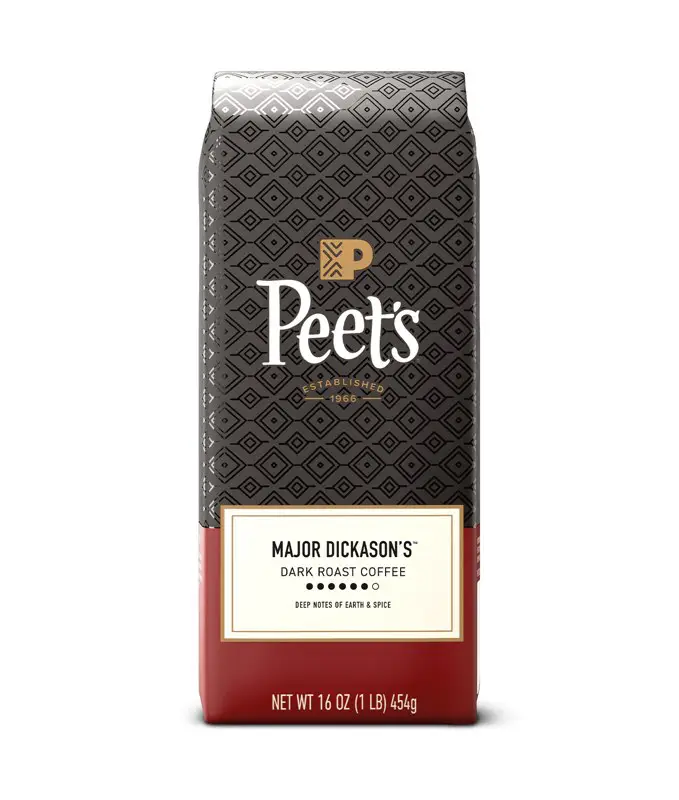
The Peet’s Major Dickason’s Blend (18 oz) is for drinkers who want intense, bold espresso shots with maximum body. Dark roast, 100% Arabica, with the kind of pronounced caramel-and-burnt-sugar profile that defines classic American espresso. Around $14 for 18 oz.
The Major Dickason’s is the right pick if you grew up on espresso at neighbourhood cafés in the 1990s/2000s. The dark roast extracts easily and forgivingly, even a slightly-off shot still tastes “right.” It’s also the pick for milk-drink-focused brewing: that dark caramel profile cuts through milk in lattes and cappuccinos better than lighter espresso would. For cappuccino-specific bean picks see our best beans for cappuccino, and for latte see best beans for latte.
Best high-caffeine espresso: Death Wish Espresso Roast
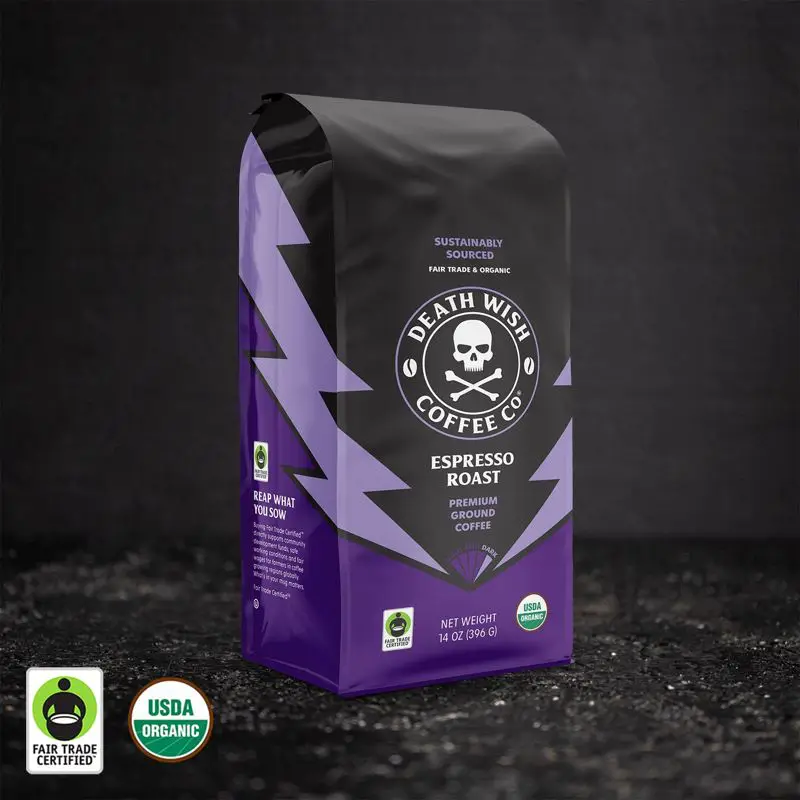
The Death Wish Espresso Roast (14 oz) is the pick when you want more caffeine per shot. Arabica-Robusta blend with twice the caffeine of standard espresso beans (Robusta is naturally about double the caffeine of Arabica). USDA Organic, Fair Trade. Notes of caramelized sugar, cocoa, and cherries. Around $18 for 14 oz.
The Death Wish Espresso is the bean for early mornings when one shot needs to do the work of two. A single shot can deliver 200+ mg of caffeine (versus ~63 mg for standard Lavazza-grade espresso). The brand has marketing edge but the actual cup is balanced, not nearly as bitter as the “world’s strongest” framing implies. The Robusta in the blend produces thick crema similar to Lavazza Super Crema.
Espresso beans comparison table
| Bean | Roast | Blend | Best for | ~$/lb |
|---|---|---|---|---|
| Lavazza Super Crema | Medium | Arabica + Robusta | Beginners, daily driver | $14/lb |
| Stumptown Hair Bender | Medium | 100% Arabica | Specialty single-origin lovers | $24/lb |
| Peet’s Major Dickason’s | Dark | 100% Arabica | Bold flavour, milk drinks | $13/lb |
| Death Wish Espresso | Dark | Arabica + Robusta | Maximum caffeine | $21/lb |
For most home baristas the order is: Lavazza Super Crema for learning, Stumptown Hair Bender for specialty quality once you’re dialed, Peet’s Major Dickason’s for milk drinks, Death Wish for caffeine maximization.
Do you need special espresso beans?
No. There is no botanical difference between an “espresso bean” and any other coffee bean. The label describes how the coffee was roasted and what the roaster expects you to do with it, not a separate species or a different plant. Any bag of coffee can be pulled as espresso if you grind it finely enough and dial the shot in.
What the espresso label usually signals is a medium-dark to dark roast, a blend built for consistency rather than seasonal character, and a flavour profile that survives being concentrated into roughly 30 ml of liquid. That is genuinely useful shorthand when you are shopping, which is why we still organise this guide around it. It simply is not a technical category. We cover the distinction in full in our guide to whether coffee beans and espresso beans are the same.
The practical consequence is worth knowing: do not rule out a bag just because it does not say espresso on the front. A medium roast sold for filter brewing will often pull beautifully, and some of the best shots come from beans that were never marketed for espresso at all.
Blend or single origin for espresso?
Most coffee sold as espresso is a blend, and there is a good reason for that. Blending lets a roaster hit the same flavour target year after year by adjusting the components as crops change. That consistency is worth a great deal while you are learning, because it means the variable you are chasing is your own technique rather than the bag in front of you.
Single origin espresso is the opposite trade. You get a clearer, more distinctive cup that tastes of one farm or one region, and you accept that the next bag may behave differently and need re-dialling. Single origins also tend to be roasted lighter, which makes them less forgiving under pressure.
Our recommendation is to start on a blend. Three of the four picks above are blends for exactly this reason. Move to single origin once your shots are repeatable and you can tell the difference between a bad bean and a bad grind setting.
Roast level for espresso, compared
Roast level is the single biggest decision on the bag, and it changes far more than flavour alone. It affects how the bean behaves under roughly nine bars of pressure, how much crema you get, and how much room for error you have while dialling in.
| Roast level | Crema | Body | Acidity | Margin for error | Best suited to |
|---|---|---|---|---|---|
| Light | Thin, pale | Light, tea-like | High and bright | Least forgiving | Experienced baristas chasing fruit and floral notes |
| Medium | Moderate | Balanced | Medium | Moderate | Specialty character without a steep learning curve |
| Medium-dark | Good | Full | Low to medium | Forgiving | Most home setups, and the safest starting point |
| Dark | Heavy | Heaviest, syrupy | Lowest | Most forgiving | Bold shots and milk drinks |
One common misconception is worth clearing up: darker roasts are not stronger in caffeine. Roasting burns some of it off, so a light roast keeps marginally more caffeine by weight. What dark roasts give you is body and forgiveness, not a bigger hit.
Match the beans to your machine
The machine already in your kitchen should narrow the shortlist, particularly if it grinds for you.
Super-automatic and bean-to-cup machines pull beans through an internal hopper and grinder you cannot easily reach to clean. Very oily dark roasts, the ones with a visible sheen on the bean, can gum up that mechanism and slow the grind over time. If your machine is bean-to-cup, stay at the medium to medium-dark end of the range. Our shortlist of non-oily coffee beans covers this case specifically.
Manual and semi-automatic machines paired with a separate grinder give you far more latitude, because you can clean the burrs and change beans without consequence. That is the setup where a dark, oily Italian roast becomes a genuine option rather than a maintenance problem.
Pressurised portafilters, the dual-wall baskets common on entry-level machines, generate crema artificially through a restrictor rather than through extraction. They make almost any bean produce a good-looking shot, which is forgiving while you learn but does mask the quality of the bean. If you have one, there is little point paying up for specialty beans until you move to a non-pressurised basket.
What else you need for espresso
- An espresso machine, see our best espresso machine guide
- A burr grinder, see our best coffee grinder guide
- A digital scale for the 1:2 ratio (see coffee to water ratio)
- A tamper, milk pitcher, and knock box
For the brewing technique itself, see our how to make espresso at home guide. For caffeine math vs regular drip, see espresso vs coffee.
The bottom line
For most home baristas, Lavazza Super Crema is the right starter bean, forgiving, well-priced, produces beautiful crema. Upgrade to Stumptown Hair Bender once your technique is dialed and you want specialty character. Pick Peet’s Major Dickason’s for bold dark espresso and milk drinks. Reach for Death Wish when you need maximum caffeine.
Once you have the right beans, you need a machine that can grind them properly. See our pick of the best espresso machines with built-in grinders, from the Breville Barista Express to super-automatic bean-to-cup options.
If you are still building a bean rotation, our shortlist of the best coffee beans for beginners is a low-risk starting point. The guide to whether coffee beans and espresso beans are actually different answers a question most shoppers have, and our best non-oily beans picks suit anyone with a grinder or super-automatic. We have more on coffee beans.
FAQs About the Best Coffee Beans for Espresso
Lavazza Super Crema is the right pick for most home baristas, Italian medium roast, Arabica-Robusta blend, thick crema, forgiving on technique, ~$14/lb. Upgrade to Stumptown Hair Bender for specialty third-wave character once your shots are consistent. Peet’s Major Dickason’s for bold dark espresso and milk drinks. Death Wish Espresso Roast for maximum caffeine per shot.
Medium-dark to dark is the safest starting point. The high-pressure extraction of espresso works well with the rich, oil-forward profile of darker roasts. Light roasts can absolutely be used for espresso (Stumptown Hair Bender is a medium with a slight light-roast character) but require more dialed-in technique. If you’re learning, start medium-dark.
Both work. 100% Arabica (Stumptown Hair Bender, Peet’s Major Dickason’s) gives more complex flavour and acidity. Arabica-Robusta blends (Lavazza Super Crema, Death Wish) produce thicker crema and more ‘classic Italian espresso bar’ mouthfeel. Italians traditionally use blends with 10-30% Robusta for the crema. Third-wave specialty coffee leans 100% Arabica for flavour clarity.
Use beans within 30 days of their roast date, ideally 7-21 days. Too fresh (under 7 days off roast) and the beans haven’t released enough CO2, shots will be uneven and crema will collapse fast. Too old (past 30 days) and the beans have lost essential oils that give espresso its character. Look for a printed roast date on the bag, not just ‘best by.’
In an airtight container at room temperature, away from light and heat. Don’t refrigerate (condensation damages the beans). Don’t freeze unless you’re freezing in single-use portions for long-term storage. Don’t store in the bag with the open clip exposed, once opened, decant to an airtight container within a few days. Aim to finish each bag within 3-4 weeks of opening.
You can, but you shouldn’t if you can avoid it. Pre-ground espresso loses freshness in days, not weeks. Whole beans hold flavour 4-5x longer. The grinder is more important than the espresso machine for cup quality, see our best coffee grinder guide for affordable burr grinder picks. If you genuinely can’t grind fresh, buy small bags (12 oz max) of pre-ground and use within 7-10 days of opening.
Yes. There is no separate species of espresso bean, so any coffee can be pulled as espresso provided you grind it fine enough and dial the shot in. Beans labelled for espresso are simply roasted darker and blended for consistency, which makes them easier to work with. A medium roast sold for filter brewing will often pull very well.
At an 18 g dose for a double shot, a 2.2 lb (1 kg) bag such as Lavazza Super Crema gives roughly 55 doubles, and a 12 oz (340 g) bag such as Stumptown Hair Bender gives roughly 19. Allow for a few wasted shots each time you open a new bag and change your grind setting.
They are a problem mainly for super-automatic and bean-to-cup machines, where oil from dark roasts can build up in the hopper and internal grinder that you cannot easily clean. On a manual or semi-automatic machine with a separate grinder it matters far less, because the burrs are accessible. If your machine grinds for you, stay medium to medium-dark.
 Austin Barker
Founder & Lead Editor
Seven years behind a bar before starting Brewing Coffees. Writes most of the equipment coverage and tests every machine on this site in an ordinary home kitchen.
Austin Barker
Founder & Lead Editor
Seven years behind a bar before starting Brewing Coffees. Writes most of the equipment coverage and tests every machine on this site in an ordinary home kitchen.