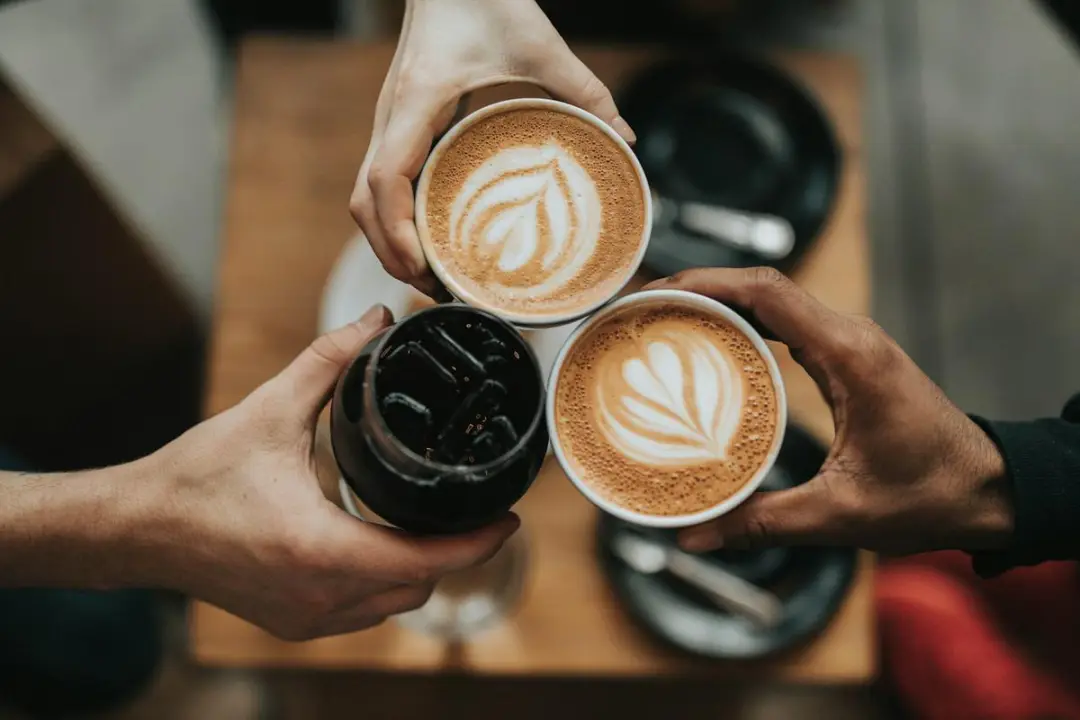
Modern decaf coffee is so good you genuinely can’t tell it apart from regular coffee in a blind taste test. The Swiss Water Process, used by most quality decaf roasters in 2026, removes 99.9% of the caffeine while leaving flavour compounds intact. The “decaf tastes terrible” reputation is from 1980s chemical-process decafs that haven’t been used at the specialty level for years. If you are wondering how much caffeine is left in a cup, see does decaf coffee have caffeine.
This guide covers the four decaf coffees worth buying in 2026, across roast levels and brewing methods. All four use Swiss Water Process (chemical-free, organic-certified). All four are available on Amazon US.
The 4 Best Decaf Coffees at a Glance
- Best overall decaf: Volcanica House Decaf
- Best organic decaf: Kicking Horse Decaf
- Best instant decaf: Mount Hagen Single Serve
- Best Volcanica single-origin: Volcanica Colombia Decaf
Below, we break down each pick, who it’s for, what it does well, and where it falls short. We’ve also included a buying guide and side-by-side comparison further down to help you choose.
What to look for in decaf coffee
- Decaffeination process: Swiss Water Process (SWP) is the gold standard, water-only, chemical-free, removes 99.9% of caffeine. Avoid “methylene chloride” or “ethyl acetate” decafs (the cheap chemical processes used by mass-market brands).
- Roast date on the bag: Same as regular coffee, within 4 weeks of roast date is the sweet spot.
- Whole bean vs ground: Whole beans stay fresh 4-5x longer. Grind fresh if you can.
- Roast level: Medium and dark roasts are most common for decaf, the longer roast helps mask the slight flavour loss from decaffeination.
- Organic + Fair Trade: Most quality decaf is certified, these are good signals for sourcing quality.
Best overall decaf: Volcanica House Decaf
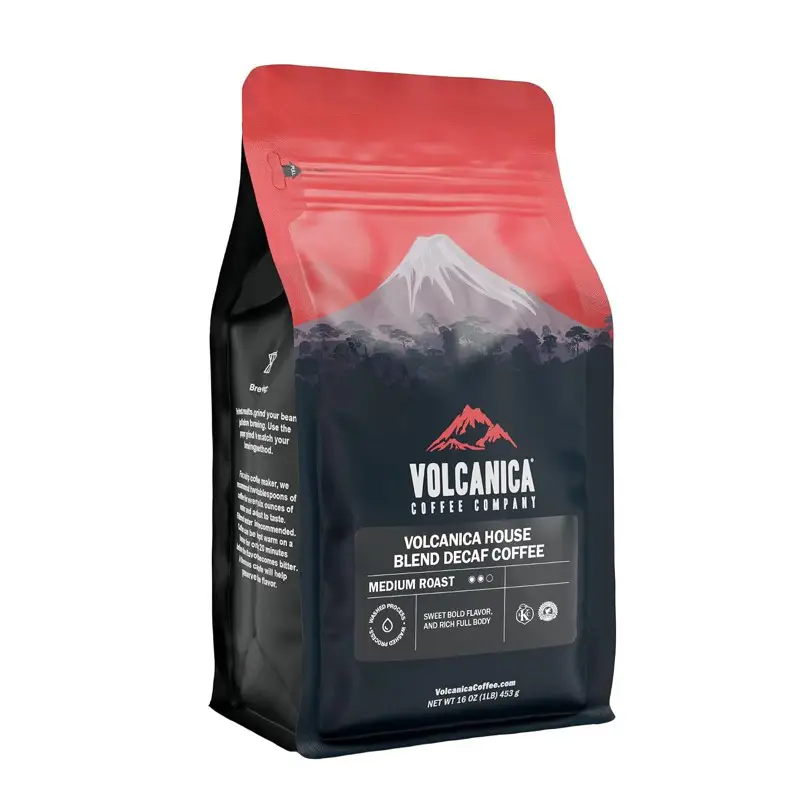
The Volcanica House Decaf (16 oz) is the decaf we recommend to most home drinkers in 2026. Swiss Water Process, fresh-roasted, kosher, around $20 for 16 oz (~$20/lb). Volcanica also makes single-origin decaf variants (Brazil, Colombia, Costa Rica) if you want more origin-specific flavour, but the House Decaf is the daily-driver pick.
What separates Volcanica from mass-market decaf: they roast in small batches and ship within days. The cup tastes like a quality medium-dark roast, chocolate, slight nut, balanced body. In blind tests against regular coffee, most drinkers can’t reliably pick which is which.
The trade-off vs cheaper grocery-store decaf: price. At $20/lb you’re paying 50–100% more than mainstream brands. But the cup quality difference is real and immediate, one batch of Volcanica next to one batch of Folgers Decaf shows the gap clearly.
Best organic decaf: Kicking Horse Decaf
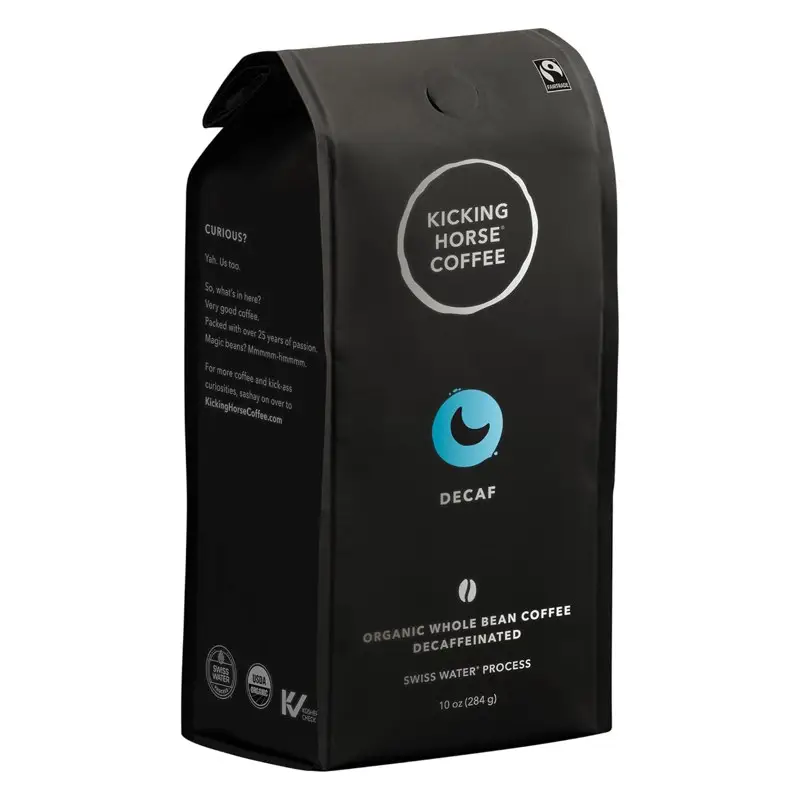
The Kicking Horse Decaf (10 oz) is the certified-organic, Fairtrade, dark-roast pick. Swiss Water Process. Canadian roaster known for bold dark roasts. Around $15 for 10 oz (~$24/lb).
The Kicking Horse Decaf is the right pick if you prefer dark roast and care about organic certification. The flavour profile is closer to traditional American dark roast, bold, slight smokiness, lower acidity. Works particularly well in cold brew and French press where the heavier body shines.
The 10 oz size is small, you’ll likely buy 2-3 bags a month if it becomes your daily decaf. The 1 lb (16 oz) version exists on Amazon if you want better $/oz. Roast quality is consistent, Kicking Horse roasts the regular and decaf versions on similar schedules, so you get the same flavour profile regardless of which you buy.
Best instant decaf: Mount Hagen Single Serve
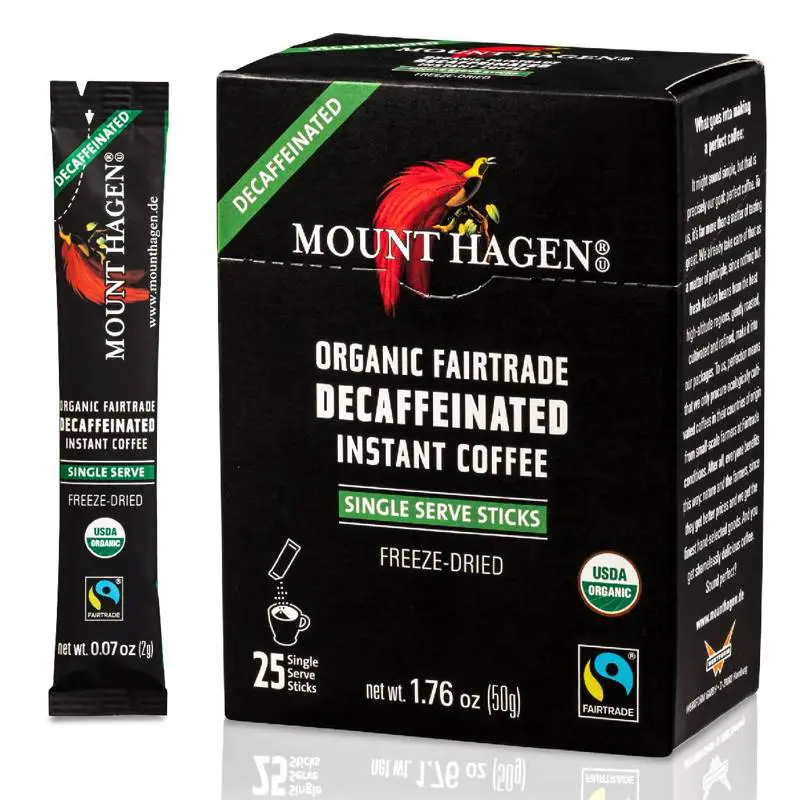
The Mount Hagen Single Serve Instant Decaf (25 sticks) is the right pick when you need decaf and you don’t have time or gear to brew. CO2 decaffeination process (chemical-free), USDA Organic, Fairtrade. Around $9 for 25 sticks (~$0.36 per cup).
Mount Hagen tops basically every “best instant decaf” list for one reason: their freeze-drying process preserves more flavour than competing instants. The cup tastes surprisingly like brewed coffee, chocolate, smooth body, only slight instant-coffee aftertaste. For travel, office, camping, or evening “I want coffee but it’s 9pm” moments, this is the right format.
The single-serve sticks are convenient, one stick per cup, just-add-hot-water. The 3.53 oz jar is a better-value format for home use if you don’t need the portion-control of sticks. Decaf is also the easier choice if you are drinking several cups inside a fasting window, since coffee does not break a fast but a day of caffeine will still catch up with you.
Best Volcanica single-origin: Volcanica Colombia Decaf
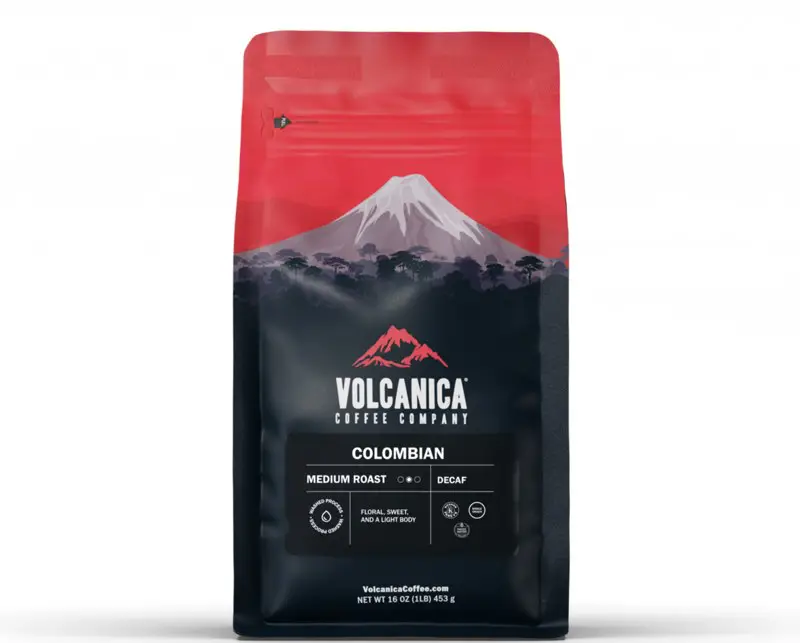
If you want to taste origin character even in decaf, the Volcanica Colombian Supremo Decaf is the third-wave-specialty pick. Single-origin Colombian beans, Swiss Water Process, medium roast. Notes of caramel, brown sugar, and dried fruit, the classic Colombian flavour profile that survives decaffeination remarkably well. Around $20 for 16 oz.
The Colombian Supremo Decaf is the right pick when you want decaf for pour over or AeroPress brewing, methods that show off origin character. Single-origin decafs tend to deliver more nuanced cups than blends because the bean’s natural profile isn’t being averaged out across multiple origins. Volcanica also makes Brazilian, Costa Rican, and Sumatran decaf variants if you want to taste different terroirs.
For brewing decaf at home, the same methods that work for regular coffee work for decaf. See our brewing guides on pour over, French press, cold brew, and AeroPress.
Decaf coffee comparison table
| Decaf | Process | Roast | Best for | ~$/lb |
|---|---|---|---|---|
| Volcanica House Decaf | Swiss Water | Medium-dark | Daily driver | $20/lb |
| Kicking Horse Decaf | Swiss Water | Dark | Organic + bold flavour | $24/lb |
| Mount Hagen Instant | CO2 | Medium | Travel + convenience | n/a (per-cup) |
| Volcanica Colombia Decaf | Swiss Water | Medium | Single-origin pour over | $20/lb |
For most decaf drinkers the order is: Volcanica House Decaf for everyday brewing, Kicking Horse for dark organic preference, Mount Hagen Instant for travel/convenience, Volcanica Colombia Decaf for single-origin specialty.
Why decaf reputation lags behind reality
Decaf coffee has a reputation problem that’s outdated by 20+ years. The “decaf tastes terrible” stereotype comes from 1980s and early 1990s chemical-process decafs (methylene chloride or ethyl acetate), which genuinely did taste worse than regular coffee. Those processes are still used by some mass-market brands (which is why grocery-store generic decaf is often bad), but the specialty coffee world moved to Swiss Water Process and CO2 decaffeination decades ago.
Modern Swiss Water Process is chemical-free, beans are soaked in water, then filtered through activated carbon that removes caffeine molecules while leaving flavour compounds. The process is gentle enough that a great Swiss Water-processed decaf is genuinely indistinguishable from regular coffee in blind tasting.
If you’ve avoided decaf for years because of bad past experiences, the brands in this guide will likely surprise you. Try the Volcanica House Decaf alongside your regular coffee and see if you can tell the difference.
How much caffeine is actually in decaf?
“Decaffeinated” doesn’t mean “zero caffeine.” US FDA standards require 97% caffeine removal; the Swiss Water Process typically removes 99.9%. A standard 8 oz cup of decaf coffee has 2-7 mg of caffeine. For comparison, a regular cup has 95 mg.
For most caffeine-sensitive people, decaf is functionally caffeine-free. But if you’re extremely sensitive or have specific medical reasons to avoid all caffeine, even decaf isn’t 100%, you’d need to avoid coffee entirely. For more on caffeine math across drinks, see our caffeine in a shot of espresso and espresso vs coffee guides.
The bottom line
Decaf coffee in 2026 is good, way better than its reputation. Volcanica House Decaf is the right daily-driver pick. Kicking Horse is the dark-organic alternative. Mount Hagen Instant is the right travel format. Volcanica Colombia is the specialty single-origin pick. All four use chemical-free processes and produce cups that are nearly indistinguishable from regular coffee.
For deeper bean context, see our guides on light vs dark roast and best medium roast coffee.
For the technical side, how each of these brands actually strips out the caffeine, see our explainer on how decaf coffee is made, covering the Swiss Water, CO2, ethyl acetate, and methylene chloride processes side by side.
Want the full picture? Our best beans for beginners shortlist applies to decaf drinkers too, and the best non-oily decaf-friendly beans work well in super-automatics. Roast date freshness still matters even without caffeine. See everything we have on coffee beans.
FAQs About the Best Decaf Coffee
Volcanica House Decaf (16 oz, Swiss Water Process) is the right daily driver pick for most decaf drinkers, fresh-roasted, balanced medium-dark, around $20. Kicking Horse Decaf is the organic dark-roast alternative. Mount Hagen Single Serve Instant is the best for travel and convenience. Volcanica Colombian Supremo Decaf is the specialty single-origin pick for pour over brewing.
Swiss Water Process is a chemical-free decaffeination method that uses only water and activated carbon filters to remove 99.9% of caffeine from green coffee beans. It’s the gold standard for quality decaf in 2026 and the process used by most specialty roasters. Other methods (CO2 process, methylene chloride, ethyl acetate) also exist; CO2 is also chemical-free and excellent, while the chemical methods are typically used by mass-market brands and produce noticeably worse cups.
About 2-7 mg per 8 oz cup. US FDA standards require 97% caffeine removal; the Swiss Water Process typically removes 99.9%. For comparison, regular coffee has ~95 mg per 8 oz. For most caffeine-sensitive people, decaf is functionally caffeine-free. For people with extreme caffeine sensitivity or specific medical reasons to avoid all caffeine, even decaf isn’t 100%, you’d need to avoid coffee entirely.
With cheap chemical-process decafs, yes, noticeably worse. With Swiss Water Process decaf from quality roasters (like the brands in this guide), no, most people can’t reliably tell the difference in blind tasting. The decaffeination process does remove a tiny amount of flavour compounds, but the gap between ‘regular’ and ‘modern Swiss Water decaf’ is much smaller than the gap between ‘cheap drip coffee’ and ‘specialty pour over.’ Roast quality matters more than caffeine content for cup quality.
No, same methods, same ratios, same grind sizes. Decaf beans are slightly more brittle than regular beans (the decaffeination process makes them more porous), so they may produce slightly more fines when grinding. But the brewing technique stays the same. See our coffee to water ratio guide for the standard ratios and our brewing method guides for technique.
No, but most quality decafs are. The brands in this guide (Volcanica, Kicking Horse, Mount Hagen) are all USDA Organic certified. Many mass-market decafs are not. Organic certification is a good signal for quality decaffeination process (organic-certified products generally avoid chemical decaf methods) and for bean sourcing quality.
 Austin Barker
Founder & Lead Editor
Seven years behind a bar before starting Brewing Coffees. Writes most of the equipment coverage and tests every machine on this site in an ordinary home kitchen.
Austin Barker
Founder & Lead Editor
Seven years behind a bar before starting Brewing Coffees. Writes most of the equipment coverage and tests every machine on this site in an ordinary home kitchen.