A typical 8 oz cup of brewed coffee has about 95 mg of caffeine, but the real range is wide: roughly 75 to 165 mg for the same size, and a large chain coffee can pass 300 mg. How much you actually get depends on the drink, the size, the beans and how the coffee was brewed.
This guide is the overview. It gives the numbers for the drinks people order most, explains why they vary so much, and covers how much is too much. For a single drink in more detail, we link to our guides on espresso, lattes and decaf.
The short answer: caffeine in a cup of coffee
- Brewed coffee, 8 oz: about 95 mg.
- Brewed coffee, 12 oz: the FDA puts it at 113 to 247 mg.
- Espresso, one shot: about 63 mg.
- Cold brew, 8 oz: roughly 100 to 200 mg.
- Decaf, 8 oz: about 2 to 15 mg.
- Daily limit for most healthy adults: 400 mg, according to the FDA.
These are averages. The same drink can differ by a factor of two from one cafe, or one brew, to the next.
Caffeine by drink
| Drink | Serving | Typical caffeine | Note |
|---|---|---|---|
| Brewed drip coffee | 8 oz | About 95 mg | The FDA range for a 12 oz cup is 113 to 247 mg |
| Cold brew | 8 oz | 100 to 200 mg | Varies with how concentrated it is |
| Espresso, single shot | About 1 oz | About 63 mg | Chains range from about 45 to 118 mg |
| Espresso, double shot | About 2 oz | About 126 mg | The base of most cafe drinks |
| Latte, cappuccino, flat white or mocha | 8 to 16 oz | 63 to 126 mg | Milk adds none, only the shots count |
| Americano | 8 to 12 oz | 63 to 126 mg | Water adds none |
| Instant coffee | 8 oz | Roughly 60 to 80 mg | Depends on the spoonful |
| Decaf brewed coffee | 8 oz | 2 to 15 mg | Low, not zero |
Milk drinks are simple: the caffeine is in the espresso, so count the shots. Our guide to the americano shows why a bigger cup of water does not mean more caffeine, and the latte caffeine guide covers the milk drinks.
Big cups and chain coffee
Size changes the picture more than the drink name. A 16 oz brewed coffee at a chain can hold over 300 mg. Starbucks, for example, lists a Grande Pike Place Roast at more than 300 mg and a Grande cold brew at about 205 mg, and it describes its caffeine values as approximate. That is the reason a large takeaway coffee can hit the daily limit faster than you expect.
Why the numbers vary so much
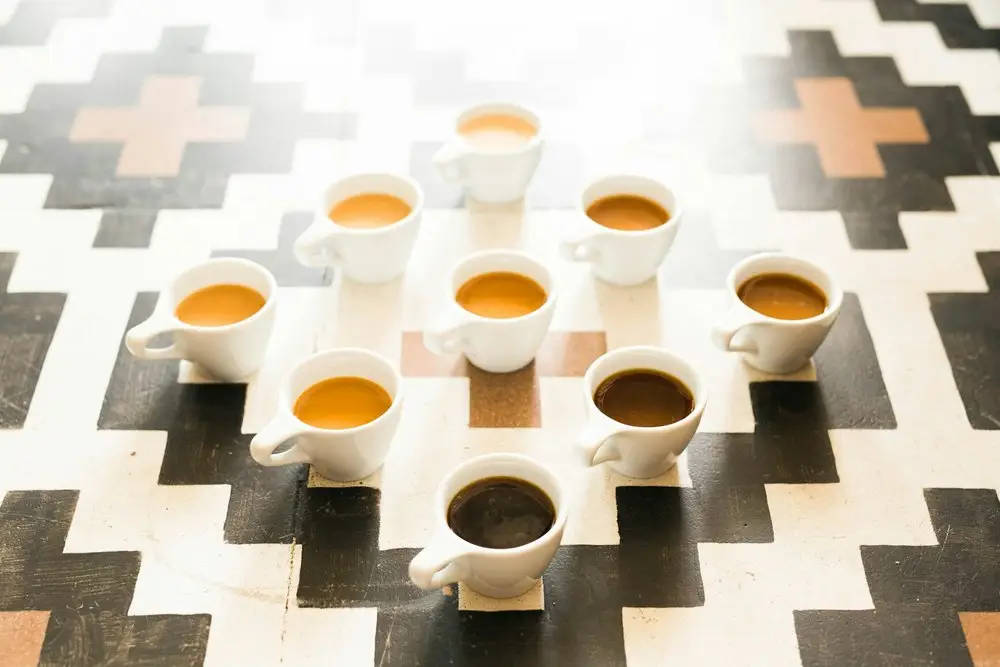
- Bean type: robusta beans carry roughly twice the caffeine of arabica. Our coffee bean types guide explains the two.
- Roast level: the difference is small. Roasting barely changes caffeine, and dark roast can measure slightly lower by the scoop because the beans are lighter. Our light vs dark roast guide covers the myth.
- How much coffee you use: a stronger brew has more. See how it changes in coffee to water ratio and how many coffee beans per cup.
- Brewing: finer grinds, hotter water and longer contact time pull out more caffeine.
- Serving size: a bigger cup means more coffee, and often more shots.
Espresso, drip and cold brew: which has the most?
Per ounce, espresso has roughly five times the caffeine of drip coffee. Per serving, it is the other way round, because a shot is about 1 oz and a mug of drip is 8 to 12. That is why a single espresso often has less caffeine than a mug of drip coffee. Cold brew concentrates can be very strong, though a diluted glass lands around 100 to 200 mg per 8 oz. Our espresso vs coffee guide and cold brew vs espresso guide compare them in detail, and what cold brew is explains why cold brew varies.
How much caffeine is too much?
The FDA cites 400 mg a day as an amount not generally associated with negative effects for healthy adults, which it equates to about two to three 12 oz cups of coffee. It also says toxic effects such as seizures can appear with rapid consumption of around 1,200 mg. People differ a lot in how they respond, so 400 mg is a ceiling for most people, not a target.
Pregnancy is different. The American College of Obstetricians and Gynecologists says moderate caffeine intake, under 200 mg a day, does not appear to be a major factor in miscarriage or preterm birth. If you are pregnant, trying to conceive or breastfeeding, or you take medication, talk to your doctor about your own limit.
How many cups get you to 400 mg?
The FDA’s 400 mg figure is easier to use with real cup sizes. This table uses about 95 mg per 8 oz, the average for brewed coffee, so treat the results as a guide. A strong brew or a heavy hand with the scoop gets you there sooner.
| Cup size | Caffeine at 95 mg per 8 oz | Cups to reach 400 mg |
|---|---|---|
| 8 oz | About 95 mg | About 4 |
| 12 oz | About 143 mg | About 3 |
| 16 oz | About 190 mg | About 2 |
| 20 oz | About 238 mg | Under 2 |
That is the reason a couple of large takeaway coffees can take you to the limit before lunch. Espresso works differently: at about 63 mg a shot, it takes more than six single shots to reach 400 mg.
Signs you have had too much, and how long caffeine lasts
Too much caffeine can bring jitters, a racing heart, anxiety, an upset stomach and trouble sleeping, and how sensitive you are varies a lot from person to person. If coffee makes you feel that way, the fix is usually a smaller cup, fewer shots or a switch to decaf for the second cup.
Caffeine also lingers. The half-life is about five hours in many adults, which means half of a morning cup can still be in your system in the afternoon, and it can be longer with some medications or in pregnancy. If your sleep suffers, moving your last cup earlier is often the simplest change.
Caffeine in decaf
Decaf is low in caffeine, not free of it. A cup usually has about 2 to 15 mg, which is a small fraction of a regular cup. A few cups still add up, so count them if you are watching your total. The full explanation is in our guide to whether decaf has caffeine, and our best decaf coffee roundup picks the beans that taste good.
How to cut down without giving up coffee
- Go smaller: a 12 oz cup instead of 20 oz saves a lot.
- Swap the second cup for decaf: you keep the habit and the flavor.
- Use fewer shots: a single-shot latte has about half the caffeine of a double. If you wonder whether blonde roast is stronger, see blonde vs regular espresso.
- Try half-strength instant: a spoonful of instant has less caffeine than a full brewed cup. Our best instant coffee roundup covers the options.
- Watch the clock: caffeine takes hours to clear, so an afternoon coffee can still affect your sleep.
The bottom line
An 8 oz cup of coffee has about 95 mg of caffeine, but the range runs from about 75 mg to well over 300 mg once you count large cups and strong brews. Keep an eye on serving size and the number of shots, and you will have a good idea of your daily total. There are more guides in our coffee drinks section.
Frequently Asked Questions About Caffeine in Coffee
A typical 8 ounce cup of brewed coffee has about 95 mg of caffeine. The range runs from roughly 75 to 165 mg depending on the beans and the brew.
The FDA cites 400 mg a day as an amount not generally associated with negative effects for most healthy adults. That is about two to three 12 ounce cups of coffee. Pregnant people are advised to stay under about 200 mg a day.
Espresso has more per ounce, about 63 mg in a 1 ounce shot. A full mug of drip coffee usually has more in total, because the serving is much larger.
Only slightly. Roasting changes caffeine very little, and any difference is small next to the effect of how much coffee you use and how you brew it.
Yes, a small amount. A typical 8 ounce cup of decaf has about 2 to 15 mg, compared with about 95 mg for regular brewed coffee.
It often is per glass. A diluted cold brew commonly holds about 100 to 200 mg per 8 ounces. The amount depends on how concentrated the batch is and how much it is diluted.
 Austin Barker
Founder & Lead Editor
Seven years behind a bar before starting Brewing Coffees. Writes most of the equipment coverage and tests every machine on this site in an ordinary home kitchen.
Austin Barker
Founder & Lead Editor
Seven years behind a bar before starting Brewing Coffees. Writes most of the equipment coverage and tests every machine on this site in an ordinary home kitchen.