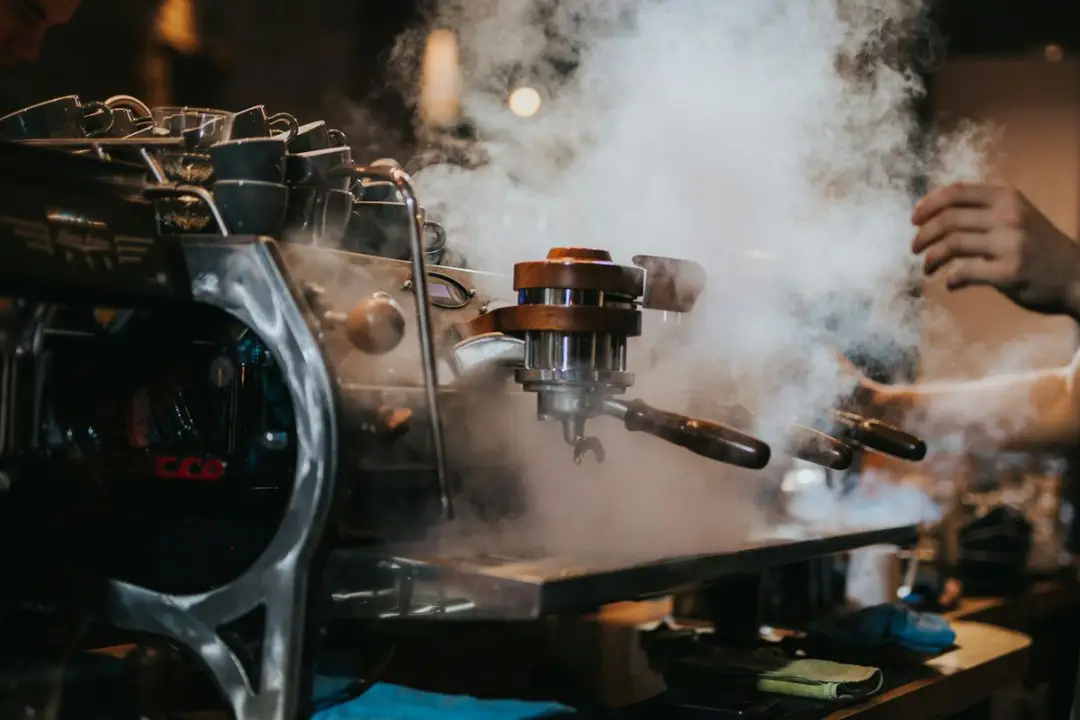
The best espresso machine for you depends on three things: your budget, whether you want to grind your own beans, and how much you actually want to play barista. Spend $150 and you’ll get a capsule machine. Spend $300 and you’ll get a real espresso machine you press one button on. Spend $700+ and you’ll get a machine with a built-in grinder, PID temperature control, and the ability to pull café-quality shots at home.
This guide covers the three espresso machines we’d actually recommend for home use in 2026, across price tiers and skill levels. All three are widely available on Amazon US, all three are proven workhorses in serious home setups, and all three give you the option to grow your barista skills over time rather than capping you at one trick.
The 3 Best Espresso Machines at a Glance
- Best for beginners: Breville Bambino Plus
- Best all-in-one: Breville Barista Express
- Best for manual enthusiasts: Gaggia Classic Evo Pro
Below, we break down each pick, who it’s for, what it does well, and where it falls short. We’ve also included a buying guide and side-by-side comparison further down to help you choose.
What to look for in a home espresso machine
Before the picks, the variables that actually matter:
- Pressure: Real espresso requires 9 bars of pressure. Capsule machines use 19 bars (engineered crema). Most real espresso machines deliver 9 bars consistently, some “espresso makers” only hit 4-6 bars and produce something more like strong coffee.
- Temperature control (PID): The single biggest factor in shot quality. PID-controlled machines hold water temperature to within ±1°F. Cheap machines swing 10–15°F, which means inconsistent extraction.
- Steam wand: If you want lattes or cappuccinos, you need a steam wand that produces real microfoam. Automatic frothers (like the Bambino Plus) work but limit your texture control. Manual wands give café-level milk but take practice.
- Built-in grinder: Convenient, but locks you in. Separate grinders give better grind quality and let you upgrade independently. See our best coffee grinder guide for standalone options.
- Footprint: Most home espresso machines are 12–15 inches wide. The Bambino Plus is the most compact at 7.7 inches.
Best for beginners: Breville Bambino Plus
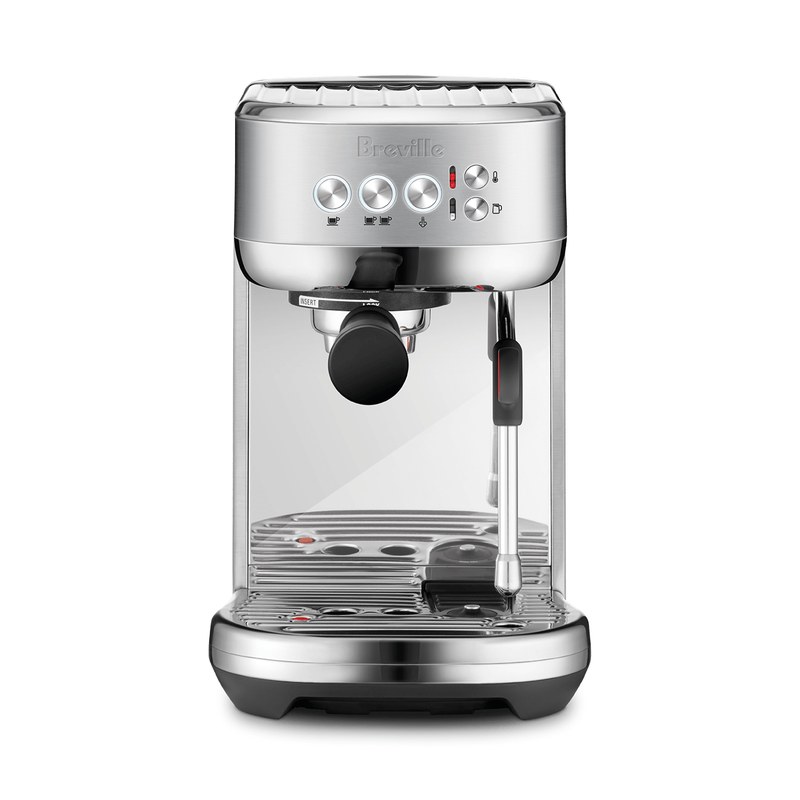
The Breville Bambino Plus is the espresso machine we recommend most often to people buying their first proper home machine. It’s compact (7.7 inches wide, fits anywhere), heats up in 3 seconds thanks to Breville’s ThermoJet system, and the automatic steam wand handles milk texture without making you learn microfoam from scratch. Around $499 at retail.
The Bambino Plus uses a real 9-bar pump (not the engineered-crema 19-bar that capsule machines use) and has PID temperature control built in. The auto-purge feature ensures every shot is at correct extraction temperature, even if you just steamed milk. The trade-off vs the Barista Express below: no built-in grinder. You’ll need a separate grinder (we recommend the Baratza Encore or Breville’s Smart Grinder Pro).
For the kind of buyer who wants to make café-quality cappuccinos and lattes at home but doesn’t want to spend an hour every morning being a barista, this is the right machine. The automatic milk wand is the single most underrated feature in home espresso, three milk textures and three temperatures, one button each.
Best all-in-one: Breville Barista Express
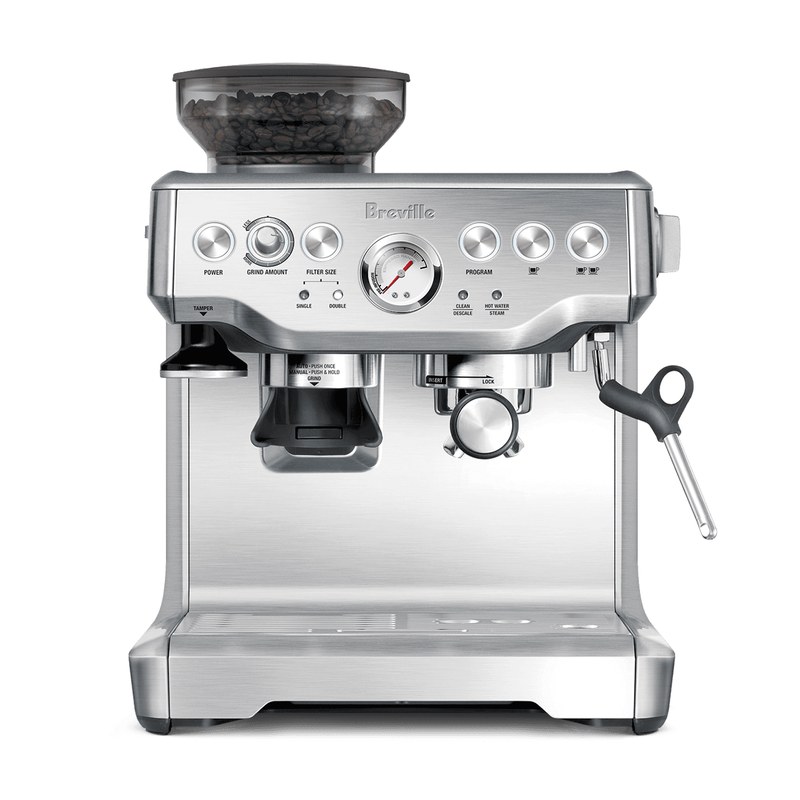
The Breville Barista Express is the right machine when you want everything in one footprint, espresso machine, conical burr grinder, and dosing system all integrated. Grind, dose, tamp, brew, all from one machine. Around $699–$799.
The Barista Express has a built-in conical burr grinder with 16 grind settings, a steam wand (manual, not auto, more control once you learn microfoam), and full PID temperature control. The “all-in-one” pitch is real: there’s a built-in grinding cradle that grinds directly into your portafilter, so you skip the awkward transfer step.
The trade-off vs going with a separate machine + grinder: the integrated grinder is solid but not best-in-class. If you’re a serious bean-curious home barista who rotates through specialty beans, you’ll eventually want a higher-end standalone grinder anyway. But for $200 more than the Bambino Plus, you get an espresso-ready setup with no extra purchases, and most people never feel the need to upgrade. The newer Barista Express Impress (B0BBYNPV33) adds auto-tamping for $200 more if you want that feature.
Best for manual enthusiasts: Gaggia Classic Evo Pro
The Gaggia Classic Evo Pro is the espresso machine for the home brewer who wants to actually learn the craft. Single-boiler, commercial-style 58mm portafilter, manual steam wand, no automation, you control every variable. Around $499.
The Gaggia is the slowest of the three machines here (you steam milk after pulling the shot, not simultaneously) and it has the highest learning curve. There is no PID temperature control out of the box (you can add a PID kit later, there’s a thriving aftermarket). The single boiler means you wait between steaming and brewing. But the manual workflow is exactly the appeal: this is a machine you’ll keep upgrading and learning on for years.
The Evo Pro is built almost entirely of metal, commercial-quality components in a home-sized footprint. The 9-bar pump is the same pump found in machines costing $1,500+. With a PID kit, naked portafilter, and decent grinder (the Baratza Encore ESP is the right pairing), it produces espresso shots indistinguishable from a specialty café. Check the current Gaggia Classic Evo Pro price on Amazon.
Espresso machine comparison table
| Machine | Grinder included | Steam wand | Best for | ~Price |
|---|---|---|---|---|
| Breville Bambino Plus | No | Automatic | Beginners, small kitchens | $499 |
| Breville Barista Express | Yes (conical burr) | Manual | All-in-one home setup | $699 |
| Gaggia Classic Evo Pro | No | Manual | Enthusiasts, learn the craft | $499 |
For most buyers, the order is: Breville Bambino Plus if you want best-experience for least effort. Breville Barista Express if you want one machine that does everything. Gaggia Classic Evo Pro if you want to learn the craft and grow into a more advanced setup over time.
Other espresso machines worth knowing
- De’Longhi La Specialista Arte: Premium alternative to the Barista Express around $700 with integrated grinder + manual steam wand. Italian design, slightly smaller capacity.
- Rancilio Silvia: The legendary “Miss Silvia”, manual single-boiler, almost identical workflow to the Gaggia but with even better build quality. Around $750. The grail for many home baristas.
- Breville Oracle Touch: Premium fully-automatic, touchscreen, auto-grinding, auto-milk, auto-tamping. Around $2,500. For people who want café quality without learning the craft.
- Nespresso Vertuo / Original: Not “real” espresso but very convenient. See our best Nespresso machine guide.
- Keurig: Not espresso at all, but covered separately. See best single-serve coffee maker if that’s what you actually want.
What else do you need for home espresso?
The machine is half the setup. The other half:
- A burr grinder (essential unless you bought the Barista Express). See our best coffee grinder guide.
- Fresh espresso beans, within 4 weeks of roast date. The same beans you brew espresso with can also be used for the cappuccino and latte guides we have.
- A digital scale, espresso is brewed by weight (18g in → 36g out for a standard double shot). See our coffee to water ratio guide for the full math.
- A milk pitcher, 12 or 20oz stainless steel. Around $15.
- A tamper, most machines come with a basic plastic one; upgrade to a 58mm metal tamper for $20.
For the brewing process itself, see our companion guide on how to make espresso at home. For caffeine math and how espresso compares to regular coffee, see caffeine in a shot of espresso.
The bottom line
The best home espresso machine for most buyers in 2026 is the Breville Bambino Plus, best balance of price, footprint, and ease-of-use. Step up to the Barista Express if you want a grinder built in. Pick the Gaggia Classic Evo Pro if you want to learn the craft and value workmanship over convenience.
The right espresso machine is the one you’ll actually use every day. A $2,500 Oracle Touch sitting unused does worse than a $499 Bambino Plus pulling two shots a day. Pick the one that matches your real morning routine.
Ready to actually pull a shot? Our how to make espresso at home walkthrough covers grind, dose and tamp. If you want milk-drink versatility, see the best home cappuccino machines, and the best French presses stay handy for slower mornings. If you’re working with a tighter budget, see our picks for the best budget espresso machines under $200. There is more to read on coffee gear.
FAQs About the Best Espresso Machine
For most buyers the Breville Bambino Plus is the right pick at around $499, compact 7.7-inch footprint, 3-second heat-up, automatic milk wand, real 9-bar extraction with PID temperature control. For an all-in-one with built-in grinder the Breville Barista Express at around $699. For manual enthusiasts who want to learn the craft, the Gaggia Classic Evo Pro at around $499.
$300–$700 is the sweet spot for a real home espresso machine. Below $300 you typically get 4–6 bar pressure machines that don’t pull true espresso. $300–$500 buys solid entry-level machines like the Bambino Plus or Gaggia Classic. $700+ gets you built-in grinders (Barista Express) or premium build quality (Rancilio Silvia, La Specialista). Above $1,500 you’re paying for automation (Oracle Touch) rather than shot quality.
Yes, unless you buy a machine with one built in (like the Breville Barista Express). The grinder matters more than the machine for shot quality, a $500 espresso machine with a $200 burr grinder beats a $1,000 machine with pre-ground coffee every time. Pre-ground espresso loses freshness in days, not weeks. See our best coffee grinder guide for the right grinder picks.
Bambino Plus if you already own (or plan to buy) a separate grinder, want a smaller footprint, and don’t want to learn manual milk steaming. Barista Express if you want everything in one machine, built-in conical burr grinder, manual steam wand, integrated dosing, and have the counter space. The Barista Express is $200 more but saves you buying a separate grinder.
Real espresso requires 9 bars of pressure, that’s the global standard. Some marketing materials advertise 19 or 20 bars, but those are typically for capsule machines (Nespresso) where the extra pressure creates engineered crema on top of the coffee. For traditional espresso machines, 9 bars at the puck is the goal; any ‘extra’ pressure above that is marketing or applies to a different part of the system. All three machines in our guide deliver real 9-bar shots.
A real espresso machine (any of the three in this guide) makes objectively better espresso than Nespresso. It also makes worse espresso if your technique is bad. Nespresso gives you ‘good enough’ espresso with zero learning curve at $150–$250. Real espresso machines give you ‘great’ espresso with a learning curve at $500+. If you make 1–2 shots a day and don’t want to think about it, Nespresso wins. If you want to learn the craft and value the cup quality ceiling, real espresso machine.
 Austin Barker
Founder & Lead Editor
Seven years behind a bar before starting Brewing Coffees. Writes most of the equipment coverage and tests every machine on this site in an ordinary home kitchen.
Austin Barker
Founder & Lead Editor
Seven years behind a bar before starting Brewing Coffees. Writes most of the equipment coverage and tests every machine on this site in an ordinary home kitchen.