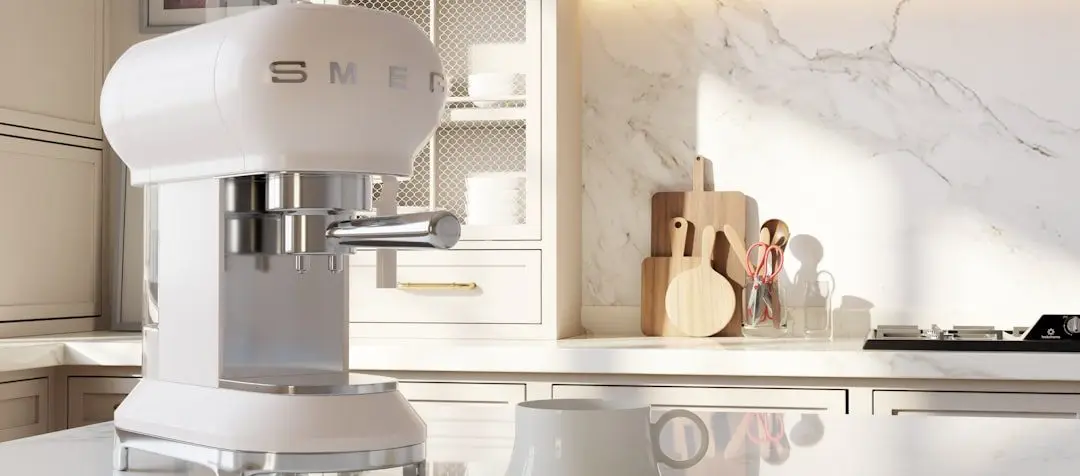
You don’t need to spend $500 to pull a real shot of espresso at home. A handful of pump and manual machines in the $100–200 range use genuine 9-bar-capable pumps or lever mechanisms and can produce real, crema-topped espresso, the tradeoffs versus a $500+ machine are build durability and temperature stability under heavy use, not whether it can make espresso at all.
If you’re ready to spend more, see our full best espresso machine guide for higher-end picks. Want the grinder built in too? See our best espresso machines with a grinder. Furnishing an office instead? Check our best office coffee machines. This one is scoped specifically to genuine budget machines.
The 5 Best Budget Espresso Machines at a Glance
- Best Overall: De’Longhi Stilosa (EC260BK)
- Best Value: Gevi 20-Bar Espresso Machine
- Biggest Water Tank: CASABREWS CM5418
- Best Manual (No Electricity): Flair NEO Flex
- Best With Built-In Grinder: Mueller Austria Premium
Below, we break down each pick, followed by a buying guide and side-by-side comparison table to help you choose.
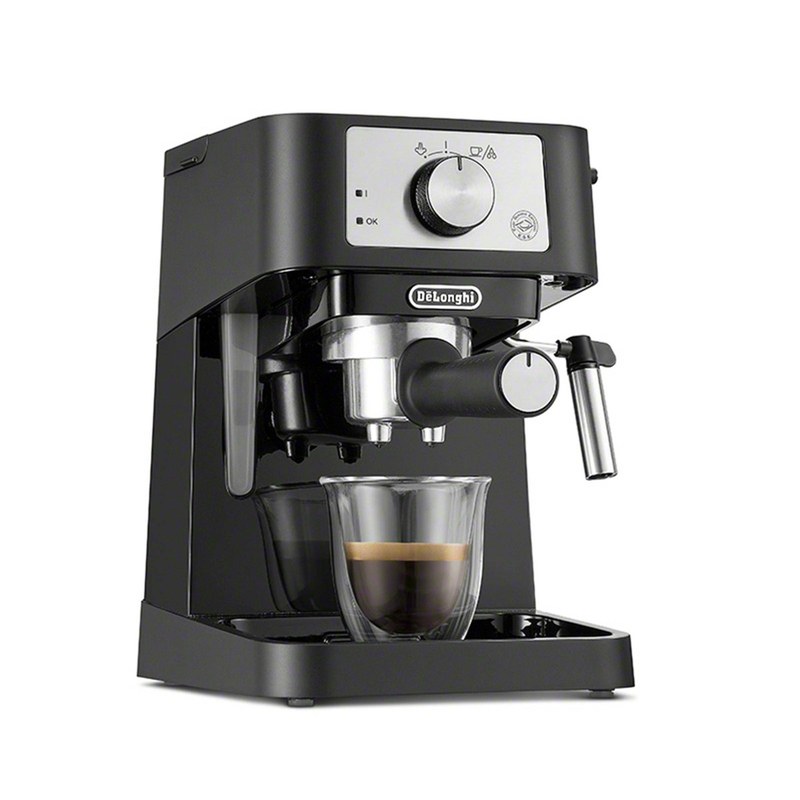
Best Overall: De’Longhi Stilosa (EC260BK)
Highlights
- Genuine 15-bar pump with a stainless steel boiler
- Manual steam wand for lattes and cappuccinos
- Compact footprint, easy to fit on a small counter
- No digital display or programmable shots, fundamentals only
The Stilosa is widely regarded as the one authentic pump espresso machine reliably available under $150. It’s not fancy, but the fundamentals are real: a genuine 15-bar pump and a stainless steel boiler rather than the plastic internals some budget machines cut corners with.
It comes with a manual steam wand capable of basic microfoam for lattes and cappuccinos, and its compact footprint makes it one of the easiest machines here to fit on a small counter.
The tradeoffs: the water reservoir and drip tray are both on the small side, meaning more frequent refills and emptying, and the learning curve for dialing in a good shot is steeper than on machines with more guardrails.
Best Value: Gevi 20-Bar Espresso Machine
The Gevi 20-Bar Espresso Machine pairs a large 40.6oz water tank with a built-in steam wand, at one of the lowest prices in this roundup.
The “20 bar” figure is the pump’s maximum rated pressure, not the pressure it actually brews at, every well-made espresso machine, budget or otherwise, targets around 9 bar during a normal shot (see our buying guide section below for more on this). Treat the 20-bar number as a spec-sheet detail, not a performance guarantee over the Stilosa’s 15-bar pump.
It’s a solid, no-frills option if a bigger tank and lower price matter more to you than brand reputation, just don’t expect the bar number alone to translate into better espresso.
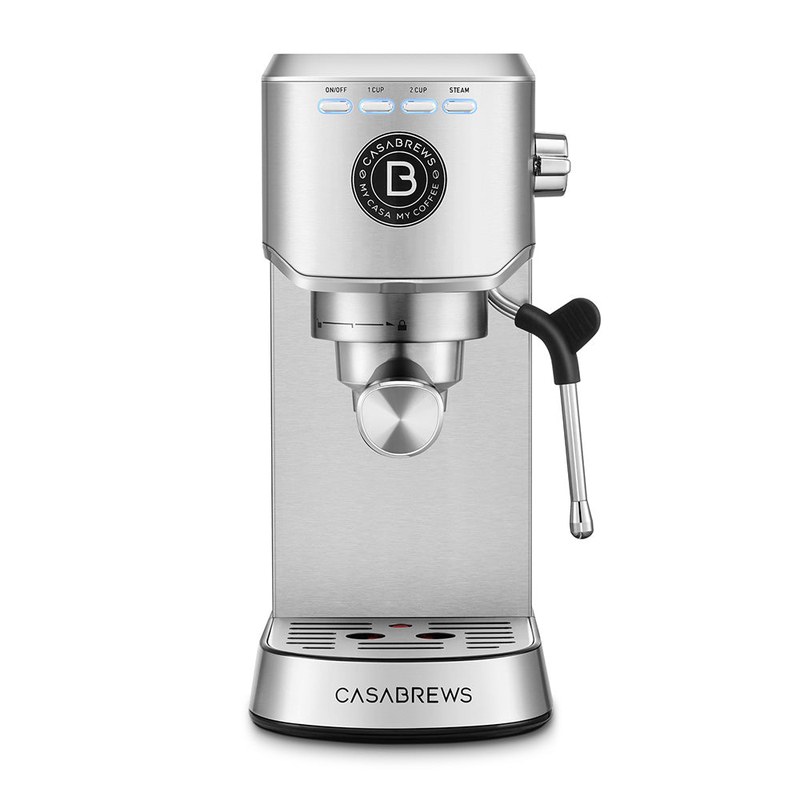
Biggest Water Tank: CASABREWS CM5418
Highlights
- 34oz water tank, the largest in this roundup
- 20-bar Italian pressure pump
- Built-in steam wand for milk drinks
- Consistently good beginner reviews
The CASABREWS CM5418 has the largest reservoir in this lineup at 34oz, plus a 20-bar pump and a steam wand, and earns consistently good reviews from beginners specifically.
It’s a lesser-known brand than De’Longhi or Breville, which is the main tradeoff, there’s less of a long track record to point to, and some owners report mixed long-term durability. For the price, though, it’s a genuinely capable entry point.
If tank size and steam-wand milk drinks matter more to you than brand history, this is worth a look.
Best Manual (No Electricity): Flair NEO Flex
The Flair NEO Flex is a genuinely different category from the rest of this list: a fully manual lever espresso maker with no electricity, no pump, and no plug. You pull a lever to generate brewing pressure yourself, targeting the same roughly 9-bar standard as an electric pump machine.
At around $99–120, it undercuts every pump machine here on price, and it’s genuinely portable, no outlet needed. The tradeoff is a real learning curve to pull a consistently good shot, and there’s no steam wand at all, so it’s a good fit for someone who drinks espresso or Americanos black rather than milk-based drinks.
If you want milk drinks, pair it with a standalone milk frother rather than expecting this machine to steam anything.
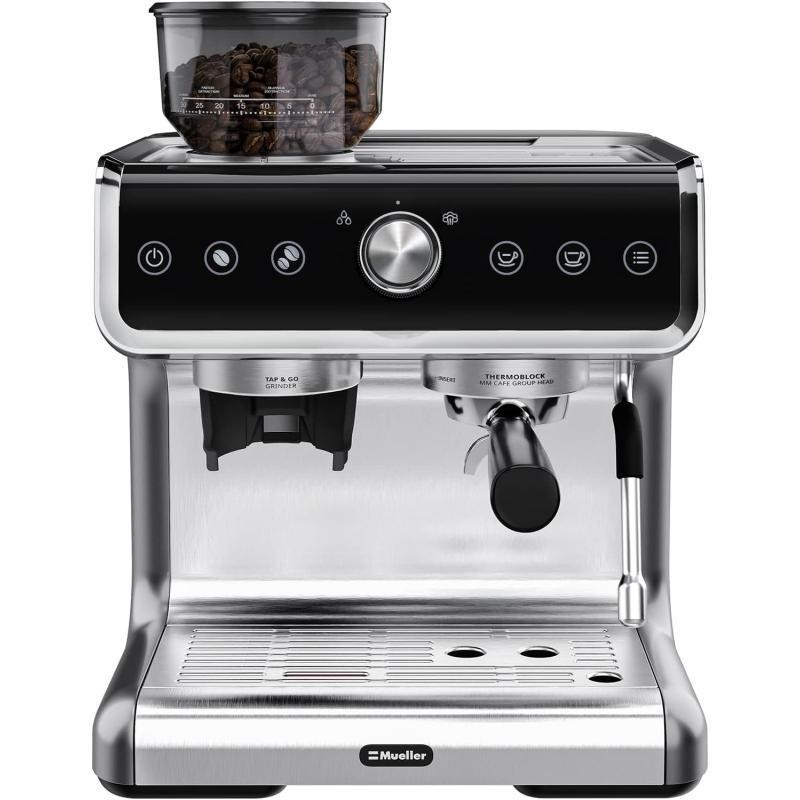
Best With Built-In Grinder: Mueller Austria Premium
Highlights
- Built-in conical burr grinder, the only pick here with one
- 3-liter water tank, the largest true reservoir in this roundup
- 15-bar pump with steam wand
- Standard and bottomless portafilters included
The Mueller Austria Premium is the only machine in this roundup with a built-in grinder, plus the largest true reservoir here at 3 liters and a 15-bar pump with steam wand.
Grinding fresh beans right before brewing is a real quality upgrade over pre-ground coffee, and having it built into a sub-$200 machine is unusual. The grinder itself is entry-level, don’t expect the consistency of a dedicated standalone burr grinder, and more built-in parts means more to maintain over time.
If you don’t already own a grinder and don’t want to buy one separately, this is the simplest all-in-one starting point on this list.
Budget Espresso Machines Compared
| Machine | Price | Pressure | Tank Size | Steam Wand | Type |
|---|---|---|---|---|---|
| De’Longhi Stilosa | ~$100–150 | 15 bar | Small | Yes | Semi-auto |
| Gevi 20-Bar | ~$100–130 | 20 bar | 40.6 oz | Yes | Semi-auto |
| CASABREWS CM5418 | ~$110–140 | 20 bar | 34 oz | Yes | Semi-auto |
| Flair NEO Flex | ~$99–120 | ~9 bar (manual) | N/A | No | Fully manual |
| Mueller Austria Premium | ~$130–170 | 15 bar | 3 L | Yes | Semi-auto + grinder |
Buying Guide: What Actually Matters at This Price
Is a budget espresso machine actually worth it?
Yes, for basic espresso and milk drinks. A $100–200 pump machine with a functional 9-bar brewing pressure can produce real crema-topped shots. The main tradeoffs versus a $500+ machine are build durability and how consistent the temperature stays across back-to-back shots, not whether it can make espresso at all.
What does “15 bar” or “20 bar” actually mean?
It’s the pump’s maximum rated pressure ceiling, not the pressure delivered during a normal shot. Actual brewing pressure on any well-made machine, budget or premium, should land around 9 bar. A higher bar number on a budget machine is largely a marketing spec, not a guarantee of better espresso.
What’s the biggest upgrade you can make on a budget setup?
A decent burr grinder for fresh, consistent grounds outperforms upgrading to a pricier all-in-one machine while still grinding stale pre-ground coffee. Fresh grind consistency matters more to shot quality than most other single upgrades at this price point.
Once you’ve got one set up, regular maintenance keeps it running well, see our how to descale an espresso machine guide. Curious why the pricier machines cost so much more? See our breakdown of why espresso machines are so expensive.
More on coffee gear across the site.
Frequently Asked Questions About Budget Espresso Machines
Yes for basic espresso and milk drinks, a $100 to $200 pump machine with a functional 9-bar pressure can produce real crema-topped shots. The main tradeoffs versus $500+ machines are build durability and temperature stability under repeated use.
It’s the pump’s maximum rated pressure ceiling, not the pressure delivered during a normal shot. Actual brewing pressure on a well-made machine, budget or premium, should land around 9 bar, a higher bar number is largely a marketing spec.
Yes, manual levers give direct control over brew pressure, targeting the same roughly 9-bar professional standard, though they have a steeper learning curve than pump machines.
Rarely, most $100 to $200 machines expect pre-ground coffee or a separate grinder. The Mueller Austria Premium is a rare built-in-grinder exception at this price.
A decent burr grinder for fresh, consistent grounds, it outperforms upgrading to a pricier all-in-one machine while still using stale pre-ground coffee.
Most in this price range include a manual steam wand capable of basic microfoam, though texture quality lags behind $400+ machines. The Flair NEO is the exception, with no steam wand at all.
Commonly 2 to 5 years with regular descaling and care, shorter than premium machines, but reasonable for the price point given proper maintenance.
 Austin Barker
Founder & Lead Editor
Seven years behind a bar before starting Brewing Coffees. Writes most of the equipment coverage and tests every machine on this site in an ordinary home kitchen.
Austin Barker
Founder & Lead Editor
Seven years behind a bar before starting Brewing Coffees. Writes most of the equipment coverage and tests every machine on this site in an ordinary home kitchen.