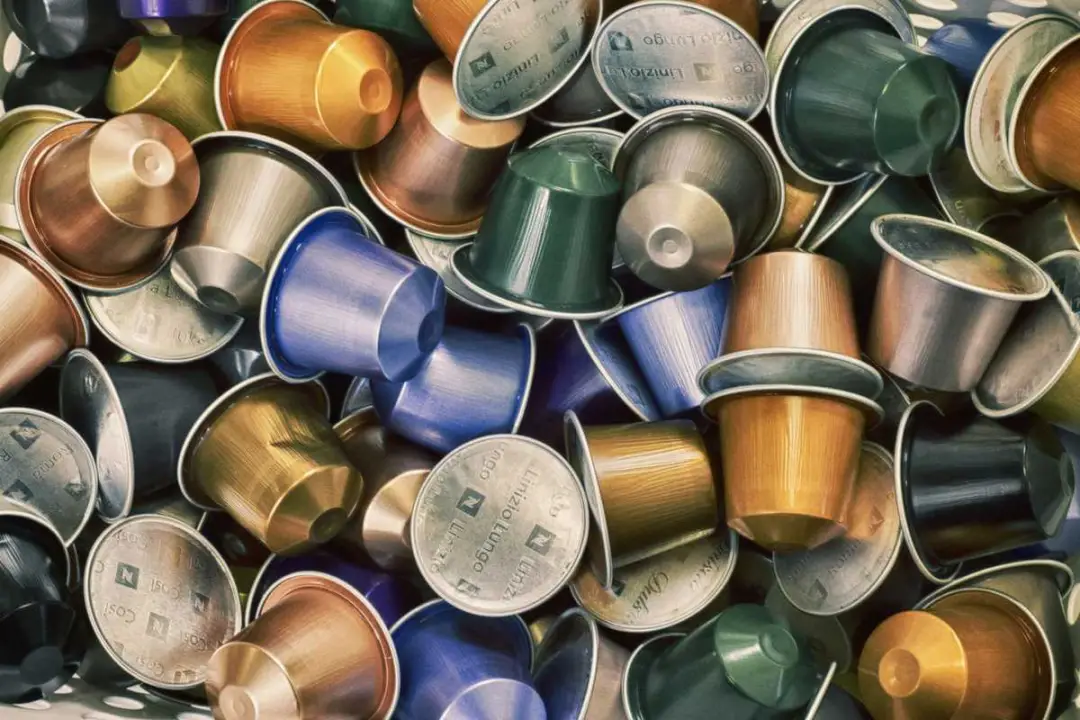
The single most useful thing to know about espresso pods is that the formats are not interchangeable. Nespresso Original, Nespresso Vertuo and ESE are three different systems, and a capsule from one will not work in a machine built for another. Buying the wrong box is the most common and most annoying mistake in pod coffee.
This guide covers what each format is, what a pod actually costs per cup against ground coffee, and which compatible capsules are worth buying once you know which system you own.
What to look for in espresso pods
- Format first. Check your machine before anything else. Original, Vertuo and ESE are mutually incompatible.
- Roast date, if you can find one. Most pod boxes give a best-before date instead, which tells you far less.
- Aluminium over plastic. Aluminium is a better oxygen barrier and is widely recycled; most plastic pods are not.
- Intensity numbers are marketing. They are brand-internal scales and do not compare across brands.
- Compatible does not mean worse. Third-party capsules from real roasters are often fresher than the machine brand’s own.
At a glance
- Best all-round compatible: Lavazza Nespresso-compatible variety pack
- Best tasting: Illy Classico aluminium capsules
- Best aluminium value: Lavazza aluminium variety, 60 capsules
- Best for trying brands: Caffe Assaggio variety sampler
The three formats, and which machines take them
| Format | Machines | Shape | Notes |
|---|---|---|---|
| Nespresso Original | Original line, plus most third-party makers | Small truncated cone | Widest choice of compatible capsules |
| Nespresso Vertuo | Vertuo line only | Domed, barcoded disc | Barcode sets the brew, so almost no third-party options |
| ESE 44mm | Many traditional espresso machines | Flat paper pod | Paper, fully compostable, needs an ESE basket |
| Proprietary (Dolce Gusto, Tassimo) | Own machines only | Various | Not espresso in the nine-bar sense |
The important asymmetry: Vertuo reads a barcode on the rim to decide volume and flow, which is why third-party Vertuo capsules barely exist. Original line has no such lock, which is why almost every roaster makes an Original-compatible capsule. If you are still choosing a machine, that difference matters more than the price.
What a pod actually costs
| Option | Per cup | Per kg equivalent |
|---|---|---|
| Nespresso own-brand Original | About 0.60 to 0.80 | Around 90 |
| Third-party Original-compatible | About 0.25 to 0.40 | Around 50 |
| ESE paper pods | About 0.30 to 0.45 | Around 55 |
| Ground coffee, 18g dose | About 0.20 to 0.35 | Around 15 to 25 |
| Whole beans, ground at home | About 0.15 to 0.30 | Around 12 to 22 |
A pod holds 5 to 6g of coffee against the 18g you would put in a basket, so the per-kilo figure is startling even when the per-cup number looks reasonable. That is the honest trade: you are paying for portioning, packaging and not having to clean anything. If cost per cup is the priority, a grind-and-brew machine pays for itself quickly.
Best all-round compatible: Lavazza variety pack
Lavazza has been roasting since long before capsules existed, and its Nespresso-compatible range is the easiest recommendation for an Original-line machine. The variety pack is the sensible starting point because intensity numbers are meaningless across brands and tasting your way through is the only real method.
Best tasting: Illy Classico
Illy’s aluminium capsules are the closest a pod gets to a well-made cafe shot. The Classico blend is 100 percent arabica, which shows as a rounder, less aggressive cup than most pods manage, and the aluminium shell keeps it that way on the shelf. It costs more per capsule than Lavazza and it is worth it if you drink pods black. There is more to read on coffee gear.
Best aluminium value: Lavazza 60-capsule variety
The same aluminium construction in a larger box, spanning light, medium and dark roasts plus decaf. If you already know you get on with Lavazza, this is the cheapest way to keep a drawer stocked without committing to one roast.
Best for trying brands: Caffe Assaggio sampler
A single box mixing Illy, Starbucks, L’Or and Lavazza capsules, all Original-compatible. Genuinely useful as a first purchase, because it settles the brand question in one go rather than across four boxes you may not finish.
Are pods real espresso?
If the machine reaches around nine bars of pressure, yes, in the technical sense. You get a genuine extraction and real crema. What you do not get is control: the dose, grind and tamp are all fixed at the factory, so there is nothing to adjust when a shot tastes off. That is the appeal for most people and the limit for the rest. If you want to change variables, see making espresso at home and our espresso machine picks.
Recycling, honestly
Aluminium capsules are recyclable but not through most kerbside collections, because they are small and contain wet grounds. Nespresso runs its own return scheme and it works, but it needs you to actually use it. ESE paper pods are the genuinely compostable option and go straight in with food waste. Plastic capsules are the worst case and mostly are not recycled anywhere.
Refillable capsules, and whether they are worth it
Stainless steel refillable capsules exist for most Original-line machines. You fill them with your own grounds, which drops the cost per cup to the price of the coffee and removes the packaging entirely. They work, with caveats.
- Grind matters more than in a basket. Too coarse and water rushes through; too fine and the machine stalls. Expect a week of adjustment.
- Dose is fixed by the capsule volume, usually 5 to 7g, so you cannot compensate for a coarse grind by adding more.
- You must tamp lightly. Original-line machines pierce the capsule, and an over-tamped puck can block entirely.
- Cleaning is a per-cup job. That is the real cost, and it is the reason most people who buy them stop using them.
Honest verdict: worth it if you already grind your own and want a pod machine for speed. Not worth it if pods are how you avoid all of that, which is the usual reason for owning one in the first place.
Decoding intensity numbers
Almost every pod brand prints an intensity scale, and none of them mean the same thing. They are internal marketing scales, not measurements, so a 7 from one brand may be darker or lighter than a 7 from another.
| What the number tracks | What it does NOT tell you |
|---|---|
| Roast level, loosely | Caffeine content |
| Perceived bitterness | Actual strength in the cup |
| Body and mouthfeel | How much coffee is in the capsule |
| Position within THAT brand’s range | Anything comparable across brands |
Counter-intuitively, darker roasts usually carry slightly less caffeine by weight than lighter ones, because caffeine degrades a little with longer roasting. So a high intensity number does not mean a stronger hit. Figures per drink are in caffeine in a shot of espresso.
Pods against buying a cheap espresso machine
| Pod machine | Entry espresso machine | |
|---|---|---|
| Upfront | £60 to £180 | £150 to £400 plus a grinder |
| Per cup | 25p to 80p | 15p to 30p |
| Time per cup | About 30 seconds | 3 to 5 minutes |
| Consistency | Identical every time | Depends on you |
| Ceiling on quality | Fixed at the factory | Much higher |
| Cleaning | Empty the bin | Backflush, descale, wipe the wand |
The break-even is around two to three years of daily drinking, at which point the machine wins on cost as well as on ceiling. Before that, pods are cheaper in total. If the ceiling is what you care about, see our espresso machine picks and the budget options.
The bottom line
Check your format before you buy anything. On Original line, third-party capsules from real roasters cost half what the machine brand charges and often taste better, so Lavazza for everyday and Illy when you want the good one. On Vertuo you are largely stuck with Nespresso’s own. And if the per-kilo maths bothers you, pods are not the format for you.
FAQs About Espresso Pods
If the machine brews at around nine bars of pressure then yes, you get a real extraction and genuine crema. The difference is control: dose, grind and tamp are fixed when the capsule is made, so there is nothing to adjust if a shot tastes off.
No, and this is the most common mistake. Nespresso Original, Nespresso Vertuo and ESE 44mm are three incompatible systems with different shapes. Vertuo capsules also carry a barcode the machine reads, which is why third-party Vertuo pods barely exist.
Not the sealed ones. Refillable stainless steel capsules exist for most Original-line machines and let you use your own grounds, though getting the dose and grind right takes some trial and error to match a factory-packed capsule.
No. A pod holds 5 to 6g against the 18g in a normal basket, so even at a reasonable price per cup the equivalent cost per kilo is several times that of ground coffee. You are paying for portioning, packaging and not having to clean anything.
Aluminium ones are, but rarely through kerbside collection, since they are small and full of wet grounds. Nespresso operates its own return scheme. ESE paper pods are fully compostable. Most plastic capsules are not recycled anywhere.
Slowly, because they are sealed under inert gas. Aluminium is a better barrier than plastic. Most boxes carry a best-before date rather than a roast date, so you cannot usually tell how old the coffee inside actually is.
 Joel Lewis
Contributor
Italian espresso conventions, and what survives the trip to the US.
Joel Lewis
Contributor
Italian espresso conventions, and what survives the trip to the US.