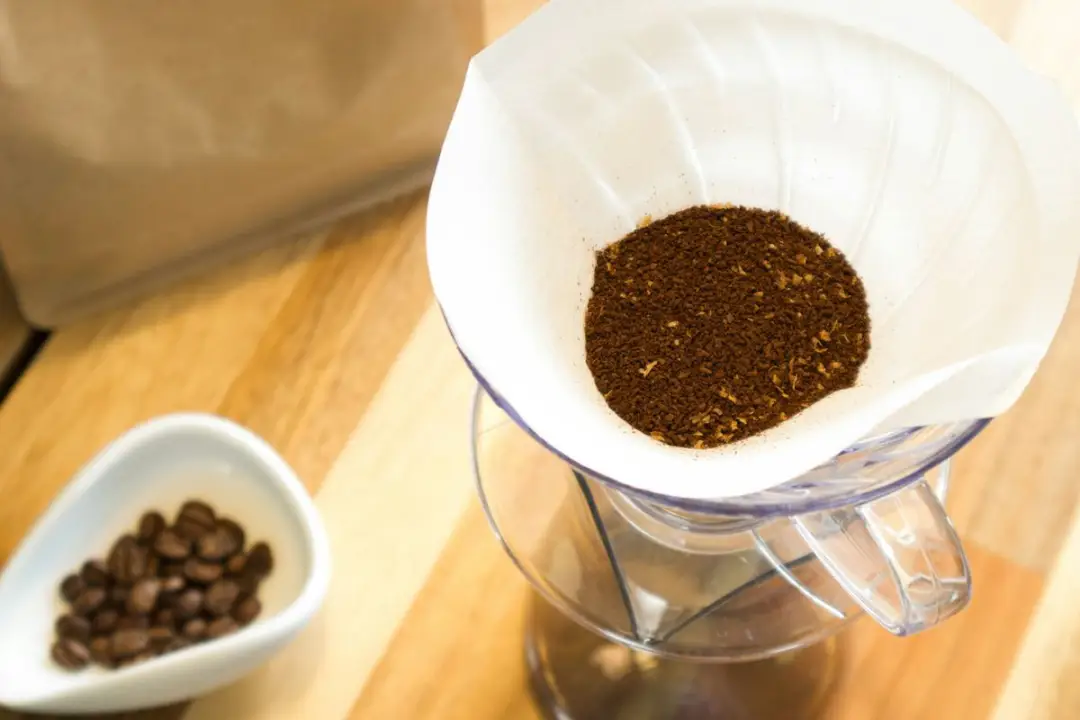
The best pour over coffee maker depends almost entirely on whether you want forgiveness or maximum flavour control. Cone-shaped drippers like the Hario V60 reward technique and produce the brightest cups, but punish bad pours. Flat-bottom drippers like the Kalita Wave are forgiving but slightly less expressive. The iconic Chemex sits in between and looks like a piece of design furniture in your kitchen.
We tested and researched the pour over drippers worth buying in 2026, the V60, Chemex, and Kalita Wave, across price, ease of use, cup quality, and durability. This guide also covers what makes one dripper better than another, plus the gear that turns a good pour over into a great one.
The 3 Best Pour Over Coffee Makers at a Glance
- Best overall: Hario V60 02 Ceramic
- Best for beginners: Kalita Wave 185
- Best for two: Chemex Classic 6-Cup
Below, we break down each pick, who it’s for, what it does well, and where it falls short. We’ve also included a buying guide and side-by-side comparison further down to help you choose.
Why pour over makes better coffee than drip
Pour over gives you full control of every variable, grind, ratio, water temperature, pour rate, bloom time, where a drip machine fixes most of these for you. That control is what produces the bright, expressive, single-origin-friendly cups that pour over is known for. A $40 dripper with good beans makes better coffee than a $300 drip machine with the same beans, every time.
The catch is technique. Pour over is the most demanding home brewing method, bad grind, bad pour, or skipped bloom and the cup will land sour or bitter. The dripper you choose affects how forgiving the method is. A V60 will reveal everything you do wrong; a Kalita Wave will quietly smooth over your mistakes.
For the full brewing method, see our how to make pour over coffee guide. For the gear, read on.
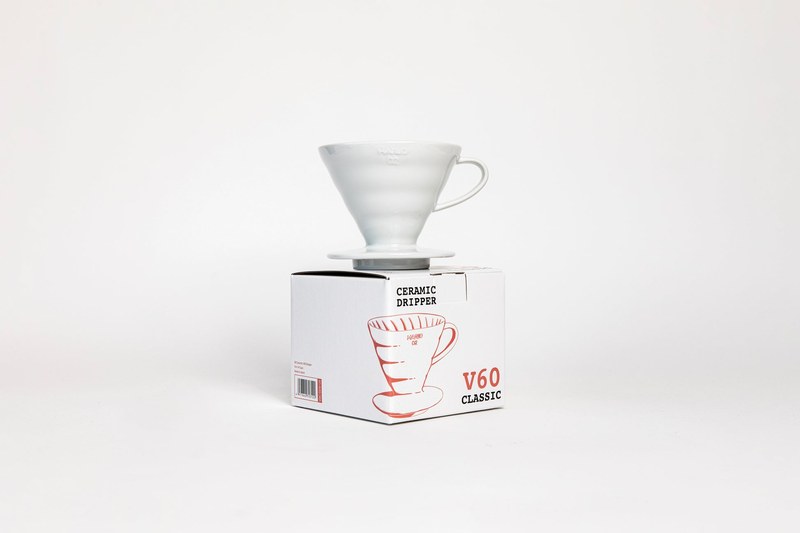
Best overall: Hario V60 02 Ceramic
Highlights
- 60° cone with spiral interior ribs for even extraction
- Single large drain hole, your pour controls flow rate
- Arita-yaki ceramic, made in Japan since 2004
- Produces the brightest, most flavour-forward cup
The Hario V60 is the specialty coffee community’s default pour over dripper for a reason. The 60° cone shape, spiral interior ribs, and single large drainage hole give you full control over flow rate, you decide how slow or fast the water passes through the grounds by adjusting your pour. That control is what produces the cleanest, brightest pour over cups you can make at home.
The Size 02 (1–4 cups) is the right buy for most homes. Ceramic is our pick over plastic because it holds heat better, a cold dripper drops your water temperature 5–10°F during the brew, which under-extracts. Pre-rinsing with hot water solves this, but ceramic gives you margin for error. The “Mugen” version (smooth ribs, no spiral) is a refinement for experienced brewers who want to slow the flow further.
The V60 is the most demanding of the three drippers in this guide. Bad pour technique means channelling (water cutting through one spot) and uneven extraction. With practice it produces the brightest, most expressive single-origin cups of any home brewer. If you want to push your coffee skills, this is the dripper to grow into.
Best for beginners: Kalita Wave 185
Highlights
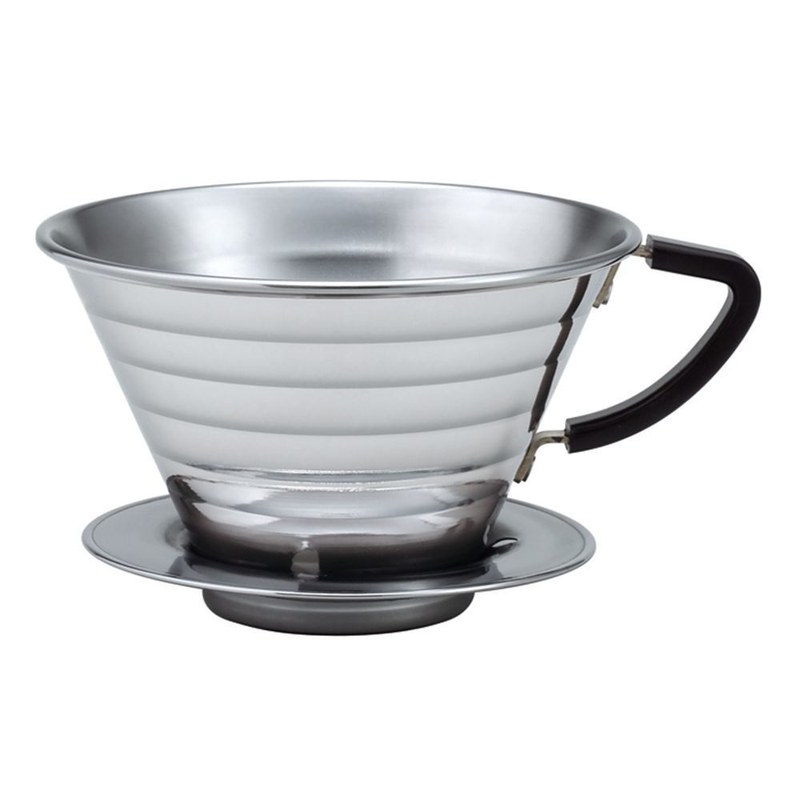
- Flat bottom, forgiving of uneven pours
- Three drainage holes regulate flow consistently
- Stainless steel, indestructible, dishwasher safe
- Wave-shaped paper filters reduce paper-to-coffee contact
The Kalita Wave is the dripper we recommend to anyone starting with pour over. The flat bottom and three small drainage holes regulate water flow more evenly than the V60’s single big hole, uneven pours and channelling have less impact on the final cup because the geometry forces a more consistent contact time across the bed of grounds.
The trade-off versus the V60 is slightly less expressive cups. The flat bottom evens out extraction at the cost of some flavour brightness, single-origin character still comes through, just not quite as vividly. For 95% of home brewers this is the right trade-off; the consistency advantage outweighs the small flavour ceiling.
Stainless steel is also the most durable material for a dripper, no glass to break, no ceramic to chip, no plastic to degrade. The 185 size makes 16–26 oz (about 2 cups). Paper filters (the proprietary wave-shaped ones) are easy to find on Amazon for around $8 per 100. For better grind on the same setup, see our best coffee grinder guide, the right grinder matters more than the right dripper for cup quality.
Best for two: Chemex Classic 6-Cup
Highlights
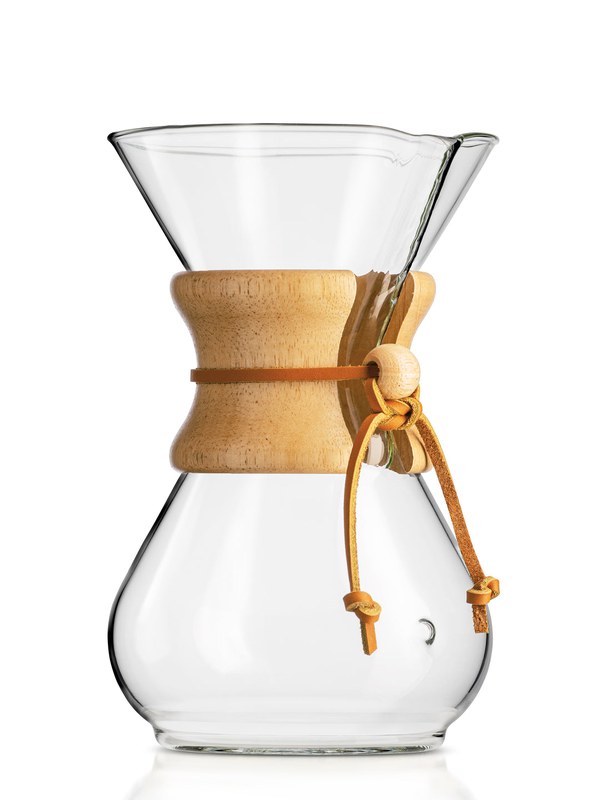
- Single-piece borosilicate glass, brewer and carafe in one
- Thick bonded paper filters produce an exceptionally clean cup
- 6-cup capacity (30 oz), ideal for two-person brewing
- Permanent collection at MoMA, design icon since 1941
The Chemex is the design icon of the pour over world, a single-piece borosilicate glass brewer-and-carafe with a wooden collar and leather tie, designed in 1941 and unchanged since. It’s in the permanent collection of the Museum of Modern Art. It also makes excellent coffee, which is the actual reason to buy it.
The Chemex’s secret is its filters, about 20–30% thicker than standard pour over filters. The thicker paper absorbs more oils and fine particles, producing the cleanest, brightest, most tea-like cup of any home brewing method. Side-by-side with a V60 using the same beans, the Chemex cup tastes more delicate and the V60 cup tastes more full-bodied; both can be great, depending on what you want.
The 6-cup version is the sweet spot for home use, 30 oz total, enough for two large mugs or one carafe-style brew you sip over the morning. The bigger 8-cup and 10-cup versions are for entertaining. Use Chemex’s own bonded paper filters (not generic ones), the proprietary fold is part of what slows the flow into that signature clean cup. For bean recommendations that suit the Chemex’s clean profile, see our best coffee beans for beginners.
Pour over dripper comparison table
| Dripper | Shape | Best for | Cup style | ~Price |
|---|---|---|---|---|
| Hario V60 02 | Cone, 1 hole, spiral ribs | Maximum flavour, advanced | Bright, expressive | $22 |
| Kalita Wave 185 | Flat, 3 holes, ridged | Beginners, forgiving | Balanced, consistent | $40 |
| Chemex 6-Cup | Cone, 1 hole, thick filter | Two-person, brewing for guests | Clean, tea-like | $50 |
If you’re picking one as a first dripper, the Kalita Wave is the most forgiving. If you want to push for maximum flavour and you have a reliable gooseneck kettle, the V60. If you brew for two regularly or you want a centrepiece-style brewer, the Chemex.
What else you need for pour over
The dripper is the cheapest part of a quality pour over setup. The grinder and kettle make at least as much difference to cup quality.
A burr grinder (essential)
Pour over rewards good grinder more than any other brewing method. A blade grinder produces too many fines that clog the filter and create bitter, uneven cups. A $170 Baratza Encore unlocks more pour over flavour than upgrading from a $30 V60 to a $200 high-end dripper would. See our best coffee grinder guide for the picks we recommend.
A gooseneck kettle (highly recommended)
Pour over needs a slow, controlled pour, gooseneck kettles are designed for exactly this. A basic non-electric gooseneck kettle costs around $30 and dramatically improves cup consistency. Electric versions with temperature control (Fellow Stagg EKG, Cosori) are $80–$150 and remove the guesswork from water temperature.
A digital scale
Every cup of pour over should be weighed, coffee in grams, water in grams, total time on a timer. A $15 kitchen scale with 0.1g resolution and a tare button is plenty. For the math, see our coffee to water ratio guide.
Paper filters
Each dripper takes its own filter, V60 cone filters, Kalita Wave filters, Chemex bonded square filters. Don’t substitute one for another. Bleached white filters are fine; brown filters need a thorough rinse to remove papery taste.
Other pour over drippers worth knowing about
Three drippers cover 90% of buyers. A few others worth a quick mention:
- Origami Dripper: Japanese ceramic with vertical ribs, flexible enough to use V60 OR Kalita filters. The flexibility makes it the favourite of pour over obsessives who want one dripper for any filter. $50+.
- Hario V60 Switch: A V60 with a stopper at the bottom, lets you do immersion-style brewing (like a French press) and then release into pour over. Best-of-both-worlds dripper.
- April Brewer / Loveramics Brewer: Newer flat-bottom drippers with slightly different rib geometry. Comparable to Kalita Wave in performance.
- Clever Coffee Dripper: Immersion-based, not technically pour over, but produces clean cups with less skill required.
The V60, Wave, and Chemex are the three drippers that have proven themselves over 10+ years of specialty coffee evolution. The others have niches. If you’re choosing your first pour over dripper, pick one of these three.
What beans should you use with your new pour over?
Pour over rewards light to medium roasts with bright, complex flavour notes. The clean paper filter strips out oils and fines, leaving every flavour in the cup clearly defined. This is where you actually taste the difference between an Ethiopian Yirgacheffe and a Colombian Supremo.
- Ethiopian (Yirgacheffe, Sidamo): Bright, floral, blueberry notes
- Kenyan: Bright, tomato-like acidity, blackcurrant
- Colombian: Balanced, chocolate, nutty
- Costa Rican: Clean, citrus, honey
- Guatemalan: Cocoa, spice, complex
Dark roasts work too but lose much of what makes pour over special, save them for French press. For starter bean recommendations, see our guides to the best coffee beans for beginners and best coffee for French press (for when you want a heavier-bodied cup).
The bottom line
The right pour over dripper depends on your goals. Pick the Kalita Wave if you’re new to pour over or you want a forgiving brewer that produces consistent cups even when your technique is shaky. Pick the V60 if you want maximum flavour and you’re willing to practice your pour. Pick the Chemex if you brew for two or you want a brewer that doubles as a piece of design furniture.
All three make better coffee than your drip machine. The dripper itself is the smallest investment in a quality pour over setup, the grinder, the kettle, and the beans all matter more. Start with the right dripper for your skill level and grow into better gear and beans from there.
Already brewing pour over? See our step-by-step pour over guide. If you brew more than one method, the best French presses and best cold brew makers round out a complete manual setup. Pair your dripper with the right beans too, see our best coffee beans for pour over. More on coffee equipment across the site.
FAQs About Pour Over Coffee Makers
For most home brewers, the Kalita Wave 185 is the right pick, its flat bottom and three drainage holes are more forgiving of uneven pours than the V60’s single hole. For more advanced brewers chasing maximum flavour, the Hario V60 02 Ceramic produces the brightest cups. For brewing for two or hosting guests, the Chemex 6-Cup is the centrepiece pick. All three are reliable; the right choice depends on your skill level and serving needs.
Different cups, both excellent. The V60 produces brighter, more flavour-forward cups because its thinner filters and single big drainage hole let more flavour compounds through. The Chemex produces cleaner, more tea-like cups because its thick bonded filters absorb more oils. If you want maximum flavour intensity, V60. If you want delicate, refined cups (especially for light roasts), Chemex. For brewing for two, Chemex’s 30oz capacity wins.
Flat-bottom drippers (Kalita Wave, Origami) are more forgiving because the geometry evens out water flow regardless of your pour technique. Cone drippers (V60, Chemex) reward technique with brighter, more expressive cups but punish bad pours. Beginners should start flat. Once you’ve nailed the technique, cone drippers give you a higher cup-quality ceiling.
Ceramic is the best heat retention, your dripper stays warm through the brew and water temperature drops less, which prevents under-extraction. Glass (Chemex) is similar. Plastic is the cheapest but cools fastest; pre-rinse with hot water to compensate. Stainless steel (Kalita) is the most durable, won’t break, dishwasher safe, and retains heat almost as well as ceramic. For most home brewers ceramic V60 or stainless Kalita are the sweet spots.
Strongly recommended, not strictly required. Gooseneck kettles let you control the pour rate and direction precisely, which is essential for even extraction on cone drippers (V60, Chemex). With a regular kettle, you can pour into the centre and the flow control is less precise, for the Kalita Wave’s forgiving flat-bottom design, this works okay. For V60 or Chemex, you’ll get noticeably better cups with a gooseneck. Basic models start around $30.
$20–$50 is the sweet spot for the dripper itself. The Hario V60 02 Ceramic is around $22, the Kalita Wave 185 around $40, the Chemex 6-Cup around $50. Spending more on the dripper itself doesn’t significantly improve cup quality. Spend extra money on a quality burr grinder and a gooseneck kettle, both upgrades make more difference to your final cup than a more expensive dripper would.
 Austin Barker
Founder & Lead Editor
Seven years behind a bar before starting Brewing Coffees. Writes most of the equipment coverage and tests every machine on this site in an ordinary home kitchen.
Austin Barker
Founder & Lead Editor
Seven years behind a bar before starting Brewing Coffees. Writes most of the equipment coverage and tests every machine on this site in an ordinary home kitchen.