

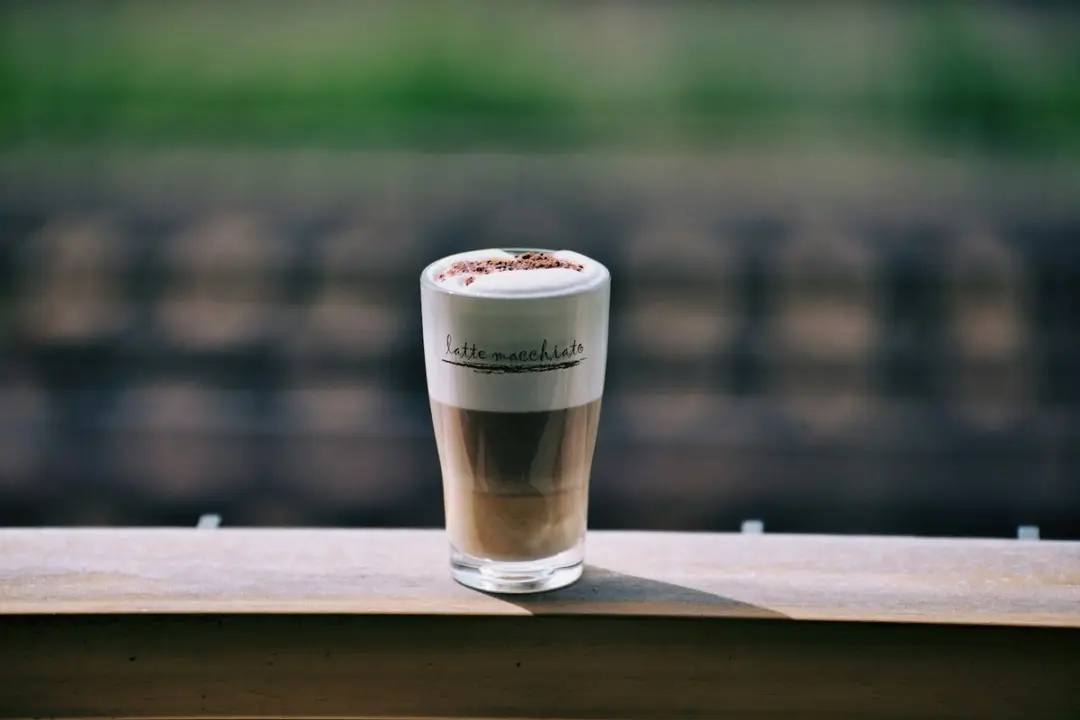
A macchiato and a latte macchiato are two completely different drinks, despite sharing a name. A macchiato is espresso with a tiny dot of foamed milk on top, a small, strong drink. A latte macchiato is steamed milk with a shot of espresso poured through it, a tall, mild drink. The order of construction is reversed, and so is the flavour balance.
This is one of the most common ordering mistakes at café counters worldwide. If you ask for “a macchiato” in Italy you’ll get a tiny espresso. If you ask for “a macchiato” at Starbucks you’ll most likely get the Starbucks Caramel Macchiato, which is actually closer to a latte macchiato. This guide breaks down what each drink really is, how they differ in taste, size, caffeine, and calories, and how to order so you get exactly what you want.
Latte macchiato vs macchiato: at a glance
| Macchiato (Espresso Macchiato) | Latte Macchiato | |
|---|---|---|
| Italian for | “Stained” espresso | “Stained” milk |
| Base ingredient | Espresso (the star) | Steamed milk (the star) |
| Build order | Espresso first, milk dot on top | Milk first, espresso poured through it |
| Size | 2–3 oz | 8–10 oz |
| Espresso | 1 shot | 1 shot |
| Milk volume | ~1 tsp foam | ~7–8 oz steamed milk + foam |
| Caffeine | ~63 mg | ~63 mg |
| Calories | ~5–10 | ~120–150 |
| Taste | Bold espresso, hint of cream | Mild, milky, espresso accent |
The headline difference: a macchiato is espresso “stained” with milk, while a latte macchiato is milk “stained” with espresso. The Italian verb macchiare means to stain or mark, both drinks describe what is being stained by what. Same shot of espresso in both, but in completely different proportions of milk.
What is a macchiato?
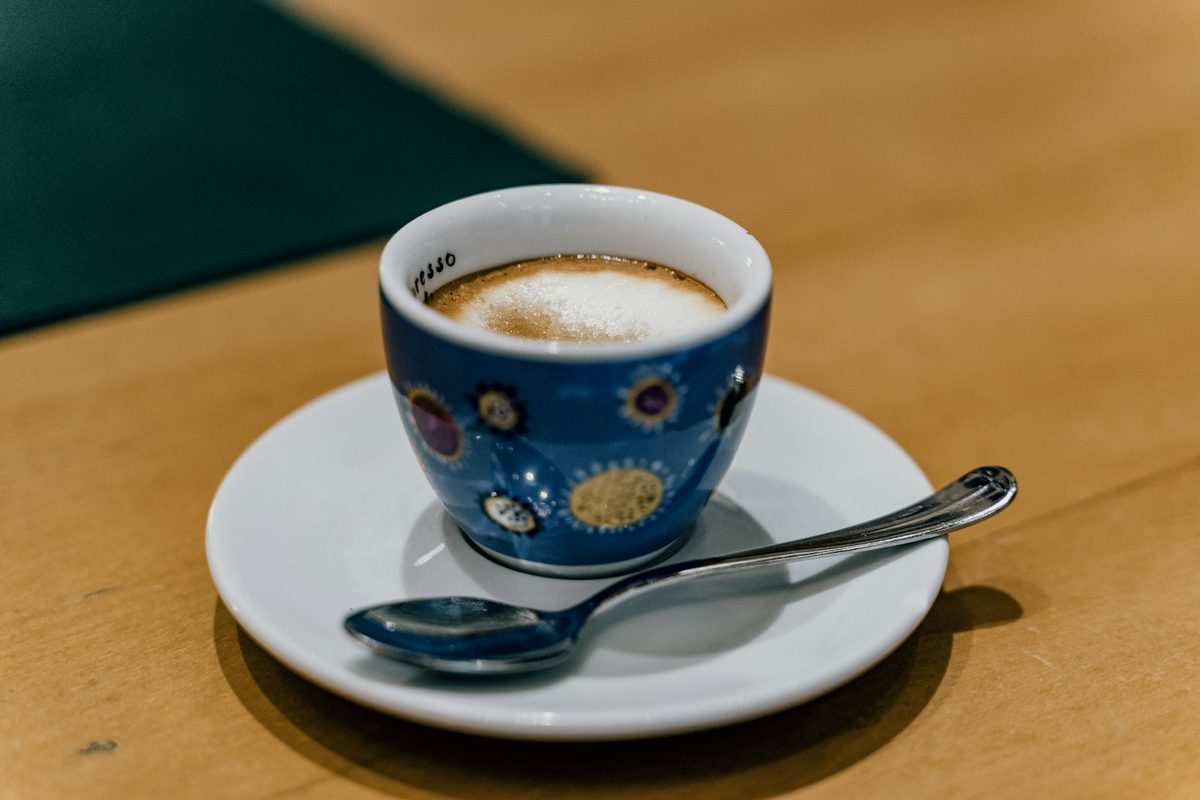
A macchiato, properly called an espresso macchiato or “caffè macchiato”, is a single shot of espresso with a small dollop (about a teaspoon) of foamed milk on top. Total size is around 2–3 oz, served in a small espresso or macchiato cup. The drink is dominated by the espresso, with the milk acting purely as a softener.
The macchiato exists because of how Italian baristas worked. In the morning, the same barista was pulling espresso shots and steaming milk for cappuccinos all at once. To remember which espresso was “marked”, meaning destined for a customer who wanted just a touch of milk added, they’d add a small dot of milk foam on top before serving. Macchiato literally means “marked” or “stained” in Italian.
The drink tastes like a slightly softer espresso. The milk takes the edge off the bitterness without diluting the flavour. For people who find straight espresso too intense but don’t want the milky body of a cappuccino, a macchiato is the right step. Compare it to other small espresso drinks in our guide on cortado vs cappuccino.
What is a latte macchiato?
A latte macchiato is steamed milk with a shot of espresso poured through it. The barista builds it in reverse order from a regular latte, milk first, then the espresso slowly trickled in from above. The result is a tall (8–10 oz), layered drink with distinct bands of milk at the bottom, espresso-stained milk in the middle, and white foam on top.
The drink was designed as a kid-friendly café drink in Italy and parts of Germany, most of the cup is hot milk with just one shot of espresso for flavour. The espresso is so diluted by the milk volume that the drink is much milder than even a regular latte (which is built with the espresso on the bottom and milk on top, mixing more thoroughly).
What you do with the drink also differs. Traditional latte macchiatos are not stirred, you sip through the layers, getting more espresso flavour as you reach the middle and bottom. Some people stir them at the table to mix everything; both are acceptable, but the layered presentation is the point. For a fuller comparison with the regular latte build order, see our mocha vs latte guide.
The build order is everything
If you remember nothing else from this guide, remember this: a macchiato is espresso topped with milk. A latte macchiato is milk topped with espresso. The order matters because of how the drink layers and how the flavours blend.
| Step | Macchiato | Latte Macchiato |
|---|---|---|
| 1. Pull espresso | 1 shot into a small cup | , |
| 2. Steam milk | ~1 tsp of foam | ~7–8 oz with thick foam |
| 3. Add to cup | , | Pour steamed milk into a tall glass |
| 4. Finish | Add milk foam dot to espresso | Pour espresso shot through the milk |
| Final look | Tiny dark drink, white dot on top | Tall layered drink: milk → espresso → foam |
The latte macchiato’s layered look only works because warm milk and hot espresso have slightly different densities, espresso is more concentrated and sinks slowly through the warm milk, creating the visible “stain”. Pour it too forcefully or into milk that’s too hot and the layers blur into a regular latte.
Taste: bold espresso vs mild milk
A macchiato tastes like espresso with the bitter edge softened. The dollop of foam on top takes 5–10 seconds to mix with the espresso underneath, so the first sip is mostly milk foam and the second is essentially black espresso. Some drinkers stir before drinking; others enjoy the contrast. Either way, the espresso is unmistakably the star, bold, intense, complex flavour notes (chocolate, nuts, citrus) all come through clearly.
A latte macchiato tastes like warm milk with a coffee accent. The first sips from the top are pure foam and milk, gradually getting more coffee-forward as you reach the middle and bottom of the glass. Because the milk volume is so high relative to the single shot of espresso, the espresso flavour is significantly diluted, most of what you taste is milk sweetness with a coffee finish.
If you love espresso flavour, the macchiato is the right choice. If you want something that’s mostly milk but technically has coffee in it, the latte macchiato. For more on espresso flavour broadly, see caffeine in a shot of espresso.
Caffeine and calories
Both drinks contain one shot of espresso, about 63 mg of caffeine. The total caffeine is identical. What differs is the calorie count, which is driven entirely by the milk.
| Drink | Caffeine (mg) | Calories (whole milk) | Sugar (g) |
|---|---|---|---|
| Espresso (1 oz, single shot) | 63 | 5 | 0 |
| Macchiato (2–3 oz) | 63 | 10 | 0 |
| Latte macchiato (8–10 oz) | 63 | 120–150 | 11–14 |
| Standard latte (12 oz) | ~150 (2 shots) | 180 | 17 |
| Starbucks Caramel Macchiato (grande) | 150 | 250 | 33 |
The macchiato is one of the lowest-calorie coffee drinks you can order, essentially espresso, with 10 calories’ worth of foam. The latte macchiato is closer to a small latte calorie-wise. The Starbucks Caramel Macchiato has nothing to do with either Italian drink, it’s a vanilla-syrup latte with caramel drizzle on top, marketed under the “macchiato” name. It’s a great drink, just unrelated to the traditional definition.
Which should you order?
Choose a macchiato if you want:
- A bold, intense, espresso-forward drink
- Something small and quick, usually drunk in 2–3 sips
- The lowest-calorie milk-coffee option available
- To taste the espresso’s actual flavour notes (single-origin bean character comes through)
- A drink that fits the post-meal Italian café tradition
Choose a latte macchiato if you want:
- A milky, mild drink that just happens to have espresso
- Something visually impressive with distinct milk-and-espresso layers
- A taller drink to sip over time, not finish in seconds
- An entry point to espresso drinks if you find espresso intimidating
- The lower-caffeine option (1 shot vs 2 shots in a typical latte)
If you’re trying to drink less caffeine but still want a milky coffee drink, the latte macchiato is the underrated answer, same espresso level as a macchiato (one shot, 63 mg) but stretched across 10 oz of milk for sipping. Most café “lattes” come with two shots and around 150 mg of caffeine, so the latte macchiato has roughly half the caffeine in a drink that looks similar in size.
How does this compare to other espresso drinks?
The macchiato sits at one extreme of the espresso-and-milk spectrum (least milk), the latte macchiato near the other extreme (most milk). Here’s where they fit:
- Espresso: Just the shot, no milk at all. 1–1.5 oz.
- Macchiato: Espresso + tiny milk foam dot. 2–3 oz.
- Cortado: Espresso + equal parts steamed milk, no foam. 3–4 oz.
- Cappuccino: Espresso + steamed milk + thick foam, equal thirds. 5–6 oz.
- Flat white: Espresso (often double) + microfoam milk. 5–6 oz.
- Latte: Espresso + lots of steamed milk + thin foam. 12 oz.
- Latte macchiato: Steamed milk + espresso poured through. 8–10 oz.
- Mocha: Latte + chocolate. 12 oz.
For more on how the milk-to-espresso ratio shifts across drinks, see our cappuccino vs latte, cortado vs cappuccino, and cappuccino vs flat white guides.
Can you make both at home?
Yes, both are achievable with the same gear: an espresso source and a way to steam milk.
For a macchiato: Pull a single shot of espresso, then add a small spoonful (about a teaspoon) of dense, dry milk foam on top. The foam should sit, not sink, proper microfoam holds its shape. If you’re using a steam wand, foam the milk for ~10 seconds longer than you would for a latte to get the drier, stiffer texture needed.
For a latte macchiato: Steam 7–8 oz of milk to ~150°F with a generous foam top. Pour into a tall glass. Pull a fresh espresso shot directly through the milk by holding the cup under the espresso outlet, the slow drip lets the espresso layer through the milk rather than mixing in. This is harder than it looks at home; the espresso machine has to dispense slowly enough for the layering to work.
No espresso machine? You can substitute strong moka pot, AeroPress, or French press coffee, see our guide to making espresso with a French press. The results won’t have a real espresso crema, but the flavour balance approximates close enough for daily home use.
The Starbucks “Caramel Macchiato”, what is it really?
This deserves its own section because it confuses millions of people. The Starbucks Caramel Macchiato is a sweetened vanilla latte with caramel drizzle on top, not a traditional macchiato in either Italian sense. It bears almost no relation to either drink we’ve covered above.
What it actually is: vanilla-flavoured syrup goes in first, then steamed milk, then espresso is poured on top (in the “latte macchiato” style of upside-down construction), then caramel sauce is drizzled on top. The “macchiato” name comes from the visible espresso layer on the milk, Starbucks adopted the term in the 1990s to lend Italian sophistication to what is essentially a flavoured milky coffee.
It’s a great drink in its own right. But if you go to an independent or Italian café and order a “macchiato”, expecting Starbucks Caramel Macchiato, you’ll get something completely different, usually a tiny 2 oz drink that’s nearly all espresso. Always check what a café means by “macchiato” before ordering.
The bottom line
A macchiato is espresso with a dot of milk. A latte macchiato is milk with a shot of espresso poured through. The build order is reversed, the size is reversed, and the experience is completely different, even though both technically contain the same single shot of espresso.
Order a macchiato when you want espresso that’s just barely softened. Order a latte macchiato when you want a milky drink with a coffee accent. And if you’re at Starbucks and you want either of these, ask specifically, “macchiato” on the Starbucks menu is a different drink entirely.
If you are comparing the traditional route instead of the layered version, see how a plain macchiato stacks up directly against a latte in our macchiato vs latte guide.
More on espresso and milk coffee across the site.
Frequently Asked Questions About Latte Macchiato vs Macchiato
A macchiato is a 2–3oz drink of espresso with a tiny dot of foamed milk on top, bold and espresso-forward. A latte macchiato is an 8–10oz drink of steamed milk with a shot of espresso poured through it, mild and milk-forward. Both use a single shot of espresso, but the milk volume and build order are completely different. The name comes from the Italian verb ‘macchiare’ (to stain), one is espresso stained with milk, the other is milk stained with espresso.
By caffeine, no, both contain one shot of espresso (about 63mg). By flavour intensity, yes, the macchiato’s tiny milk volume means the espresso flavour is much more pronounced. The latte macchiato dilutes the same espresso across 8–10oz of milk, so each sip tastes much milder. If you want espresso intensity, the macchiato is stronger. If you want a tall mild drink with less caffeine than a regular latte (which usually has 2 shots), the latte macchiato is a good pick.
No, it bears almost no relation to a traditional Italian macchiato or latte macchiato. The Starbucks Caramel Macchiato is a sweetened vanilla latte with caramel drizzle on top: vanilla syrup, steamed milk, espresso, then caramel sauce. It’s a great drink but it’s neither a true macchiato (tiny espresso) nor a traditional latte macchiato. Starbucks adopted the ‘macchiato’ name in the 1990s mainly for marketing.
The build order. A latte is espresso first, then steamed milk poured on top, the two mix on contact, creating a uniformly coloured drink. A latte macchiato is steamed milk first, then a single shot of espresso poured through it, the espresso layers visibly through the milk, creating distinct bands. Lattes typically use 2 shots; latte macchiatos use 1. The latte is fuller-flavoured; the latte macchiato is milder and visually layered.
A traditional espresso macchiato is around 10 calories, essentially just the espresso plus a teaspoon of milk foam. A latte macchiato is around 120–150 calories with whole milk, similar to a small latte. The macchiato is one of the lowest-calorie coffee drinks you can order; the latte macchiato lands in the same range as other 8oz milk drinks.
‘Macchiato’ is Italian for ‘marked’ or ‘stained’. The name describes what’s being stained by what. An espresso macchiato is espresso ‘marked’ with a dot of milk foam, the milk is staining the espresso. A latte macchiato is milk ‘marked’ with espresso, the espresso is staining the milk. Both drinks honour the same Italian root word but flip the relationship between espresso and milk.
 Austin Barker
Founder & Lead Editor
Seven years behind a bar before starting Brewing Coffees. Writes most of the equipment coverage and tests every machine on this site in an ordinary home kitchen.
Austin Barker
Founder & Lead Editor
Seven years behind a bar before starting Brewing Coffees. Writes most of the equipment coverage and tests every machine on this site in an ordinary home kitchen.