Espresso machines can be expensive, and not everyone has one sitting on their counter. The good news: you can pull an espresso-style shot at home using gear you probably already own. The French press is the easiest starting point, but it’s far from your only option.
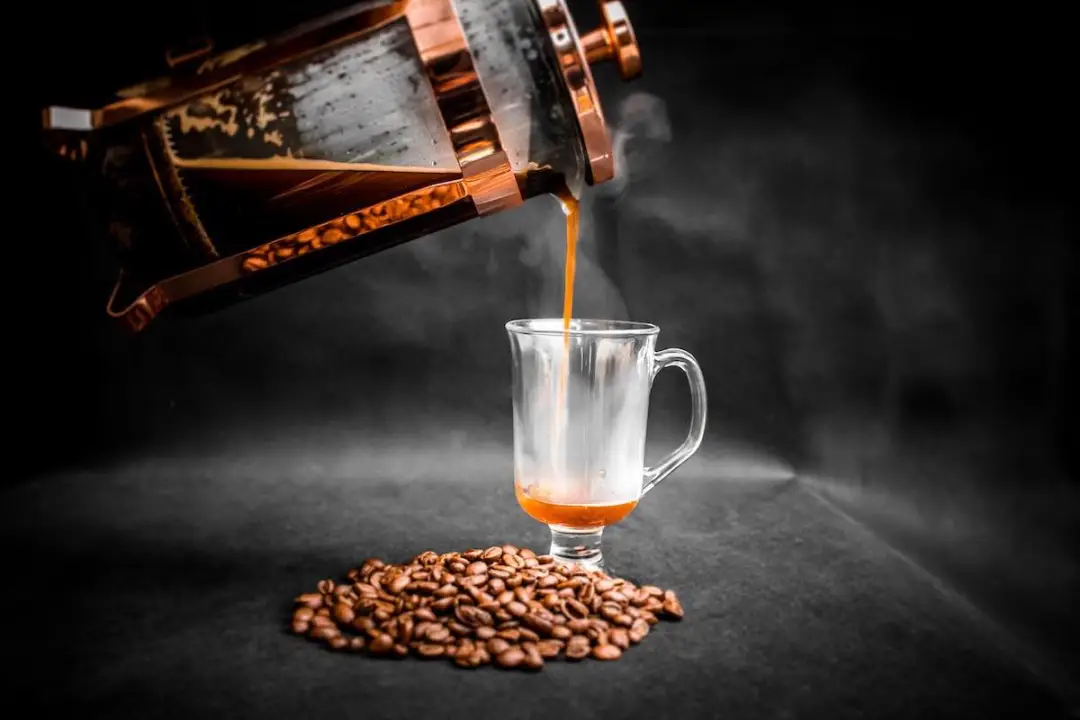
To make espresso with a French press, combine 36 grams of medium-fine ground dark roast with 205ml of water heated to 200–205°F (93–96°C). Brew for 4 minutes, then press the plunger slowly. You’ll get a rich, concentrated brew, not technically espresso (no crema, no 9-bar pressure) but close enough to use as a shot base.
This guide covers the French press method step by step, plus four other ways to make espresso at home without a machine, including the Moka pot and AeroPress. A comparison table at the end helps you pick the right method for your setup.
Can You Make Real Espresso Without An Espresso Machine?
Technically, no, but you can get surprisingly close. True espresso requires 9 bars of pressure to force hot water through finely packed grounds. No common home gadget outside a proper machine achieves that. What you can make is an espresso-style concentrate: strong, bold, and rich enough to use in lattes, cappuccinos, or Americanos.
The French press produces the weakest approximation, it’s immersion brewing with no meaningful pressure. A Moka pot or manual espresso maker gets much closer, generating 1–9 bars depending on the device. You won’t get the thick golden crema from a French press, but with a Moka pot or portable espresso maker you’ll get a thin, satisfying layer.
For most home brewers, the difference matters less than you’d think. If you’re using the concentrate as a base for a latte or Americano, an espresso-style shot works just as well.
How To Make Espresso With A French Press
The French press method is the most accessible option, no special equipment needed beyond your press and good beans.
What You’ll Need
French Press: Not all French presses are equal. A quality French press with a fine-mesh plunger keeps more sediment out of your cup. An insulated model holds heat during the 4-minute steep, which makes a real difference.
Coffee Beans: Use a dark espresso roast and grind to medium-fine, slightly coarser than you’d use in a real espresso machine. Fine espresso grinds slip through the mesh and muddy your shot. Curious how many beans that works out to? We break down how many coffee beans per cup for every brew method. For the best results, use a great coffee roasted for French press.

Step-By-Step Instructions
- Heat your water. Aim for 200–205°F (93–96°C), just off the boil. Boil, then let it rest for 30–60 seconds.
- Pre-warm your French press. Pour a splash of hot water in, swirl it around, and discard. This stops the press from pulling heat out of your brew water.
- Add your grounds. Measure 36 grams of medium-fine ground dark roast. That’s roughly a heaped ¼ cup before grinding.
- Pour the water. Add 205ml (about ¾ cup + 2 tbsp) of hot water. Pour slowly and evenly over the grounds to ensure full saturation.
- Steep for 4 minutes. Set a timer. Under-extraction gives a watery, sour shot. Over-extraction past 5 minutes turns it bitter.
- Press slowly. Apply steady, gentle pressure on the plunger. Rushing creates turbulence and pushes sediment through the mesh.
- Pour immediately. Don’t leave the brew sitting in the press, it keeps extracting against the grounds. Pour into two cups and use right away, or as a base for a cappuccino or latte.
Other Methods: Making Espresso Without A Machine
The French press is just one option. Here are four other methods, ranked roughly from most accessible to closest-to-real-espresso.
Moka Pot
The Moka pot is the most espresso-like method you can achieve on a stovetop. It forces boiling water through packed grounds at 1–2 bars of pressure, low compared to a machine’s 9 bars, but enough to produce a genuinely strong, concentrated brew with a thin layer of crema.
Use a fine-to-medium grind and a dark roast. Fill the bottom chamber with cold water up to the pressure valve, fill the basket with grounds (don’t tamp, it can cause the valve to blow), then brew over medium heat. Remove it from the burner as soon as you hear the liquid start to sputter and gurgle. Leave it too long and the high heat kills the flavor. The same logic scales down further, and you can make coffee without a coffee maker at all.
A Moka pot costs $30–$60 and lasts for years. If you want the closest thing to espresso without a machine, this is it.
AeroPress
The AeroPress won’t produce real espresso, but it makes an excellent concentrated coffee that functions the same way in drinks. The key is a fine grind, a short steep, and a slow, firm press.
The inverted method works well for espresso-style shots: flip the AeroPress upside-down, add 15–18g of fine-ground dark roast, pour in 50ml of 200°F water, steep for 90 seconds, then flip and press slowly over 30 seconds. The result is a 1.5–2oz dark concentrate with minimal sediment, cleaner than a French press shot.
At $35–$45, the AeroPress is one of the most practical brewers you can own. It’s especially good if you travel frequently or brew in small spaces.
Manual Espresso Maker
A manual espresso maker (like the Flair Espresso or the ROK) works like a simplified espresso machine, you apply pressure with your hands and body weight to extract the shot. Done right, these generate 7–9 bars of pressure: enough for real espresso with genuine crema.
The trade-off: they require practice, a good grinder, and more effort per cup. Cost ranges from $50 to $250+ depending on the model. For serious home espresso without a full machine, a quality manual maker produces results nothing else in this list can match.
Portable Espresso Maker (Minipresso / Nanopresso)
The Wacaco Minipresso and Nanopresso are compact, hand-pump devices built specifically for espresso on the go. You add ground coffee to one end, hot water to the other, and manually pump a piston to build pressure. At 8–16 bars (depending on the model), the Nanopresso can produce a convincing shot with real crema in a device that fits in your jacket pocket.
These cost $50–$80 and are worth considering if you want genuine espresso while traveling, or just don’t want to clutter your counter with a full Moka pot setup.
Method Comparison: Which Is Right For You?
Not sure which method fits your needs? Here’s a quick side-by-side of all five options.
| Method | Approx. Cost | Pressure | Crema? | Best For |
|---|---|---|---|---|
| French Press | $20–$50 | None | No | Beginners, budget brewers |
| Moka Pot | $30–$60 | ~1–2 bar | Thin layer | Closest stovetop espresso |
| AeroPress | $35–$45 | Low (manual) | Minimal | Travel, clean concentrate |
| Manual Espresso Maker | $50–$250 | 7–9 bar | Yes | Serious home espresso |
| Minipresso / Nanopresso | $50–$80 | 8–16 bar | Yes | Travel, espresso on the go |
If you already own a French press, start there, it’s zero extra cost. If you want something that tastes more like the real thing, a Moka pot is the obvious upgrade. For serious espresso at home without spending $500, a manual espresso maker is the only option that delivers genuine crema and extraction.
Final Thoughts
You don’t need a $500 espresso machine to make a good shot at home. The French press is the most accessible starting point. A Moka pot or AeroPress gets you closer to real espresso for $30–$45. And if you want actual crema and genuine pressure extraction, a manual espresso maker delivers it without the machine price tag.
The most important variables are consistent across every method: fresh beans, correct grind size, and the right water temperature. Nail those and even a French press produces a surprisingly satisfying shot. Make sure you’re also keeping your equipment clean, residue buildup affects flavor more than most people realize.
Want the real thing instead of a workaround? See our how to make espresso at home walkthrough, and the classic French press method if you want to use your kit properly. If you are upgrading, our best French presses picks last decades. We have more on coffee drinks.
Frequently Asked Questions About Making Espresso Without A Machine
Yes. While you can’t replicate the 9-bar pressure of a real machine, you can make a strong espresso-style concentrate using a French press, Moka pot, AeroPress, or manual espresso maker. A Moka pot or portable espresso device comes closest to the real thing.
Not exactly. French press espresso-style coffee lacks the pressure-driven crema and extraction quality of a real shot. It’s a good approximation for drinks like lattes or Americanos, but a purist will notice the difference. For something closer, try a Moka pot or AeroPress.
Use a medium-fine grind, coarser than you’d use for a real espresso machine. True espresso grind is too fine for a French press and will slip through the mesh screen, leaving gritty sediment in your cup.
A Moka pot makes the closest thing to espresso you can achieve on a stovetop, strong, concentrated, and with a thin layer of crema. But it only generates 1–2 bars of pressure vs. the 9 bars an espresso machine uses, so it doesn’t meet the technical definition of true espresso.
Yes. French press espresso-style concentrate works well as a base for lattes, cappuccinos, and Americanos. You won’t get latte art from it (no crema layer to work with), but the flavor holds up fine once mixed with steamed or frothed milk.
4 minutes is the sweet spot. Less than 3 minutes produces an under-extracted, sour shot. More than 5 minutes risks bitterness from over-extraction. Set a timer, it makes a noticeable difference.
 Megan Cunningham
Contributor
Tests everything in an ordinary kitchen on affordable gear.
Megan Cunningham
Contributor
Tests everything in an ordinary kitchen on affordable gear.