A gooseneck kettle’s thin, curved spout lets you control the speed, direction and thickness of your pour, which is the single biggest lever you have over a pour-over cup once you have decent beans and a burr grinder. A regular kettle dumps water in an uncontrollable rush; a gooseneck lets you draw a slow, steady spiral exactly where you want it.
We cover why the spout shape matters, electric versus stovetop tradeoffs, the temperature-control features worth paying for, and four real picks across price points. Pair it with a coffee scale for the other half of a consistent pour-over setup, precise weight and a controlled pour solve two different problems that both affect the same cup.
The 4 Best Gooseneck Kettles at a Glance
- Best Overall: Fellow Stagg EKG
- Best Splurge: Fellow Stagg EKG Pro
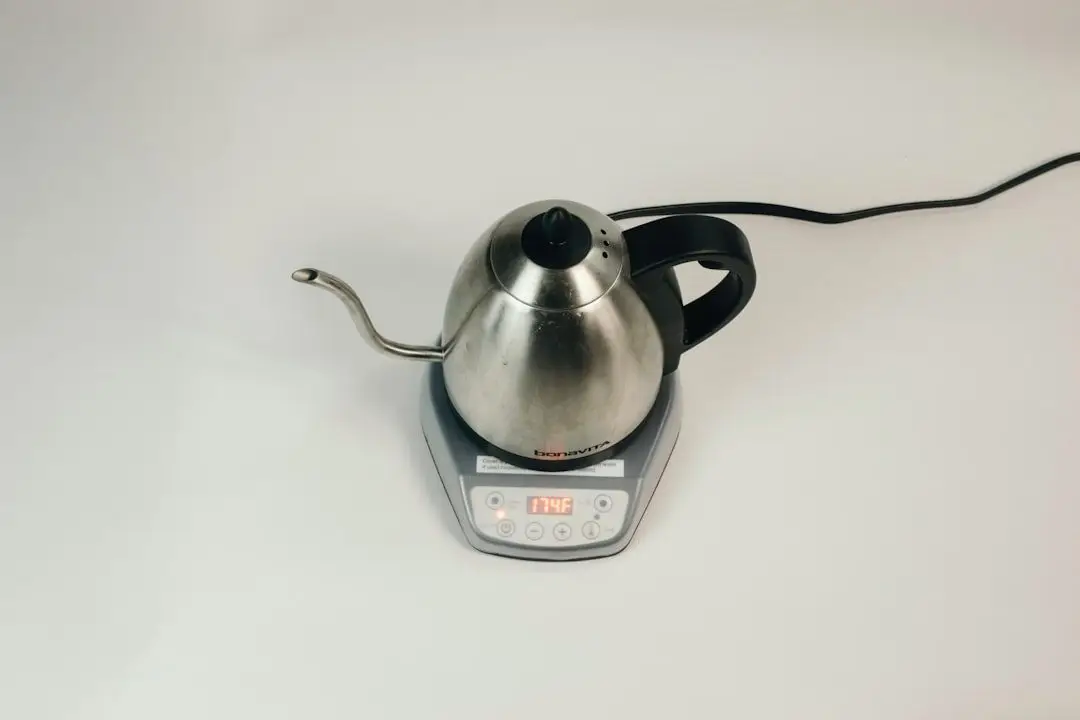
- Best Value (Electric): Bonavita 1L Variable Temperature Gooseneck Kettle
- Best Stovetop: Hario V60 Buono
Below, we break down each pick, followed by a buying guide and comparison table.
Best Overall: Fellow Stagg EKG
Highlights
- Precise, to-the-degree electric temperature control
- 1200W element heats water in under 3 minutes
- Counterbalanced handle for controlled, steady pours
- 60-minute temperature hold once at target
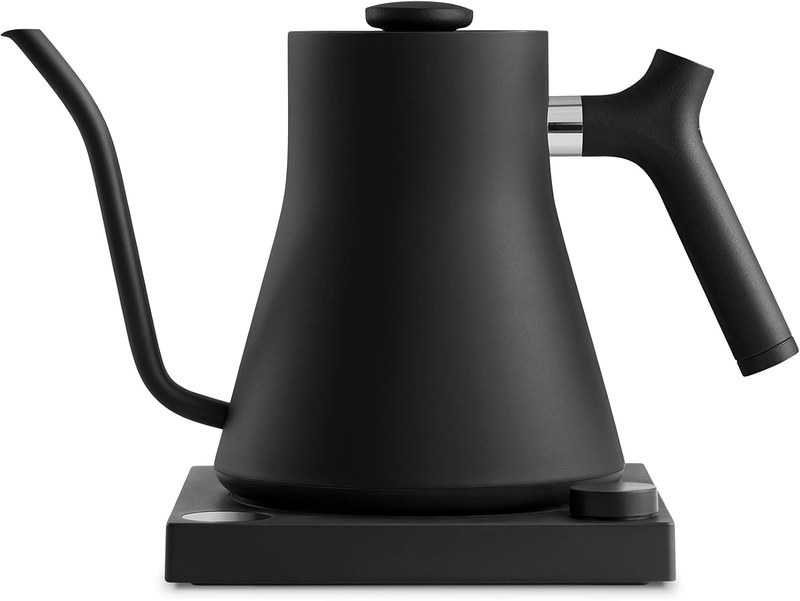
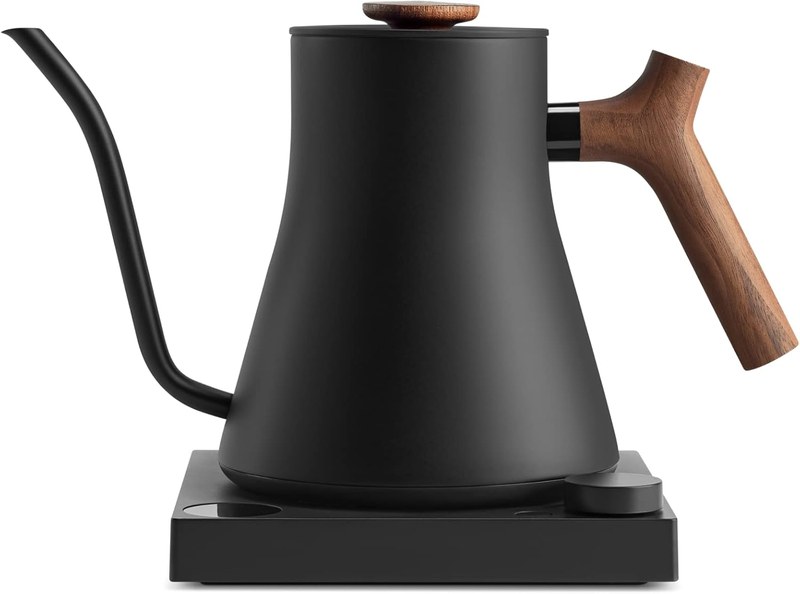
The Stagg EKG is the electric gooseneck kettle most pour-over guides point to first, and the thin, precisely engineered spout is why: it lets you slow a pour down to a thin, controlled stream without the water splashing or gulping out in bursts, which is exactly what an even bloom and main pour need.
Digital temperature control means you set 205°F once and never guess with a stovetop kettle and a thermometer again. It costs more than a basic stovetop kettle, but if you brew pour-over daily, the time saved on temperature guesswork adds up fast.
Best Splurge: Fellow Stagg EKG Pro
Highlights
- Color LCD display with guided brew mode
- Built-in brew timer alongside temperature control
- Scheduling and temperature-hold presets
- Same precision gooseneck spout as the standard EKG
The Pro adds a built-in brew timer and a guided brew mode on top of everything the standard EKG already does, which is genuinely useful if you are trying to hit a specific bloom time and pour schedule without a separate stopwatch running.
It is a meaningful jump in price over the standard EKG for features that matter most if you are dialing in a repeatable recipe rather than just wanting hot water at the right temperature. For most home brewers the standard EKG covers the essentials just as well.
Best Value (Electric): Bonavita 1L Variable Temperature Gooseneck Kettle
Highlights
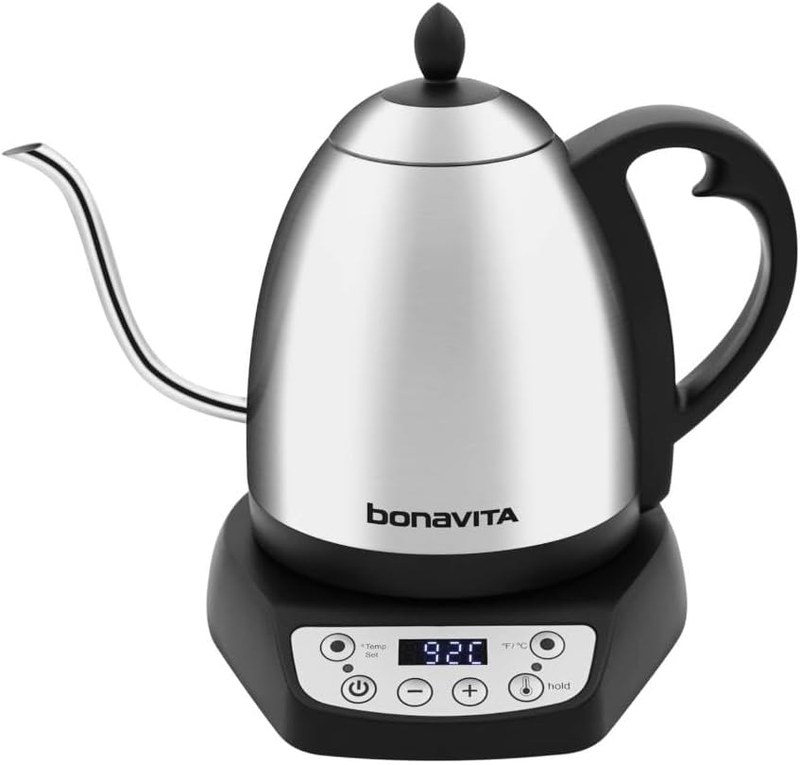
- 6 preset temperatures plus custom digital control
- 1200W element, ready to pour in about 5 minutes
- Up to 60 minutes of temperature hold
- 304 stainless steel body, BPA-free plastic base
Bonavita has been making pour-over gear for longer than most of its competitors, and this kettle gets the fundamentals right at a noticeably lower price than the Fellow models: real digital temperature control, a proper gooseneck spout, and a fast 1200W heating element.
It gives up the polish and app features of the EKG line, but for anyone who wants precise electric temperature control without paying a premium for design, this is the more budget-friendly route to the same core benefit.
Best Stovetop: Hario V60 Buono
Highlights
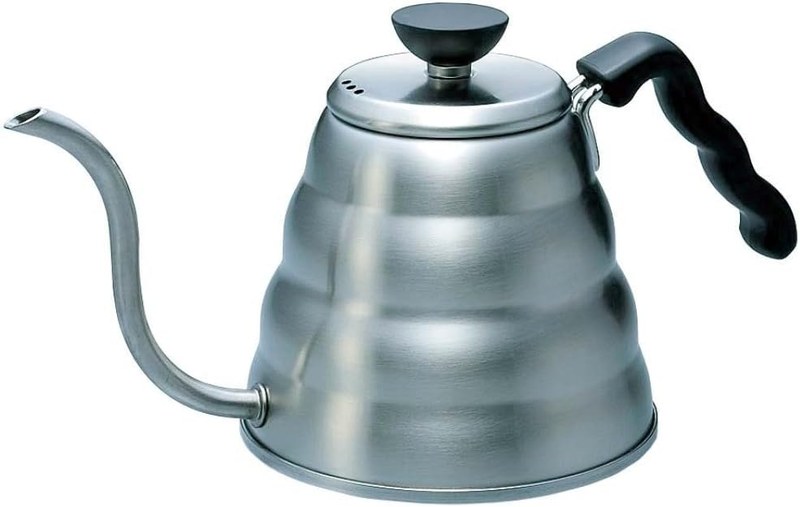
- Slim gooseneck spout for slow, controlled pouring
- Works on gas, electric and induction ranges
- No cord, no battery, no electronics to fail
- 1.2L capacity, enough for two to three servings
The Buono is the stovetop kettle most V60 and Chemex guides recommend, because it delivers the same controlled, slow-pour spout as the electric options without needing a plug. It is the cheapest way into a genuine gooseneck kettle, and there is nothing electronic to eventually stop working.
The tradeoff is manual temperature control: boil, then count roughly 30 seconds off the heat to land in the 195–205°F sweet spot, the same method covered in our pour-over guide. For anyone who does not want to manage a cord and a charging habit for another kitchen device, it is the simplest option here. Pair it with our best beans for pour-over picks to round out the setup.
Why the Gooseneck Spout Matters for Pour-Over Control
Pour-over extraction depends on pouring water evenly over the coffee bed in a controlled spiral, first for the bloom and then for the main pour, both covered step by step in our pour-over guide. A regular kettle spout is wide and hard to aim precisely, so water tends to come out in an uneven gush that floods one side of the bed and channels through it, pulling flavour unevenly.
A gooseneck’s narrow, curved spout lets you slow the flow to a thin, steady stream and place it exactly where you want, which is what makes an even, controlled pour actually achievable by hand. It is the one piece of gear that most directly affects extraction evenness, more than the dripper you brew with, though it works alongside your coffee-to-water ratio, not instead of it.
Electric vs. Stovetop: Which Should You Buy?
Electric gooseneck kettles add digital temperature control, so you can set 200°F once and know the water is actually at that temperature every time, without a thermometer or counting seconds off the boil. They cost more, need a power outlet, and are one more small appliance to find counter space for.
Stovetop gooseneck kettles like the Buono cost less, need no power, and are simpler to clean since there is nothing electronic inside. The tradeoff is manual temperature management, boil, then wait roughly 30 seconds off the heat, the same rule used in our French press guide for a similar reason. If you brew pour-over daily and want to remove one more variable, electric is worth the extra cost. If you brew occasionally or already have a reliable stovetop routine, a stovetop gooseneck does the same core job for less.
Temperature Control Features to Look For
Precise Digital Readout
Look for a kettle that displays and lets you set an exact temperature (in 1°F or 1°C increments), not just a low/medium/high dial. Pour-over’s ideal window is narrow, 195–205°F, and a vague dial makes it hard to land inside it consistently.
Temperature Hold
A hold function keeps the kettle at your target temperature for a set window (commonly up to 60 minutes) instead of cooling the moment it clicks off. This matters if you are brewing multiple cups back to back or take a few minutes to grind between pours.
Heating Speed
A 1200W element brings a typical 0.9–1L kettle to temperature in about 3–5 minutes. Slower elements are not a dealbreaker, but they add real waiting time if you are brewing first thing in the morning.
Gooseneck Kettles Compared
| Kettle | Type | Temp Control | Best For |
|---|---|---|---|
| Fellow Stagg EKG | Electric | Precise digital | All-around best pick |
| Fellow Stagg EKG Pro | Electric | Precise + guided brew mode | Dialing in a repeatable recipe |
| Bonavita 1L Variable Temp | Electric | 6 presets + custom | Best value electric |
| Hario V60 Buono | Stovetop | Manual (boil + wait) | Budget, no electronics |
A gooseneck kettle and a coffee scale are the two upgrades that make the biggest difference to a home pour-over setup, and they solve different problems: the scale gets your ratio right, the kettle gets your pour technique right. See our pour-over guide and French press guide for how both fit into the full brewing process.
Our full guide to coffee gear goes deeper.
Gooseneck Kettle FAQ
Strongly recommended, not strictly required. A gooseneck’s thin spout lets you control pour speed and placement precisely, which is what makes an even, controlled pour achievable by hand, a regular kettle’s wide spout makes that much harder.
If you brew pour-over daily, yes, precise digital temperature control removes a variable you would otherwise be managing manually. If you brew occasionally, a stovetop gooseneck with the boil-and-wait method covers the same core need for less.
Roughly 195–205°F (90–96°C). Off a rolling boil, count about 30 seconds before pouring if you do not have digital temperature control.
Yes, though it matters less there, a French press is fully immersed rather than poured over a filter bed, so the pour precision that matters for pour-over is less critical. A gooseneck is still handy for pouring in a controlled stream without splashing.
A 0.8–1.2L kettle covers one to three cups, which suits most home brewers. Larger capacities exist but take longer to heat and are mainly useful if you are regularly brewing for a group.
Stovetop models vary, check the listing specifically for induction compatibility, since not every stainless kettle has the ferrous base induction needs. Electric kettles like the Fellow and Bonavita models sidestep this entirely since they plug in rather than sitting on a stove.
 Joel Lewis
Contributor
Italian espresso conventions, and what survives the trip to the US.
Joel Lewis
Contributor
Italian espresso conventions, and what survives the trip to the US.