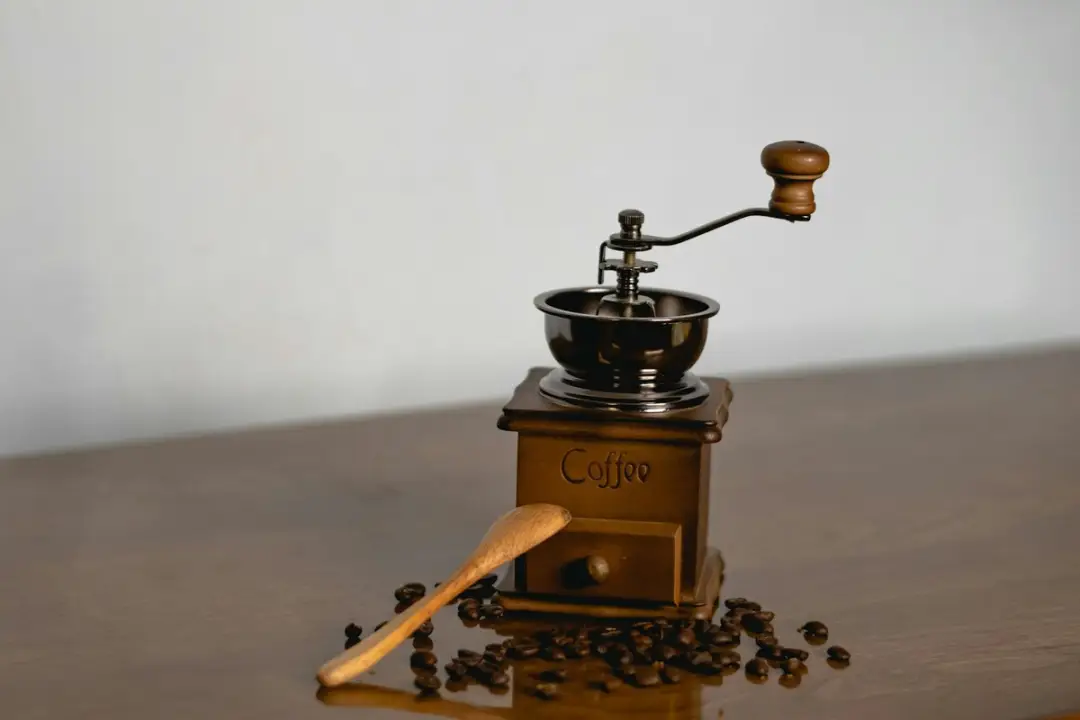
If you only upgrade one piece of coffee gear this year, make it your grinder. A quality burr grinder transforms even cheap beans, while a great espresso machine fed with bad grinds will still produce mediocre coffee. The right grinder for you depends on what you brew, how much you want to spend, and whether you want manual or electric.
We tested and researched the best coffee grinders across price points and brewing methods. This guide covers our four top picks, best overall, best for espresso, best high-end, and best manual, plus two budget alternatives worth considering, and a full buying guide so you can match a grinder to the way you actually brew.
The 4 Best Coffee Grinders at a Glance
- Best overall: Baratza Encore
- Best for espresso: Baratza Sette 30
- Best high-end: Fellow Ode Gen 2
- Best manual: 1Zpresso JX-Pro S
Below, we break down each pick, who it’s for, what it does well, and where it falls short. We’ve also included a buying guide and side-by-side comparison further down to help you choose.
Why a good coffee grinder matters more than a good machine
Most beginners spend $300+ on a fancy espresso machine and then grind their beans on a $20 blade grinder. The result is mediocre coffee no matter how good the machine is. The grinder is doing more work than the brewer, it determines particle size, particle consistency, and how much surface area is exposed to water during extraction. Get the grind wrong and nothing downstream can save the cup.
Burr grinders crush the beans between two ridged plates, producing uniform particles. Blade grinders hack at the beans with a spinning blade, producing a mix of dust and chunks at the same setting. The difference between under-extracted chunks and over-extracted powder in the same cup is what makes blade-ground coffee taste bitter and sour at the same time. If you take only one thing from this guide: own a burr grinder.
For more on why the grinder choice matters, see our piece on whether the type of coffee grinder makes a difference. Spoiler: it does, more than almost any other equipment upgrade you can make.
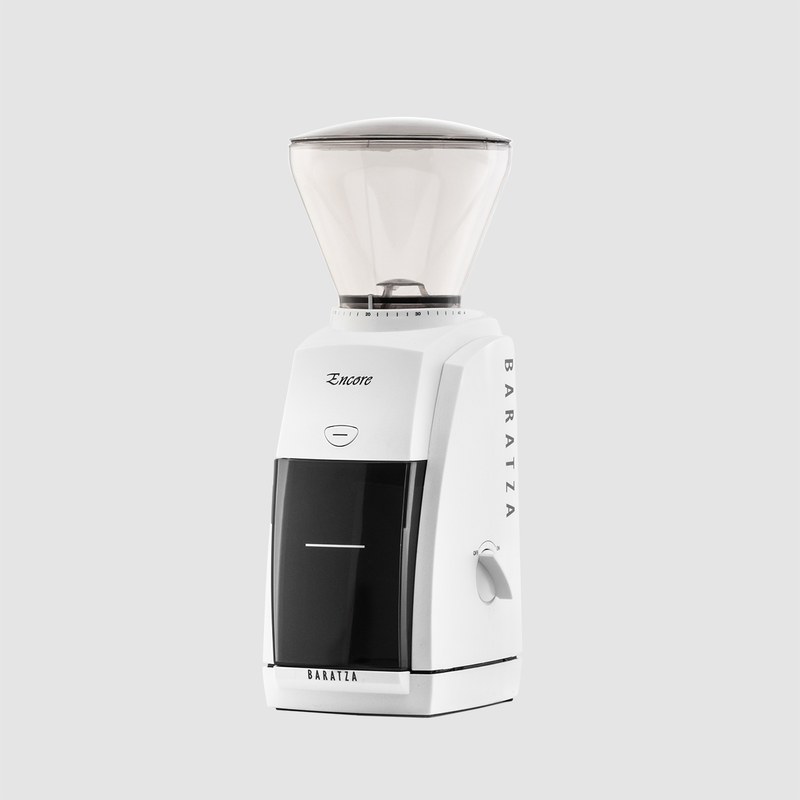
Best overall: Baratza Encore
Highlights
- 40mm commercial-grade conical burrs
- 40 grind settings, espresso to French press
- Industry standard at the entry level for over 10 years
- Repairable, replaceable parts available direct from Baratza
The Baratza Encore is the grinder we recommend to almost everyone starting out. It has been the default entry-level burr grinder since 2012, and nothing has come along that meaningfully unseats it. At around $170, it does almost everything a $400 grinder does, just slower and slightly less precise at the espresso end.
The 40 grind settings cover everything from a coarse French press grind to a fine drip grind. It is technically capable of espresso at the finest settings, but if espresso is your main brew method, the Sette 30 below is a much better fit. For drip, pour-over, French press, AeroPress, and cold brew, the Encore is genuinely all the grinder most home brewers will ever need.
The killer feature is Baratza’s repairability. Burrs wear out after about 1,000 lbs of coffee, that’s roughly 10 years of daily use, and when they do, Baratza sells replacement burrs for $30 instead of forcing you to buy a new grinder. The motor, gearbox, and electronics are all serviceable too. This is a grinder you can own for 15+ years.
Best for espresso: Baratza Sette 30
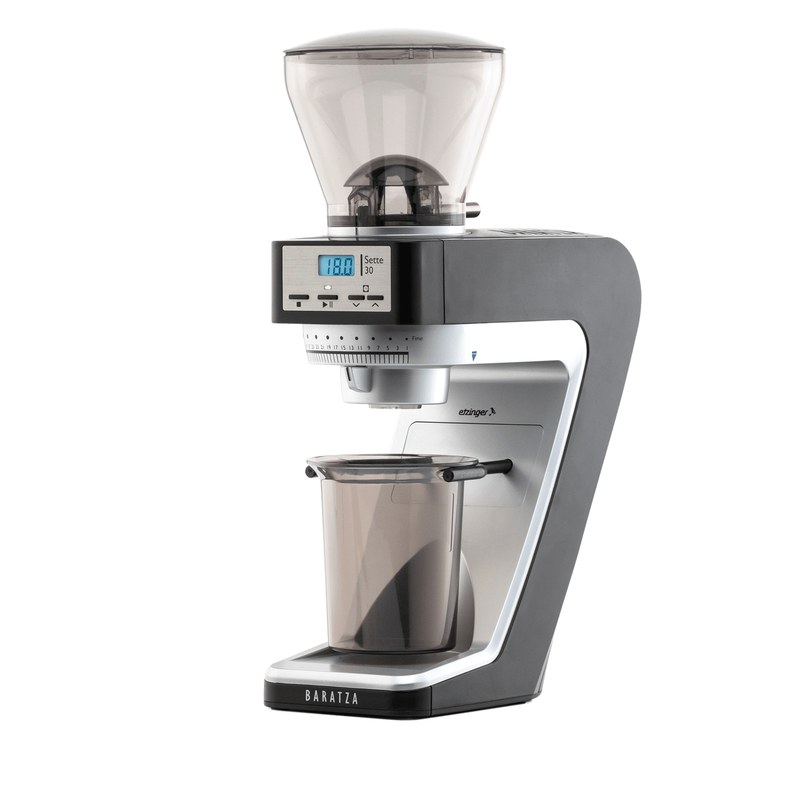
Highlights
- Straight-through design, grinds directly into the portafilter
- 30 espresso-focused micro-adjustments
- Integrated timer for repeatable doses
- Grinds nearly twice as fast as conventional designs
The Baratza Sette 30 is built specifically for espresso, with a straight-through design that grinds beans directly into your portafilter, no static-prone funnel, no dose loss. At around $300, it sits in a sweet spot where you get genuine espresso-tier performance without paying double for a commercial grinder.
The 30 settings are tuned to the espresso end of the spectrum, with the kind of fine adjustability that lets you actually dial in shots. Most “all-purpose” grinders technically reach espresso grind size but the adjustments are too coarse to dial in properly. The Sette 30 fixes that. The integrated timer also means once you find your dose, you hit a button and get the exact same weight of grinds every time.
If you mostly brew pour-over or French press, the Encore is the better buy. But if you have an espresso machine, even a budget one, the Sette 30 will improve your shots more than upgrading the machine itself would. For more on the espresso bean side, see our guide to coffee beans vs espresso beans.
Best high-end: Fellow Ode Gen 2
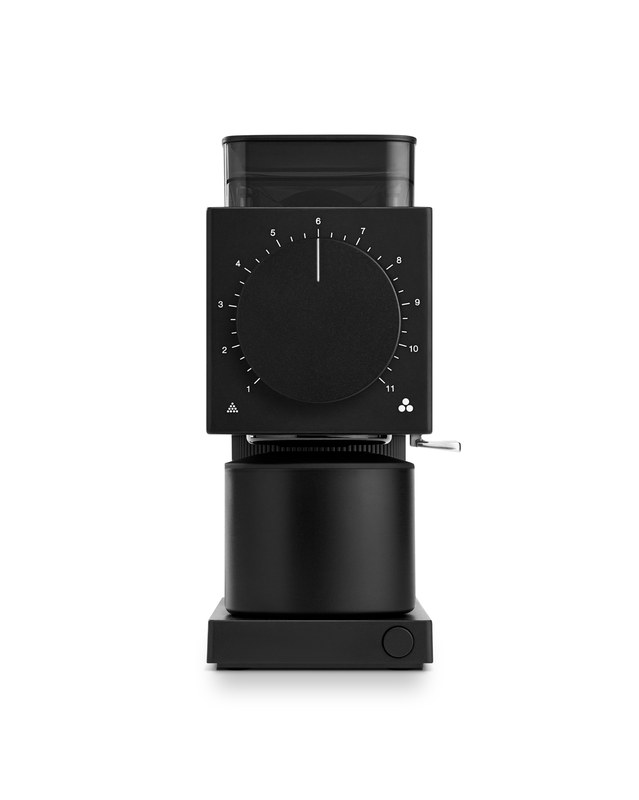
Highlights
- 64mm flat burrs (commercial-grade size)
- Single-dose design, no hopper, no retention
- 31 grind settings, designed for filter coffee
- Compact footprint and design-magazine looks
The Fellow Ode Gen 2 is the grinder you buy when you take filter coffee seriously and want something that lasts. At around $345, it sits between the Encore and a commercial grinder, but the build quality, burr size, and grind consistency are closer to the commercial side. The Gen 2 update added wider grind range and quieter operation over the original.
Single-dose design means you weigh out the beans you need and feed them straight in, no hopper sitting full of stale coffee, no retention between dose and cup. For people who buy specialty bags and rotate through different roasts, this is the right way to grind. The 64mm flat burrs produce a noticeably cleaner, more uniform grind than the Encore’s 40mm conical, which translates to clearer flavours in pour-over and Chemex especially.
The Ode is not for espresso, it cannot grind fine enough. If you brew pour-over, V60, Chemex, AeroPress, French press, or cold brew, and you want one grinder that you will never need to upgrade, this is the buy. For people who batch beans for a week, it pairs beautifully with the long-shelf-life style of our cold brew guide.
Best manual: 1Zpresso JX-Pro S
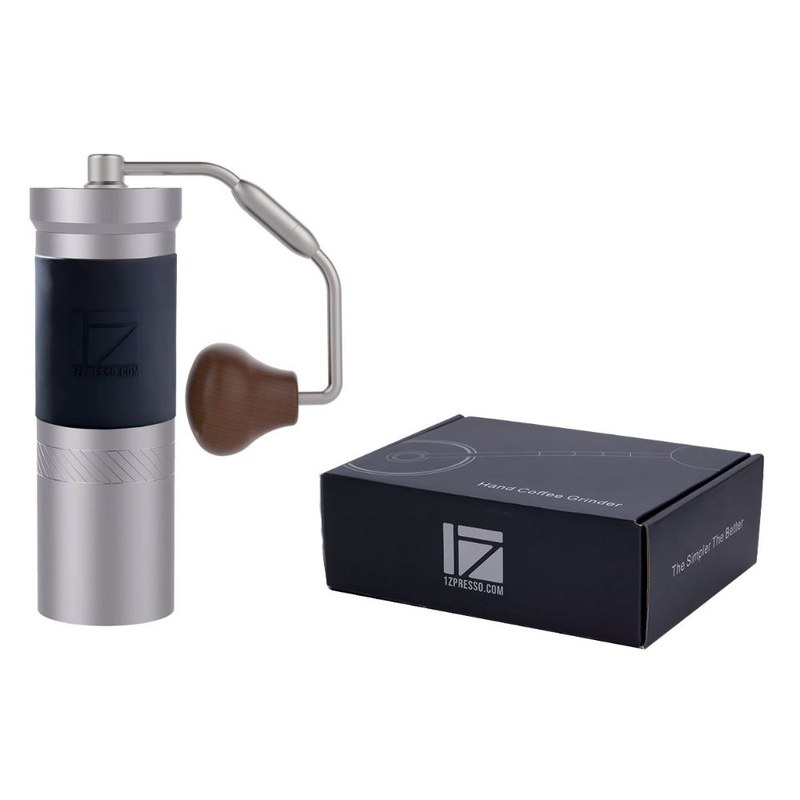
Highlights
- 48mm hardened steel conical burrs
- 12.5-micron-per-click fine adjustment
- Espresso to French press in one grinder
- No electricity, quiet, portable, indestructible
The 1Zpresso JX-Pro S is what the specialty coffee community considers the best manual grinder you can buy under $200. It punches above its price class by a clear margin, the build quality, burr geometry, and adjustability rival electric grinders three times the cost. If you have ever dismissed manual grinders as compromises, this one will change your mind.
The fine-adjustment dial moves the burrs in 12.5-micron increments, that is fine enough for genuine espresso dialing-in, while the wider range still goes coarse enough for cold brew. The hardened-steel conical burrs are sharper than most home electric grinders and stay sharp longer. Grinding 25g of beans takes about 45 seconds with reasonable effort, enough for one or two pour-overs.
Manual grinders make sense in three situations: small kitchens where counter space is gold, travellers and campers, and people who want zero retention between grinds. The 1Zpresso JX-Pro S is also nearly silent, useful for early-morning brewers in shared spaces. The only real downside is the effort: not a problem for one cup, becomes one for batch brewing.
Budget alternatives worth knowing about
If $170 for the Encore is more than you want to spend right now, two other grinders are worth considering. They both make better coffee than blade grinders by a wide margin, even if they cannot match the picks above.
The OXO Brew Conical Burr Coffee Grinder is the best electric option under $120. It uses stainless steel conical burrs, has 15 grind settings, and a one-touch timer for repeatable doses. Build quality is OXO’s usual, solid but not premium. It is the right buy if you want a no-fuss electric grinder for drip and pour-over without spending Encore money.
The Timemore Chestnut C2 is the manual grinder under $80 that overdelivers. Stainless steel burrs, 36 click settings, and a 25g capacity, basically a junior 1Zpresso for less than half the price. It is what we recommend to people who want their first burr grinder, manual or electric, on a tight budget.
What to look for in a coffee grinder
Beyond the brand-name picks, here is what actually matters when you are choosing a grinder.
Burrs over blades, always
This is non-negotiable. Blade grinders chop beans randomly, at any grind setting, you get a mix of fines and chunks, which produces uneven extraction. Burr grinders crush beans between two ridged plates, producing uniform particles. Every grinder in this guide is a burr grinder. If you are looking at anything under $50 that “grinds coffee,” check what kind of grinder it is, most cheap ones are blade.
Conical vs flat burrs
Both work. Conical burrs (Encore, JX-Pro S, Sette 30) are cheaper to make, run cooler, and produce a slightly bimodal grind, meaning slightly more variation in particle size. Flat burrs (Fellow Ode Gen 2) produce more uniform particles which translates to clearer flavours in the cup, but they cost more and generate more heat. For 95% of home use, conical is fine. Flat burrs are the upgrade you make when you want to taste the difference between a Kenyan and an Ethiopian side by side.
Grind range and adjustability
If you only ever brew one method, you only need a grinder that nails that method. If you switch between espresso, pour-over, and French press regularly, you need wide range AND fine adjustability. “30 settings” sounds like a lot until you realise espresso uses a 5-setting window, at that point, “30 evenly spaced settings” is much less adjustable than “30 settings concentrated at espresso fineness”.
Retention and single-dose
“Retention” is grinds that stay inside the grinder after you finish, they get stale and pollute your next brew. Hopper-based grinders hold beans on top and retain less per dose, but the hopper itself goes stale within a week. Single-dose grinders (like the Fellow Ode) take only the beans you weigh in, eliminating both problems. For people who buy good beans and rotate roasts, single-dose is genuinely better. For people who keep a single house blend, hopper grinders are fine.
Coffee grinder comparison table
| Grinder | Burr | Best for | Approx. price |
|---|---|---|---|
| Baratza Encore | 40mm conical | All-purpose, beginner-to-intermediate | $170 |
| Baratza Sette 30 | Conical, espresso-tuned | Espresso | $300 |
| Fellow Ode Gen 2 | 64mm flat | Pour-over, filter coffee, single-dose | $345 |
| 1Zpresso JX-Pro S | 48mm conical (manual) | Travel, small kitchens, all-method | $170 |
| OXO Brew Conical Burr | 40mm conical | Budget electric for drip/pour-over | $110 |
| Timemore Chestnut C2 | 38mm conical (manual) | Budget manual, all-method | $70 |
The right choice depends on your brewing method first, budget second. If you brew espresso, the Sette 30. If you do mostly pour-over/Chemex and care deeply about cup clarity, the Ode. If you want one grinder for everything and you are starting out, the Encore. If you want manual or you are tight on counter space, the JX-Pro S.
Watch: how much grinder upgrade actually matters
The “$50 vs $500 vs $500,000 Coffee Grinder” video from Lance Hedrick is one of the clearest demonstrations of how much grinder quality moves the cup. He blind-tastes coffee from a budget grinder, a prosumer grinder, and a $500K commercial grinder, and the difference is real, but smaller than most people expect once you are above the $150 burr-grinder threshold.

What coffee should you use with a new grinder?
A good grinder shows the bean. Once you upgrade, you will taste the difference between fresh and stale beans, light and dark roasts, and origins you have ignored for years. A few starting points:
- For French press: chocolatey, full-bodied beans, see our best coffee for French press
- For cold brew: medium-dark roasts with caramel notes, see our best beans for cold brew
- For latte and cappuccino: espresso blends with chocolate and nut notes, see our best beans for cappuccino and best beans for latte
- For total beginners: a balanced medium roast, see our best beans for beginners
Freshness matters more than origin for most people. A bag within 4 weeks of its roast date will outperform a “premium” bag that has been sitting on a shelf for 6 months. Our piece on how long beans stay at their best after roasting covers this in detail.
The bottom line
The grinder is the most important piece of coffee equipment in any home setup. A great grinder with a $30 French press makes better coffee than a $30 grinder with a $1,000 espresso machine. If you do one upgrade this year, make it your grinder.
For most people, the Baratza Encore is the right buy, it handles every brewing method, it lasts a decade, and at $170 it is still attainable. Add the Sette 30 if you brew espresso, the Ode Gen 2 if you take filter coffee seriously, or the 1Zpresso JX-Pro S if you want manual. The OXO and Timemore options below $120 are real upgrades over blade grinders and a sensible starting point if your budget is tight today.
FAQs About Coffee Grinders
Want a hand-crank option instead? See our best manual coffee grinder picks. Our full guide to brewing equipment goes deeper.
Blade grinders chop beans randomly, producing a mix of fine dust and large chunks at the same setting. That mix extracts unevenly, the dust over-extracts and tastes bitter while the chunks under-extract and taste sour, both at the same time. Burr grinders crush beans between two ridged plates, producing uniform particles for even extraction. The difference in the cup is dramatic.
Spend more on the grinder than on the brewer. The Baratza Encore at around $170 is the sweet spot, past this point, you pay more for specific advantages (espresso precision, flat burrs, single-dose design) rather than raw quality. Under $100, the OXO Brew and Timemore C2 are both real upgrades from blade grinders but trade off speed or adjustability. Avoid anything under $40, that price floor is almost always blade grinders.
In theory yes, in practice not always well. The Baratza Encore covers everything from espresso to French press but the espresso adjustments are coarse, fine for a pre-ground espresso machine, fiddly for a serious setup. If espresso is your main brew method, get a dedicated espresso grinder like the Baratza Sette 30. If you brew espresso once a week, the Encore is fine.
Electric for daily multi-cup brewing, manual for one-up brewing or travel. Manual grinders like the 1Zpresso JX-Pro S match or exceed electric grinders three times the price on grind quality. But grinding 60g of beans for a full French press by hand takes 2–3 minutes of effort. If you brew once a day for one person, manual is a great choice. If you brew for a family every morning, get electric.
Conical burrs are cheaper, run cooler, and are easier to keep clean. Flat burrs produce a more uniform grind which translates to clearer flavours in the cup, worth it if you take pour-over seriously and buy specialty bags. For all-purpose home brewing, conical is the right choice (the Baratza Encore is conical). Flat burrs are the upgrade you make to the Fellow Ode Gen 2 when you want noticeably better filter coffee.
A quality burr grinder lasts 10 to 15 years of daily home use. The burrs themselves wear out after roughly 1,000 lbs of coffee, that is roughly a decade of daily use, but on grinders like the Baratza Encore and Sette, replacement burrs are sold direct from the brand for around $30. Cheaper grinders often cannot be repaired and have to be replaced entirely once the burrs dull.
 Austin Barker
Founder & Lead Editor
Seven years behind a bar before starting Brewing Coffees. Writes most of the equipment coverage and tests every machine on this site in an ordinary home kitchen.
Austin Barker
Founder & Lead Editor
Seven years behind a bar before starting Brewing Coffees. Writes most of the equipment coverage and tests every machine on this site in an ordinary home kitchen.