Coffee brewing is an art form. It is a process that requires patience, skill, and, perhaps most importantly, the correct equipment. This leads us to today’s question: Does the type of coffee grinder make a difference to your coffee’s taste?
A coffee grinder can help you to produce delicious coffee that is fresh and full of flavor. Pre-ground coffee can be stale, whereas a grinder guarantees a fresh cup of coffee every day. The moment coffee is ground, it begins losing its volatile aromatic compounds, a fresh grind immediately before brewing captures those compounds in your cup instead of in the air.
A coffee grinder also allows you to choose your grind size, which can be useful for making different types of coffee. Espresso needs a fine, powder-like grind; French press wants coarse, chunky grounds. One size does not fit all brew methods, and the right grinder lets you dial in exactly what each recipe demands.
Knowing which grinder is best for your coffee is vital, and we’ve got everything you need to know, from grind size charts to budget guidance.
Does the Coffee Grinder You Use Make a Difference?
The type of grinder you use makes a big difference, and a quality grinder can completely transform your cup of coffee.
The coffee grinder you use makes a big difference because it affects the coarseness and consistency of the coffee grounds, which is crucial to the coffee’s strength and bitterness.
Different grinders also produce different amounts of heat, which affects the coffee’s flavor. A blade grinder spins at high speed and generates significant friction heat, enough to subtly cook the grounds before they even hit the water. Burr grinders operate more slowly and with greater control, preserving delicate flavor compounds that high heat would otherwise destroy.
Beyond heat, consistency is the single most important factor in grind quality. When your grounds contain a mix of fine powder and coarse chunks, the fines over-extract (turning bitter) while the coarse pieces under-extract (turning sour), all in the same cup. A grinder that produces uniform particle sizes gives you control over extraction, which means control over flavor.
Why the Type of Coffee Grinder Matters
Different grinders produce different heat levels, static electricity, and grind sizes.
Grind size refers to how coarse or fine your ground coffee will be. Think of it like a spectrum: from superfine Turkish coffee powder at one end to coarsely chopped cold brew grounds at the other. Each brew method has a sweet spot on that spectrum, and hitting it consistently is what separates a mediocre cup from an exceptional one.
Coffee that is not ground enough can be weak, while coffee that is ground too finely can be bitter. Over-ground coffee passes through filters poorly, clogs espresso pucks, and creates unpleasant astringency. Under-ground coffee lets water rush through too quickly, resulting in a watery, sour brew that lacks body.
The grinder can also cause a surge of static charge in the ground coffee. This charge occurs due to the grinding burr’s speed, how the coffee moves through the grinder’s chute, the temperature, and the humidity. You cannot control all of these factors, but the type of grinder you use is in your control. Static is a bigger problem with blade grinders and lower-quality electric burr grinders, premium burr grinders are often designed to minimize static buildup.
Then there’s heat. The temperature of the coffee will increase during the grinding process, and heat causes coffee to lose flavor. This is why professional baristas often prefer slower-RPM burr grinders: they generate less frictional heat, protecting the aromatic oils that define a coffee’s character.
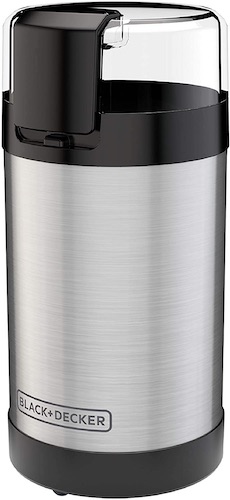
Our Pick: Black & Decker
Compact Design, 30% Better Grinding. This coffee grinder makes it simple to achieve the uniform grind that makes a delicious cup of coffee.
Types of Coffee Grinders
The two main types of coffee grinders are the blade grinder and the burr grinder.
Burr grinders are better but also more expensive. So, before you rush out and buy one, let’s take a look at the pros and cons.
Blade grinder
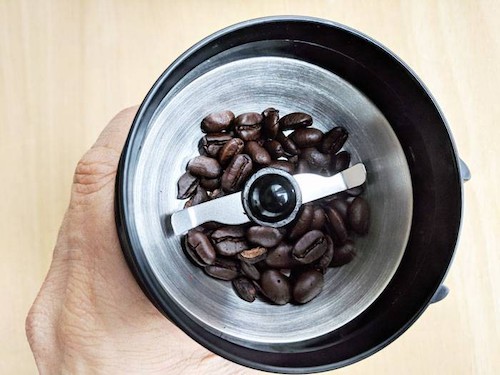
The blade grinder is very common and an excellent choice for beginners.
They are easy and affordable but getting a consistent grind size can be challenging.
This type of grinder chops the coffee beans and has a propeller-like blade. It works quickly, but the ground coffee is often very uneven, which results in a low-quality cup of coffee.
It is best to pulse instead of holding the blade grinder down. The aim is to grind the beans evenly while not letting them get too hot. Short two-second pulses with brief pauses in between help redistribute the beans and reduce heat buildup.
Blade grinders produce a fair amount of static charge, which causes the coffee grounds to stick to any surfaces they touch. This can result in a very messy kitchen! A simple trick is to add a single drop of water to the beans before grinding, this reduces static significantly without affecting the brew.
A blade grinder is ok for beginners or coffee lovers on a budget, but it shouldn’t be your first choice.
A blade grinder will get the job done and is better than nothing, but you’ll want to consider a burr grinder instead for the best quality.
Burr grinder
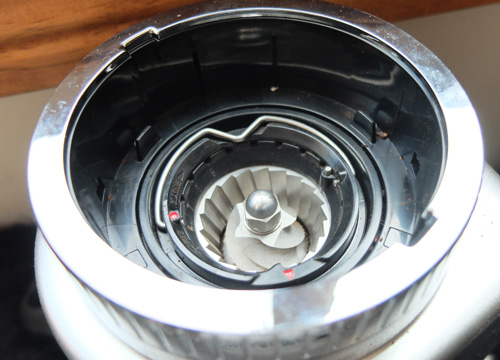
Burr grinders, also known as burr mills, avoid many downsides of blade grinders and are generally seen as superior.
Burr grinders can be expensive, but they are good quality and known for their consistency. The key advantage is that the gap between the two burrs is fixed and adjustable, you set the gap, and every bean passes through it at the same distance, producing remarkably uniform particle sizes.
Instead of blades, burr grinders have two revolving surfaces, called burrs, which revolve to grind the coffee.
There are two main types of burr grinders: flat and conical.
Conical burr grinders use two cone-shaped burrs, while flat burr grinders use two parallel and identical rings.
Both of these grinders have a stationary burr and another that moves. The beans are drawn between the burrs and crushed.
Conical burr grinders are better for beginners and home coffee brewers as they are easier to use, cheaper, and quieter. Flat burr grinders tend to be found in commercial espresso bars, they produce an extremely consistent grind and are prized by professionals, but they come at a higher price point and require more maintenance.
Blade vs Burr Grinder

Grind Size Guide: Which Setting for Which Brew
One of the most valuable things a good grinder gives you is control over grind size. But knowing you need a “fine” grind for espresso is one thing, understanding exactly why and what that means for your cup is another. The table below maps each popular brew method to its ideal grind size and explains why that size works.
| Brewing Method | Grind Size | Description | Why It Matters |
|---|---|---|---|
| Espresso | Extra fine | Powder-like, similar to fine salt | High pressure forces water through quickly, fine grounds slow it down enough for full extraction |
| AeroPress | Medium-fine | Slightly coarser than espresso | Shorter brew time needs finer grounds to extract flavor; adjust finer or coarser to taste |
| Pour over | Medium | Resembles table salt or coarse sand | Allows water to flow at the right rate for a clean, balanced extraction |
| Drip / filter | Medium | Similar to pour over | Flat-bottom drip baskets need a medium grind to match the machine’s flow rate |
| French press | Coarse | Chunky, like sea salt or breadcrumbs | Coarse grounds stay above the plunger mesh and reduce sediment in the cup |
| Cold brew | Extra coarse | Rough and chunky | Long steep times (12–24 hrs) require coarse grounds to avoid over-extraction and bitterness |
A useful mental model: the longer water is in contact with coffee grounds, the coarser your grind should be. French press and cold brew steep for minutes or hours, so you want large particles that release flavor slowly. Espresso is a 25–30 second extraction under pressure, so you need fine particles that release flavor fast.
Most entry-level burr grinders have numbered click settings (e.g. 1–10) rather than labeled grind sizes, so use the table above as a reference point and dial in from there. When your espresso tastes sour and watery, grind finer. When it tastes bitter and harsh, grind coarser. Small adjustments, one click at a time, make a noticeable difference.
Hand Grinder vs Electric Grinder
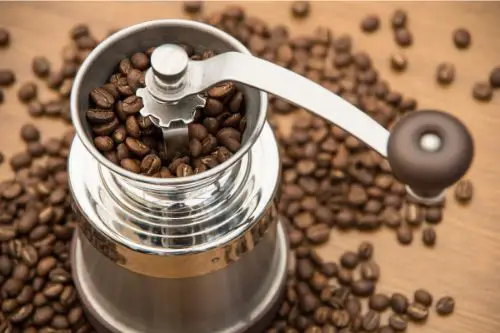
When most people picture a coffee grinder, they picture an electric model sitting on the kitchen counter. But hand grinders, manually operated burr grinders turned by a crank, have surged in popularity, and for good reason. Knowing the difference helps you choose the right tool for your lifestyle.
Hand grinders excel for travel and portability. They are compact, lightweight, and require no electricity, ideal for camping, hotel rooms, or office desks where counter space is limited. A quality hand burr grinder like the Timemore C2 or 1Zpresso JX fits in a jacket pocket and produces grind quality that rivals electric burr grinders costing three times as much. If you are a frequent traveler who refuses to compromise on coffee quality, a hand grinder is hard to beat.
On a tight budget, a hand burr grinder almost always outperforms an electric blade grinder at the same price. A $30–$40 hand burr grinder will produce more consistent grounds than a $30 electric blade grinder, full stop. The manual mechanism forces beans through a fixed burr gap, which a spinning blade simply cannot replicate. If your choice is between a budget blade grinder and a budget hand burr grinder, choose the hand burr every time.
That said, electric grinders win on daily convenience. Grinding 20g of coffee by hand takes 45–60 seconds of consistent cranking, perfectly fine for one cup, but tedious if you are making coffee for two or three people every morning. Electric burr grinders, even entry-level models, do the same job in under 10 seconds. For a household that brews multiple cups daily, the convenience of an electric burr grinder justifies the higher price.
How Much Should You Spend on a Coffee Grinder?
Grinder prices span a wide range, from under $20 for a basic blade grinder to over $500 for a prosumer flat burr machine. The good news is that you do not need to spend big to get a significant quality upgrade. Here is a breakdown of what each budget tier actually delivers.
| Budget | Type | What You Get | Best For |
|---|---|---|---|
| Under $30 | Blade grinder | Gets the job done; inconsistent grind; high heat and static | Casual drinkers, first-time grinder buyers |
| $30–$80 | Entry hand burr or entry electric burr | Consistent grind; adjustable settings; minimal heat | Home brewers making pour over, drip, or French press |
| $80–$200 | Mid-range electric burr | Stepless grind adjustment; low retention; suitable for espresso | Espresso and pour over enthusiasts; daily home use |
| $200+ | Prosumer burr grinder | Near-silent motor; precise particle distribution; minimal fines | Serious home baristas dialing in espresso or specialty brews |
The biggest value jump in grinder spending happens between the under-$30 blade tier and the $30–$80 burr tier. Spending an extra $20–$30 to move from a blade grinder to an entry burr grinder will produce a more noticeable improvement in cup quality than spending $200 more within the burr category. If you are upgrading from a blade grinder for the first time, this is the move to make.
Espresso is the one brew method where spending more on a grinder genuinely pays off. Pulling a good espresso shot requires extreme grind consistency and precise adjustment capability, qualities that only mid-range and above grinders reliably deliver. If espresso is your primary brew, budget at least $80–$120 for a grinder before worrying about upgrading your espresso machine.
Final Thoughts
There are many benefits to having a coffee grinder at home. The most significant is fresher coffee, as pre-ground coffee can quickly go stale, ground coffee starts losing its best aromatics within 15–30 minutes of being ground. Grinding fresh immediately before brewing is the single highest-impact change most coffee drinkers can make.
When it comes to choosing the right grinder, a simple recommendation ladder applies. If you are just getting started or on a very tight budget, a blade grinder will produce drinkable coffee, but treat it as a temporary stepping stone. The next step up is an entry-level burr grinder, either hand or electric, in the $30–$80 range; this is where grind consistency improves dramatically and most home brewers will be very happy. Mid-range electric burr grinders ($80–$200) open the door to espresso and allow you to fine-tune extraction across all brew methods. At the prosumer level ($200+), you are buying precision, silence, and minimal waste, worthwhile if you are brewing specialty coffee daily and want the absolute best results.
Though more expensive than blade grinders, burr coffee grinders are the best option, as they produce a more consistent ground. When choosing a burr grinder, we recommend conical over flat grinders for home use, as they are cheaper, quieter, and make it easier to produce a consistent grind of the desired coarseness.
If you want to actually upgrade your grind, our pick of the best coffee grinders covers burr, manual and electric options. You can also read why some beans are harder to grind than others, or whether you can use a food processor in a pinch. We have more on coffee gear.
A burr grinder uses two abrasive surfaces (burrs) to crush beans to a consistent particle size. A blade grinder chops beans randomly with a spinning blade, producing an uneven mix of fine dust and coarse chunks. Uneven particle size causes uneven extraction, some grounds over-extract (bitter) while others under-extract (sour). For any brew method, a burr grinder produces a noticeably better and more consistent cup.
Yes, even an inexpensive burr grinder (£30–50) produces significantly more consistent grounds than a blade grinder. The improvement in cup quality is immediately noticeable. Entry-level burr grinders like the Baratza Encore or Oxo Brew Conical Burr Grinder are often the single biggest upgrade a home brewer can make after buying quality beans.
Espresso requires a very fine, consistent grind that most general-purpose grinders can’t reliably achieve. Espresso grinders have finer adjustment settings and more precise burrs to hit the tight particle size range espresso extraction demands. Using an unsuitable grinder for espresso typically results in channelling, uneven extraction, and shots that are either too fast (sour) or too slow (bitter). A dedicated espresso grinder makes a significant difference to shot quality.
A quality manual burr grinder can produce grounds as consistent as a mid-range electric burr grinder, sometimes better, because hand grinders can use larger burrs relative to their price. The trade-off is time and effort: grinding enough for a full cafetière by hand takes 2–3 minutes. For espresso, manual grinders are slower but very popular among enthusiasts. For daily use at volume, an electric grinder is more practical.
Yes, one of the most impactful changes you can make to your coffee. Ground coffee starts losing aroma and flavour within 15–30 minutes of grinding as volatile compounds oxidise and escape. Pre-ground coffee bought in a bag has already lost much of its freshness by the time it reaches you. Grinding just before brewing preserves these compounds and produces a noticeably more aromatic, flavourful cup compared to pre-ground, regardless of the beans used.
 Austin Barker
Founder & Lead Editor
Seven years behind a bar before starting Brewing Coffees. Writes most of the equipment coverage and tests every machine on this site in an ordinary home kitchen.
Austin Barker
Founder & Lead Editor
Seven years behind a bar before starting Brewing Coffees. Writes most of the equipment coverage and tests every machine on this site in an ordinary home kitchen.