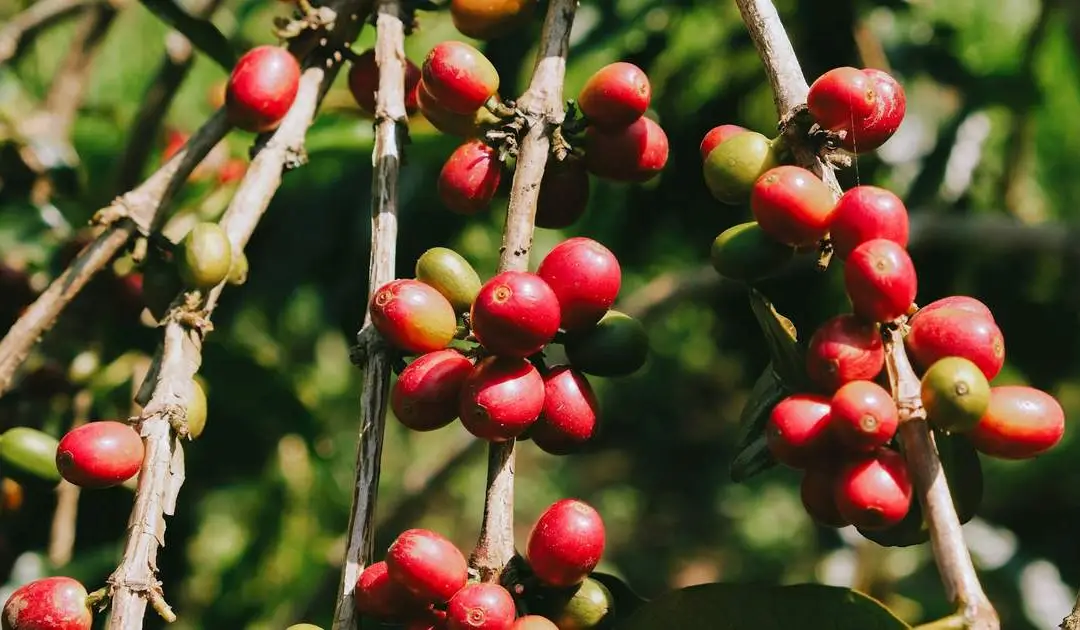
Kona coffee is arabica coffee grown on the volcanic slopes of Hualalai and Mauna Loa in the Kona districts of Hawaii’s Big Island. It has a reputation for a smooth, mild, low-acid cup, and it is one of the most expensive and most imitated coffees on the shelf, which is why the label matters as much as the taste.
This guide covers what Kona coffee is, what it tastes like, how the grades work, why it costs so much and how to tell real Kona from a blend. If you want to see how it fits among other coffee grown in the US, our guide to US coffee has the wider picture.
The short answer: what is Kona coffee?
- Where: the North and South Kona districts on the west side of Hawaii’s Big Island.
- Growing area: a narrow belt on the slopes of Hualalai and Mauna Loa, roughly 30 miles long and only a mile or two wide.
- Bean: arabica, mostly the Typica variety.
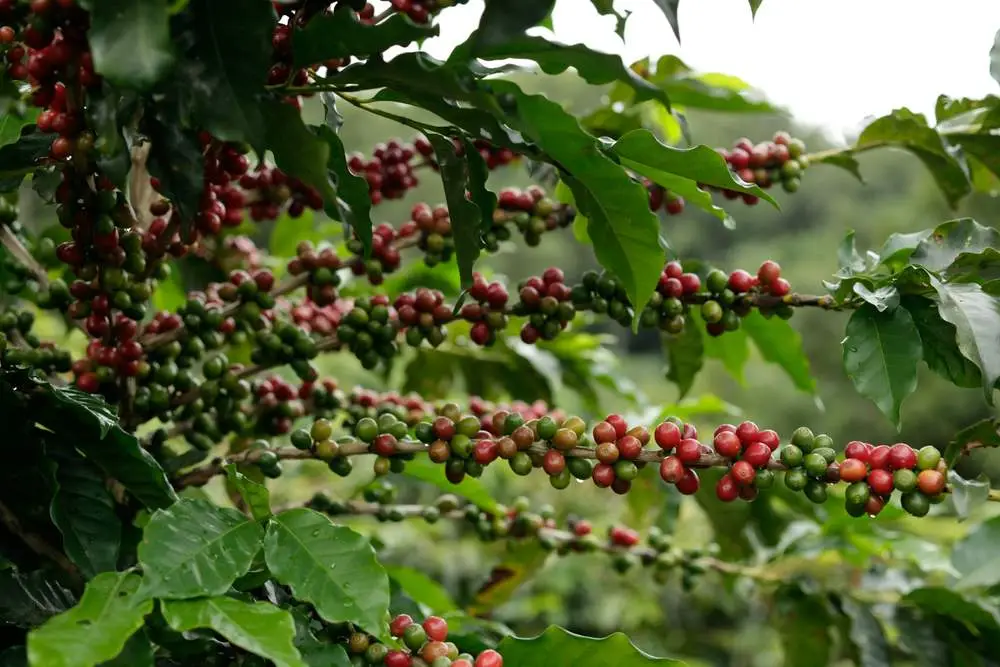
- Harvest: picked by hand over several months, roughly late summer to winter.
- Taste: smooth, mild and medium in body, with low acidity.
Why Kona is different
Kona has a combination that suits coffee: volcanic soil, sunny mornings, cloud cover in the afternoon and regular rain, all on mountain slopes at a moderate elevation. The farms are small and often family-run, and much of the picking is done by hand across steep ground. The growing area is tiny compared with the big coffee regions of Brazil or Colombia, so there is very little Kona to go round.
What Kona coffee tastes like
Kona is usually described as smooth and mild, with a medium body, low acidity and notes of brown sugar, nuts and milk chocolate, sometimes with a light fruit or floral edge. It is a delicate coffee rather than a bold one, which means it shows best when it is brewed simply. A pour-over or a drip machine lets the subtle flavors through, and a French press gives a fuller body. See our guides to how to make pour-over coffee and how to make French press coffee.
Kona coffee grades
| Grade | What it means |
|---|---|
| Extra Fancy | The largest beans with the fewest defects, and the most expensive |
| Fancy | Slightly smaller beans, still with very few defects |
| No. 1 | Smaller again, with a few more defects allowed |
| Select | Lower-grade beans with more defects |
| Prime | The lowest of the standard grades, with the most defects allowed |
| Peaberry No. 1 and Peaberry Prime | Round, single-seed beans that form when only one bean develops in a cherry |
Grading is mostly about bean size and defects, not taste. A lower grade is not automatically a worse cup, but the higher grades are sorted more carefully and carry the price to match.
100% Kona vs a Kona blend
This is where most buyers get caught out. A bag labeled 100% Kona coffee contains only coffee grown in the Kona districts. A bag labeled Kona blend can legally contain far less. Under Hawaii’s coffee labeling law, a blend that names a Hawaii growing region needs at least 10% coffee from that region today, and the label has to state the percentage and the origin of the rest. The state has passed a law that will raise the minimum to 51%, and the rules are set out on the Hawaii Department of Agriculture labeling page.
The safest approach is to look for the words 100% Kona coffee on the front of the bag. Terms such as Kona blend, Kona style or Kona-flavored do not guarantee much Kona at all.
Why is Kona coffee so expensive?
- A tiny growing area: the Kona belt is a strip on one side of one island.
- Hand picking: steep slopes and staggered ripening mean most cherries are picked by hand.
- High costs: land, labor and processing all cost more in Hawaii.
- Strong demand: the name is famous, and supply cannot rise to meet it.
- Imitation: blends and mislabeled bags exist, so genuine 100% Kona keeps a premium.
How much of that price is quality and how much is scarcity? Our guide on cheap vs expensive coffee beans looks at what you get for extra money, and Kona is a good example of a coffee where the origin drives the price.
How to buy real Kona coffee
- Look for 100% Kona coffee on the front, not on a small line at the back.
- Check the grade. Extra Fancy and Fancy are the top grades, and Peaberry is sold as a specialty.
- Buy roasted-to-order beans with a roast date, and see how to tell if coffee beans are fresh.
- Buy whole bean so you grind it fresh.
- Buy from a farm or a roaster that names the farm, which is harder to fake than a big-brand bag.
- Be wary of a low price. Real 100% Kona rarely sells cheaply.
Note that Hawaiian coffee and Kona coffee are not the same thing. Other islands and districts, such as Kau, Maui and Kauai, grow coffee too, and it is sold as Hawaiian rather than Kona.
How to brew Kona coffee
Go for a medium roast, which keeps the delicate flavors that make Kona worth paying for. A very dark roast tends to hide them. Use fresh beans, water at 195 to 205°F and a ratio of roughly 1 part coffee to 16 parts water, as covered in our coffee to water ratio guide. Our light vs dark roast guide explains how the roast changes the cup, and the best medium roast coffee roundup lists other beans in the same style. Store the beans airtight and away from light, as covered in how to store coffee beans.
Starting recipes for Kona:
| Method | Coffee | Water | Time |
|---|---|---|---|
| Pour-over | 20 g | 320 g | 3 to 4 minutes |
| French press | 30 g | 450 g | 4 minutes |
| Drip machine | 60 g | 1 liter | Follow the machine |
These follow the 1 to 16 style ratios in our coffee to water ratio guide. Grind just before brewing, and change the amount of coffee, not the time, if you want it stronger.
Common Kona buying mistakes
- Buying a Kona blend and thinking it is Kona: read the percentage on the label.
- Buying pre-ground: the delicate flavors fade quickly once it is ground.
- Buying old stock: a roast date matters more for a coffee this delicate.
- Choosing by price alone: a very cheap bag is almost certainly a blend.
- Brewing it too dark or too strong: that hides the reason you paid for it.
Is Kona worth it?
If you like smooth, mild, gentle coffee, a bag of genuine 100% Kona can be a lovely treat. It is not necessarily better than well-sourced coffee from elsewhere, though: you are paying for scarcity and origin as well as flavor. Buy a small bag first and judge it for yourself. Many farms on the Kona side also offer tours and tastings, which is a good way to see the harvest, compare roasts and buy directly. If what you want is a low-acid cup, there are cheaper ways to get there, covered in our guide to low acid coffee.
The bottom line
Kona coffee is a smooth, mild arabica from a small strip of Hawaii’s Big Island. Look for the words 100% Kona on the bag, brew it simply and treat it as a treat rather than a daily staple. There is more to explore in our coffee beans section.
Frequently Asked Questions About Kona Coffee
Kona coffee is arabica coffee grown on the slopes of Hualalai and Mauna Loa in the North and South Kona districts of Hawaii’s Big Island. It is known for a smooth, mild, low-acid cup.
Only a small area can grow it, most of it is picked by hand on steep slopes, and land and labor costs in Hawaii are high. Demand is strong and supply is limited, which pushes the price up.
A bag labeled 100% Kona has only coffee from the Kona districts. A Kona blend can contain as little as 10 percent Kona today, mixed with cheaper coffee from elsewhere, and the state has passed a law to raise that minimum.
Smooth and mild with a medium body and low acidity, often with notes of brown sugar, nuts and chocolate.
The standard grades, from best to lowest, are Extra Fancy, Fancy, No. 1, Select and Prime, judged mostly by bean size and defects. Peaberries are graded separately as Peaberry No. 1 and Peaberry Prime.
It is often described that way, and many drinkers find it gentle. Acidity also depends on the roast and the brewing, so a dark roast or a cold brew can be lower still.
 Austin Barker
Founder & Lead Editor
Seven years behind a bar before starting Brewing Coffees. Writes most of the equipment coverage and tests every machine on this site in an ordinary home kitchen.
Austin Barker
Founder & Lead Editor
Seven years behind a bar before starting Brewing Coffees. Writes most of the equipment coverage and tests every machine on this site in an ordinary home kitchen.