French press and pour over both give you more control and flavour clarity than an automatic drip machine, but they land in very different cups: French press is full immersion, brewed with a metal filter that lets oils and fine sediment through, while pour over and drip are both filtered through paper, which strips those oils for a cleaner, lighter cup. Drip is the hands-off version of that same filtered method, built for convenience rather than control.
If you already know how to brew each one and just want the how-to, see our guides to French press coffee and pour over coffee. This guide is the head-to-head: what actually separates the three methods on taste, caffeine, gear, and cleanup, so you can pick the one that fits how you actually drink coffee. For more methods, see how to make coffee.
French Press vs Pour Over vs Drip Coffee: The Difference at a Glance
| French Press | Pour Over | Drip Coffee | |
|---|---|---|---|
| Brew method | Full immersion | Filtered, manual | Filtered, automatic |
| Filter type | Metal mesh | Paper | Paper |
| Grind size | Coarse | Medium-fine | Medium |
| Brew time | ~4 minutes | 2.5–4 minutes | 5–6 minutes (full pot) |
| Body / mouthfeel | Heavy, oily, some sediment | Clean, light, tea-like | Clean, light, mild |
| Hands-on effort | Low (steep and press) | High (pour technique matters) | Very low (machine does it) |
| Best for | Rich, full-bodied cup with minimal gear | Clarity and nuance, one cup at a time | Convenience for a crowd or a daily routine |
For the full breakdown of every major coffee drink and brew style on the site, see our guide to types of coffee.
What Is French Press Coffee?
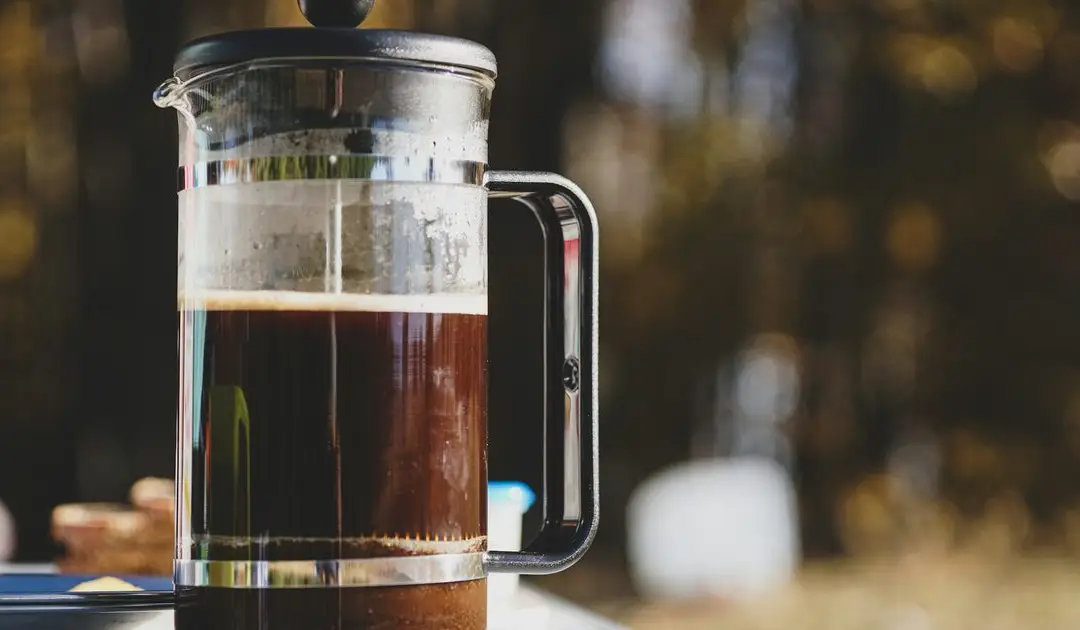
A French press steeps coarse coffee grounds directly in hot water for about four minutes, then separates the grounds with a metal mesh plunger. Because the grounds sit fully submerged for the whole brew, this is called immersion brewing. It’s also the reason a French press needs almost no gear beyond the press itself and a kettle, no filters, no dripper, no paper to restock.
The metal mesh is coarse enough to let the coffee’s natural oils and some fine particles through, which is the single biggest reason French press tastes so different from the other two methods here. For the full method, ratios, and steep-time troubleshooting, see our how to make French press coffee guide.
What Is Pour Over Coffee?
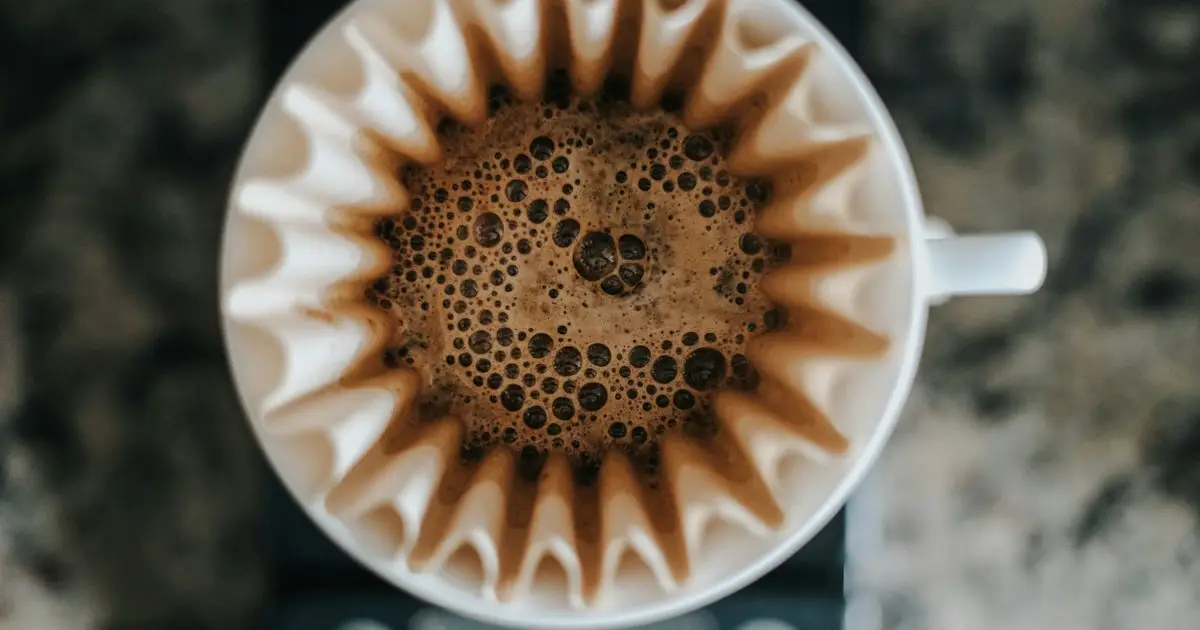
Pour over is a manual, filtered brewing method: hot water is poured over medium-fine grounds sitting in a paper-lined dripper (a Hario V60, Chemex, or Kalita Wave, for example), and gravity pulls the coffee through into a cup or carafe below. Unlike French press, the water is only in contact with each layer of grounds briefly as it passes through, which is why it’s sometimes called a filtered or infusion method rather than immersion.
The paper filter is doing most of the work here: it catches the oils and fine sediment a metal mesh lets through, which is why pour over coffee comes out so much cleaner and brighter than French press. It’s also the most technique-dependent method of the three, pour speed, pour pattern, and grind consistency all show up directly in the cup. See our full how to make pour over coffee guide and our picks for the best pour over coffee makers if you’re buying your first dripper.
What Is Drip Coffee?
Drip coffee is what comes out of an automatic coffee maker, the countertop machine that heats water and drips it over grounds in a paper filter basket, brewing an entire pot with no hands-on pouring required. Mechanically, it’s the same filtered method as pour over, water through grounds through a paper filter, just automated and usually brewed at a larger volume and a faster, less-controlled flow rate.
That’s also its main limitation next to manual pour over: a drip machine can’t vary its pour speed or pattern the way a person can, so it’s more consistent batch to batch but less capable of the precision that makes a great single-cup pour over so distinct. It earns its place for a completely different reason, brewing four, eight, or twelve cups at once with zero technique required.
Taste and Body Compared
This is where the filter, not the method’s popularity, decides everything. French press’s metal mesh lets natural coffee oils and fine particles straight into the cup, giving it a heavier, fuller body with a slightly gritty mouthfeel if you drink it right down to the bottom. That same lack of filtration mutes some of the brighter, more delicate flavour notes and can tip into bitterness if the grounds steep too long before pressing.
Pour over’s paper filter blocks almost all of those oils and fines, producing a noticeably cleaner, lighter-bodied cup that lets acidity and individual flavour notes, fruit, florals, chocolate, whatever the bean offers, come through more distinctly. Drip coffee shares that same clean, paper-filtered profile, but tends to taste slightly flatter and less nuanced than a well-poured pour over, since the machine can’t adjust its pour the way a person controlling a kettle can.
- French press: heavy body, more bitterness risk, less clarity.
- Pour over: clean, bright, the most nuanced of the three, but the most technique-dependent.
- Drip: clean like pour over, but flatter and less distinct, the trade-off for hands-off convenience.
Caffeine Compared
Caffeine differences between these three methods come mostly from how much coffee you use per cup, not from some fixed property of the method itself, but there is a real pattern worth knowing. Because French press fully immerses the grounds for the whole brew, it extracts caffeine slightly more efficiently than a quick pass through a filter, one widely cited comparison found French press running roughly 15–20% higher in caffeine than drip and filtered coffee brewed at a similar ratio.
| Method | Typical caffeine (8oz cup) |
|---|---|
| French press | ~80–120mg |
| Pour over | ~80–115mg |
| Drip coffee | ~95–165mg |
Those ranges overlap on purpose, the real lever is your coffee-to-water ratio, not which of these three methods you pick. A strong pour over with a tight ratio will out-caffeinate a weak, over-diluted drip pot every time.
Brew Time, Grind Size and Gear Compared
Grind size has to change with the method because it controls how long water is in contact with the coffee. French press uses a coarse grind since the grounds steep for a full four minutes, too fine and you’ll get over-extracted, muddy coffee (and more sediment past the mesh). Pour over needs a medium-fine grind so water passes through in the right window, roughly two-and-a-half to four minutes. Drip machines typically call for a medium grind, a middle ground that works with the machine’s fixed, faster flow rate.
| French Press | Pour Over | Drip Coffee | |
|---|---|---|---|
| Grind size | Coarse | Medium-fine | Medium |
| Upfront gear cost | Lowest ($15–$40) | Low-medium ($20–$60 dripper + kettle) | Highest ($30–$200+ machine) |
| Ongoing cost | None (reusable mesh) | Paper filters | Paper filters |
| Skill required | Low | High | Very low |
A consistent grind matters more for pour over than for the other two, since uneven particles create channels that let water rush through unevenly. If you’re serious about pour over, a good burr grinder will do more for your cup than a fancier dripper.
Cleanup and Convenience Compared
French press is the messiest to clean, wet grounds have to be knocked out or scooped from the carafe, and the mesh filter needs a rinse to stay free of trapped oils. Pour over is the easiest: lift the paper filter out with the spent grounds still inside and toss it, no scrubbing needed. Drip machines split the difference, the filter basket is just as easy to empty as a pour over, but the carafe, hot plate, and water reservoir need occasional cleaning and descaling to keep the machine running well.
For daily convenience, drip wins outright, load it up, hit the button, and come back to a full pot. Pour over is the opposite end of the spectrum, one cup, full attention, five minutes of your time you can’t really multitask around.
Setting up at home? A good burr grinder matters more than which of these three you pick, see our best coffee grinder picks, and if pour over is the one you’re after, our best pour over coffee maker roundup covers the V60, Chemex, and Kalita Wave.
What About Moka Pot or AeroPress?
Neither fits neatly into this comparison, but both come up alongside it often enough to mention. A moka pot uses steam pressure to push water through grounds, producing something closer to concentrated espresso than any of the three methods above. An AeroPress is closer to a hybrid, immersion like French press, but pushed through a paper or metal filter with hand pressure, landing somewhere between French press body and pour over clarity depending on the filter you use.
Which Should You Choose?
- French press, you want a rich, full-bodied cup with almost no gear and don’t mind a bit of sediment.
- Pour over, you want the cleanest, most nuanced cup and are happy to spend five focused minutes getting there.
- Drip coffee, you want a full pot with zero technique, ideal for mornings, offices, or brewing for more than one person.
None of the three is objectively “better”, they’re solving different problems. A lot of coffee drinkers end up owning two: a French press or drip machine for daily volume, and a pour over dripper for the mornings they actually want to slow down and taste what the bean is doing.
Frequently Asked Questions About French Press vs Pour Over vs Drip Coffee
For more on brewing ratios across every method, see our coffee to water ratio guide. Explore more in our coffee drinks hub.
French press typically runs slightly stronger in caffeine at the same ratio, since full immersion extracts caffeine a bit more efficiently than a quick filtered pass. In practice, the ratio you use matters more than the method.
Mechanically yes, both are filtered methods using a paper filter, but pour over is done by hand with full control over pour speed and pattern, while drip is automated by a machine. That manual control is what gives pour over its extra clarity and nuance.
Slightly, in most comparisons, because immersion brewing extracts caffeine a little more efficiently. The difference is small next to how much it changes if you simply use more or less coffee per cup.
Pour over, by a wide margin. You lift out the paper filter with the spent grounds still inside and throw it away. A French press needs the grounds knocked out and the mesh filter rinsed to keep it from holding onto oils.
No. French press needs a coarse grind for its four-minute steep, pour over needs medium-fine, and drip machines are built around a medium grind. Using the wrong grind for the method is one of the most common causes of weak or bitter coffee.
French press or drip coffee. Both are far more forgiving than pour over, which depends heavily on pour technique and grind consistency to taste its best. Pour over is worth learning once you already know you like manual brewing.
 Austin Barker
Founder & Lead Editor
Seven years behind a bar before starting Brewing Coffees. Writes most of the equipment coverage and tests every machine on this site in an ordinary home kitchen.
Austin Barker
Founder & Lead Editor
Seven years behind a bar before starting Brewing Coffees. Writes most of the equipment coverage and tests every machine on this site in an ordinary home kitchen.