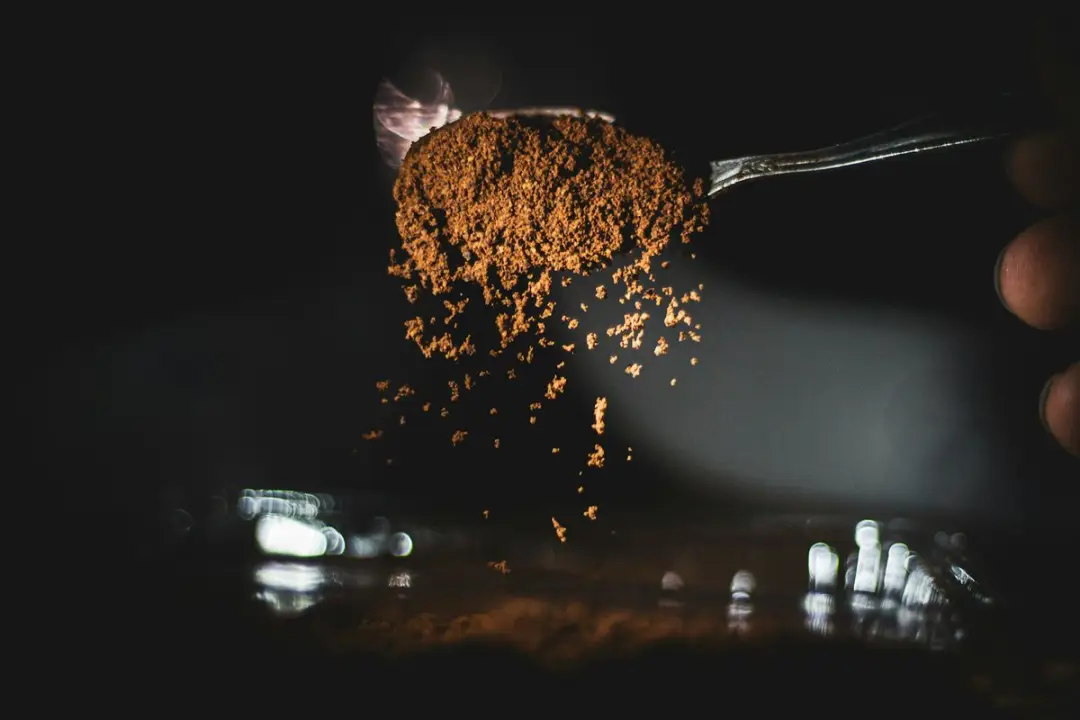
The line that matters in instant coffee is freeze-dried against spray-dried. Freeze-drying removes water at low temperature and keeps far more of the aromatic compounds. Spray-drying blasts concentrated coffee through hot air, which is cheaper and is why most supermarket instant tastes faintly of burnt cardboard.
Check the jar. If it says freeze-dried, it is worth trying. If it does not say, it is almost certainly spray-dried. That one distinction will do more for your cup than any brand loyalty.
What to look for in instant coffee
- Freeze-dried, stated on the label. The single best predictor of whether it tastes like coffee.
- 100 percent arabica. Robusta is cheaper and much harsher in instant form, where there is no crema to carry it.
- Granules, not powder. Visible irregular granules indicate freeze-drying; fine uniform powder indicates spray-drying.
- Origin, if given. A named origin is a sign the producer cares. Most instant is an anonymous blend.
- Small jars. Instant is stable but not immortal, and it absorbs moisture every time you open it.
At a glance
- Best overall: Mount Hagen organic freeze-dried
- Best single-serve: Starbucks VIA Pike Place Roast
- Best supermarket option: Nescafe Taster’s Choice House Blend
Best overall: Mount Hagen organic freeze-dried
Mount Hagen is the instant coffee that converts people who thought they hated instant coffee. It is organic, fair-trade, 100 percent arabica and genuinely freeze-dried, and it tastes like a decent medium-roast filter coffee rather than like instant. The decaf version is unusually good too, which is rare, because decaffeination and instant processing usually compound each other’s faults.
Best single-serve: Starbucks VIA Pike Place
VIA is microground rather than purely freeze-dried, which means very finely ground coffee blended into the instant. It gives the cup more body than most instant manages, at the cost of a slight sediment at the bottom. The sachets are the point: they travel without a jar and each one is sealed until you use it.
Best supermarket option: Nescafe Taster’s Choice
If you want something from a normal shop, Taster’s Choice is the one to reach for. It is freeze-dried, which most of Nescafe’s range is not, and the House Blend is a light-medium roast that stays drinkable black. It is not going to be mistaken for filter coffee, but it is several steps up from standard instant. We have more on coffee beans.
How to make instant coffee properly
- Use 2g per 200ml, which is about one rounded teaspoon. Most people use too much and then blame the coffee.
- Water off the boil, around 90C. Boiling water scalds instant and makes it taste bitter, the same as it would with ground coffee.
- Bloom it. Add a splash of water first, stir to a paste, then top up. It dissolves far more evenly.
- Add milk last and off the heat, so the granules dissolve in water rather than in fat.
For iced, dissolve the granules in a small amount of hot water first, then pour over ice. Instant will dissolve in cold water eventually, but unevenly. This is also the base for whipped coffee, which only works with instant, because the freeze-dried granules are what let it whip into a foam. Instant-style coffee is also what a Frappuccino is built on, as we explain in what a Frappuccino is.
Is instant coffee bad for you?
No. It is coffee with the water taken out. It carries the same polyphenols and a similar caffeine content, typically 60 to 80mg a cup against 95 to 120mg for brewed, because the dose is smaller. Instant does contain more acrylamide than brewed coffee, a byproduct of roasting, but the quantities are far below levels considered a concern and it is present in bread and roasted vegetables too.
The genuine downside is flavour, not health. If you want the caffeine numbers by drink, see caffeine in espresso and caffeine in a latte.
Instant against ground and whole bean
| Instant | Pre-ground | Whole bean | |
|---|---|---|---|
| Flavour ceiling | Limited | Good | Best |
| Cost per cup | Lowest | Low | Low |
| Time to a cup | 30 seconds | 3 to 5 min | 4 to 6 min |
| Equipment | A kettle | Brewer | Brewer plus grinder |
| Shelf life once open | Months | 1 to 2 weeks | 3 to 4 weeks |
| Caffeine per cup | 60 to 80mg | 95 to 120mg | 95 to 120mg |
Instant wins decisively on shelf life, which is the argument for keeping a jar even if you normally grind. Whole beans go flat in a month, and our guide to storing coffee beans explains why.
How instant coffee is actually made
Instant coffee starts as ordinary brewed coffee, brewed very strong. The question is only how the water is removed, and that single decision explains most of the quality difference on the shelf.
Spray-drying (cheap, and it shows)
The concentrate is sprayed as a fine mist into a tower of hot air at around 250C. The water flashes off and dry powder falls to the bottom. It is fast and cheap, and the heat destroys most of the volatile aromatics, which is why spray-dried instant smells faintly burnt and tastes flat.
Freeze-drying (slower, much better)
The concentrate is chilled to around minus 40C until it is solid, broken into granules, then placed under vacuum. Under low enough pressure the ice turns straight to vapour without ever becoming liquid, a process called sublimation. Because it never gets hot, far more of the aroma survives.
You can usually tell by looking: freeze-dried coffee is irregular, glassy granules, because it was broken up while frozen. Spray-dried is a uniform fine powder. If the jar does not say which, the shape will tell you.
- Bloom it. Add a splash of hot water first, stir to a smooth paste, then top up. Dumping granules into a full mug leaves undissolved clumps that taste harsh.
- Use less than the jar says. 2g per 200ml. Most label doses are generous, and over-dosing is the single most common cause of that metallic edge.
- Water at 90C, not boiling. Boiling water scalds instant exactly as it does ground coffee.
- A pinch of salt. Genuinely works: sodium suppresses bitterness perception. A few grains, not a pinch you can taste.
- Add milk after it has dissolved, so the granules dissolve in water rather than fat.
- Try it as iced coffee. Instant dissolves readily and the format is far more forgiving cold. See how to make iced coffee.
Instant espresso is a different product
Instant espresso powder and instant coffee are not interchangeable, even though both are freeze-dried or spray-dried coffee. Instant espresso is made from a darker roast, brewed far more concentrated before drying, and is designed to dissolve into a small volume or into batter. It is the one you want for baking, where recipes call for it precisely because a little adds coffee depth without adding liquid.
Using instant coffee where a recipe asks for instant espresso gives a weaker, flatter result. Using instant espresso as a drink gives you something closer to a very strong, slightly bitter black coffee, which some people like.
The bottom line
Buy freeze-dried and 100 percent arabica, and use less of it than you think. Mount Hagen if you want it to taste like real coffee, VIA if you need sachets that travel, Taster’s Choice if you are buying it in a supermarket. Skip anything that will not tell you how it was dried.
FAQs About Instant Coffee
Mount Hagen organic freeze-dried is the best-tasting widely available option: organic, fair-trade, 100 percent arabica and genuinely freeze-dried rather than spray-dried. Starbucks VIA is the best single-serve, and Nescafe Taster’s Choice is the best you will find in a normal supermarket.
No. It is coffee with the water removed, carrying similar polyphenols and slightly less caffeine, usually 60 to 80mg a cup. It contains more acrylamide than brewed coffee, but at levels far below any threshold of concern and comparable to bread.
Yes. It is brewed coffee that has had the water removed, either by freeze-drying at low temperature or by spray-drying with hot air. Freeze-dried keeps far more aroma, which is why it tastes closer to a normal cup.
About 2g, or one rounded teaspoon, per 200ml of water. Using too much is the most common reason instant tastes harsh. Use water off the boil at around 90C rather than straight from a rolling boil.
Usually yes, roughly 60 to 80mg a cup against 95 to 120mg for brewed coffee. That is because the dose per cup is smaller, not because the coffee itself is weaker.
It is very stable sealed, often good for a year or two. Once opened it slowly absorbs moisture, which clumps the granules and dulls the flavour. Keep the lid tight and buy smaller jars if you use it rarely.
 Austin Barker
Founder & Lead Editor
Seven years behind a bar before starting Brewing Coffees. Writes most of the equipment coverage and tests every machine on this site in an ordinary home kitchen.
Austin Barker
Founder & Lead Editor
Seven years behind a bar before starting Brewing Coffees. Writes most of the equipment coverage and tests every machine on this site in an ordinary home kitchen.