

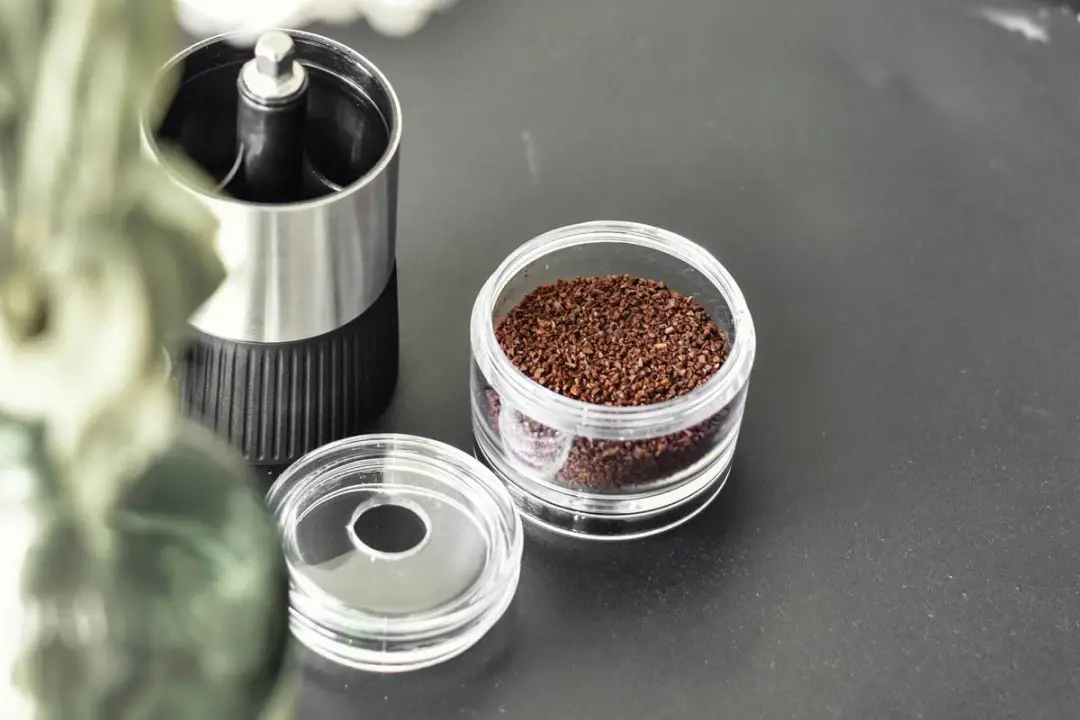
A coffee grinder needs a dry brush-out every week or two and a full strip-down every few months. The reason is oil. Coffee beans are between 10 and 15 percent oil by weight, that oil coats the inside of the grinder, and within a couple of weeks it goes rancid and starts flavouring everything you grind.
This is the single most neglected piece of maintenance in home coffee, and it is usually the answer when someone says their beans taste stale despite being fresh. Here is how to clean both types properly, and how often it actually needs doing.
The short answer
- Never use water on burrs. They are usually steel and they will rust. Dry brush only.
- Blade grinders can be wiped with a barely damp cloth, then dried immediately.
- Grind rice or a cleaning tablet to lift oil, then discard the first dose of coffee afterwards.
- Unplug it first. Burr grinders will happily start with your fingers inside them.
How often to clean, by how much you use it
| Use | Brush out | Full strip-down |
|---|---|---|
| 1 to 2 cups a day | Every 2 weeks | Every 3 to 4 months |
| 3 or more cups a day | Weekly | Every 6 to 8 weeks |
| Dark or oily roasts | Weekly | Every 4 to 6 weeks |
| Flavoured beans | After every bag | Every 4 weeks |
Dark roasts and flavoured beans both accelerate everything, dark roasts because more oil is pushed to the surface during roasting, flavoured beans because the coating is sticky and transfers to the next thing you grind.
Cleaning a burr grinder
What you need
- A stiff dry brush. A clean pastry brush or a toothbrush works.
- A vacuum with a narrow nozzle, or canned air.
- A dry cloth or microfibre.
- Optional: grinder cleaning tablets, or 30g of uncooked rice.
The method
- Unplug the grinder and run it empty for two seconds to clear the chamber.
- Remove the hopper and wipe it with a dry cloth. If it is sticky, warm soapy water is fine here, but dry it completely before it goes back.
- Take out the top burr. On most home grinders this unclips or unscrews by hand. Note the orientation before you lift it.
- Brush both burrs and the chute, working the brush into the grooves. This is where the stale grounds hide.
- Vacuum out the loose debris rather than blowing it deeper into the motor housing.
- Reassemble and grind a small dose of coffee to season it, then throw that dose away.
If your grinder is a stepped conical burr model, do not change the grind setting while the top burr is out. On some designs the adjustment collar loses its reference point and you will have to recalibrate from zero.
Cleaning a blade grinder
Blade grinders are simpler and, because the chamber is usually one sealed piece, slightly harder to get into. They also heat the coffee more, which makes the oil residue worse rather than better. See everything we have on coffee equipment.
- Unplug it, then grind 30g of uncooked rice to a fine powder. The rice is abrasive enough to lift oil off the walls and blade.
- Tip the rice out and wipe the chamber with a dry cloth wrapped around a finger.
- For stubborn residue, use a cloth dampened with a little white vinegar, then dry it thoroughly before use.
- Never immerse the base. The motor housing is not sealed on most models.
If you are running a blade grinder and finding your coffee inconsistent, the cleaning will help but the design is the real limit. Burr grinders produce an even particle size, and that consistency is the biggest single upgrade most home setups can make. We cover the options in our coffee grinder guide and the manual grinder roundup.
Rice or cleaning tablets?
| Rice | Cleaning tablets | |
|---|---|---|
| Cost | Pennies | Around 15 to 20 pence per dose |
| Safe for burrs | Not on most burr grinders | Yes, food-safe and designed for it |
| Safe for blades | Yes | Yes |
| Removes oil | Reasonably well | Better |
| Risk | Can jam or chip burrs if hard | None if you follow the dose |
The short version: rice is fine in a blade grinder and a bad idea in an expensive burr grinder. Most manufacturers void the warranty if you grind rice, because it is harder than coffee and the burrs are not built for it. Tablets are made from a soft food-safe compound that crumbles instead.
What a dirty grinder actually tastes like
Rancid coffee oil does not taste sour or burnt. It tastes flat and faintly greasy, like the aftertaste of stale nuts, and it dulls everything else in the cup. If you have bought fresh beans and they taste like nothing much, clean the grinder before you blame the roaster. Our guide to telling if beans are fresh covers the other half of that diagnosis.
What never to put near a grinder
- Water on steel burrs. They will rust, and rust changes the grind permanently. Dry brush only.
- Washing-up liquid inside the grind path. Coffee oil holds soap residue and you will taste it for weeks.
- Any lubricant. WD40 and cooking oil both migrate into the coffee. Burrs are designed to run dry.
- Compressed air into the housing. It pushes fines past the bearings instead of out of the chute.
- Anything abrasive on a blade grinder chamber. Scratches give the oil more surface to cling to.
Hand grinders
The easiest to strip, because they are built to come apart. Unscrew the handle, lift the axle out, and the burrs separate. Brush both, wipe the shaft, and reassemble in the same order. Note the grind setting before you start, since many hand grinders zero out when the burr is removed.
Electric conical burr
The top burr unclips or unscrews. Lift it straight out rather than twisting, brush both faces and the chute below, then vacuum. This is where a surprising amount of stale coffee hides, because the chute is the one part nothing scrapes clean during normal use.
Flat burr
Usually more screws and a fixed alignment. Take a photo before you remove anything, and do not force the lower burr, which is often shimmed to a set distance. If you are not confident, brush what you can reach and leave the alignment alone.
Dirty burrs or worn burrs?
These feel similar from the cup and the fix is completely different, so it is worth telling them apart before you buy anything.
| Symptom | Dirty | Worn |
|---|---|---|
| Flat, greasy aftertaste | Yes | No |
| Improves right after cleaning | Yes | No |
| More fines than usual at the same setting | Sometimes | Yes |
| Grind time creeping up | Sometimes | Yes |
| Needs a finer setting to hit the same shot time | No | Yes |
| Visible chips or a rounded cutting edge | No | Yes |
Home burrs are usually rated somewhere between 250kg and 500kg of coffee, which at two doses a day is many years, so wear is rare and dirt is common. If cleaning does not fix it, look at the beans before the burrs: our guide to telling if beans are fresh and how to store them cover the other half.
The bottom line
Brush the burrs every couple of weeks, strip it down every few months, and keep water away from anything steel. It takes five minutes and it is the cheapest improvement available to most home setups. While you are at it, the same logic applies to the machine itself: see descaling an espresso machine and cleaning a coffee maker.
Frequently Asked Questions About Cleaning a Coffee Grinder
Brush it out every one to two weeks and strip it down fully every three to four months for normal home use. Move to weekly brushing if you grind more than three cups a day, or if you use dark, oily or flavoured beans.
Not the burrs. They are steel on almost every grinder and water will rust them, which permanently affects the grind. Hoppers and removable plastic bins can be washed in warm soapy water as long as they are completely dry before reassembly.
In a blade grinder, yes. In a burr grinder it is risky, because rice is harder than coffee and can chip the burrs or jam the mechanism, and most manufacturers treat it as grounds for voiding the warranty. Use a purpose-made cleaning tablet instead.
Old coffee oil in the grinder is the most common cause. It goes rancid within a couple of weeks and coats everything you grind afterwards, which flattens the flavour without making it obviously sour or bitter.
For everyday switching, no. After flavoured beans, yes, because the flavour coating transfers readily. If you are moving from a dark oily roast to a delicate light roast and want to taste the light one properly, grind and discard a small dose first.
 Austin Barker
Founder & Lead Editor
Seven years behind a bar before starting Brewing Coffees. Writes most of the equipment coverage and tests every machine on this site in an ordinary home kitchen.
Austin Barker
Founder & Lead Editor
Seven years behind a bar before starting Brewing Coffees. Writes most of the equipment coverage and tests every machine on this site in an ordinary home kitchen.