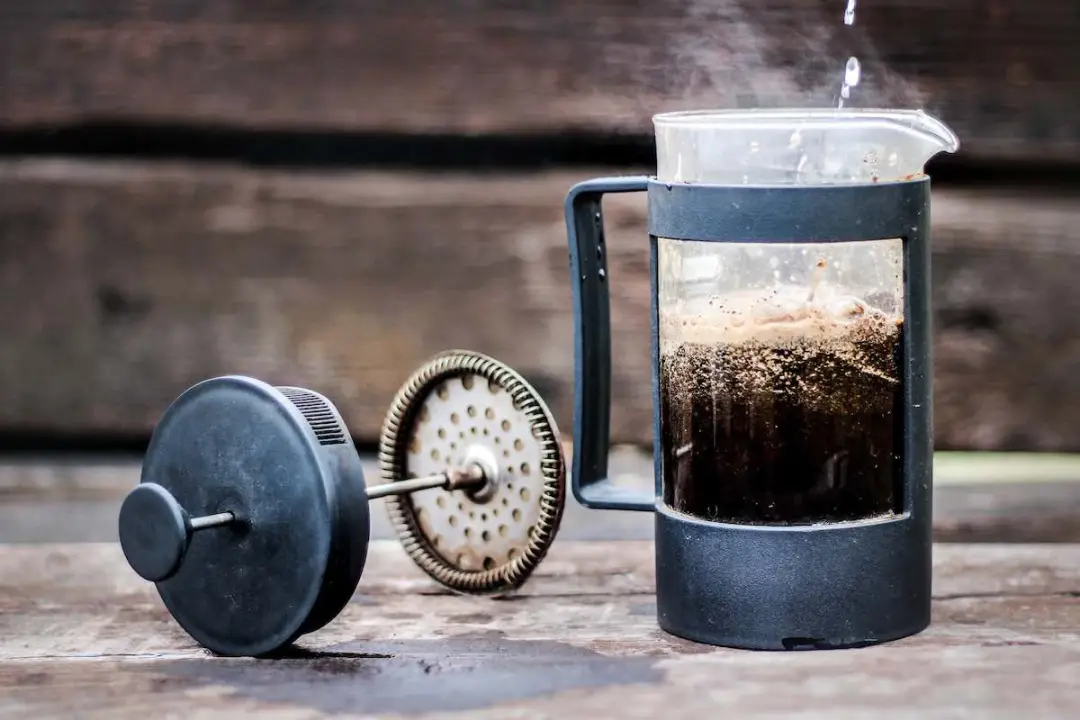
French press is probably one of the most popular ways to brew coffee because it is simple to use. However, a French press brews coffee differently, which may suit certain coffee beans. What is the best coffee for the French press?
The best coffees for French press include medium and light roasts with natural sweetness and chocolatey, nutty flavors. Our top picks:
- Death Wish Organic Medium Roast Coffee
- Real Good Coffee Company Ugandan Medium Roast
- Intelligentsia El Gallo Organic Light Blend
- Café Don Pablo Subtle Earth Organic
- Lavazza Super Crema
This post explores the best coffees you can use to brew your French press. We also looked at some examples of roasts you can pick up to make the best French press coffee.
What Type Of Coffee Suits French Press?
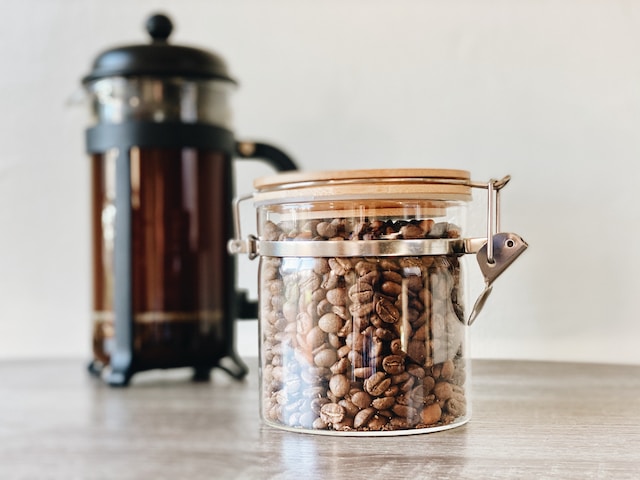
Light and medium-roasted coffee tend to do well with the French press. The French press also allows more flavor blending in the coffee, likely accentuating darker flavors such as chocolate, cocoa, or nuts.
To understand what type of coffee beans suits the French press, we must first look at how a French press brews coffee. You can also make a classic espresso with a French press.
You start by combining the coffee grounds and hot water, allowing them to brew for several minutes. Then you use a plunger to separate the grounds from the coffee. The plunger is usually made of metal mesh.
Expert baristas see that the metal mesh made the French press different from drip coffee or Chemex. This is because the metal mesh tends to allow more flavors to pass through, compared to, say, paper filters.
As a result, a French press tends to produce richer coffee with a deeper flavor profile. You may taste darker flavors in a French press, such as chocolate or nuts. Paper-filtered brewing styles tend to reduce these flavors. Instead, you may notice more fruity, floral notes.
If you intend to get the best coffee out from your French press, consider these characteristics:
- Light or Medium Roasts: Light and medium roasts generally carry darker flavors and natural sweetness that your French press can accentuate. Dark roasts can be a bit too intense with a French press.
- Darker Flavors: Shop for coffee with deep, darker flavors such as chocolate, hazelnut, almond, etc. These flavors accentuate well when brewed in a French press.
- Natural Sweetness: Aim for roasts with sweet notes, such as brown sugar, molasses, honey, caramel, etc. Your French press should bring out the sweetness in the coffee.
- Certain Coffee Regions: Regions such as Indonesia, Hawaiian, Central, and South America tend to produce coffee suitable for French presses.
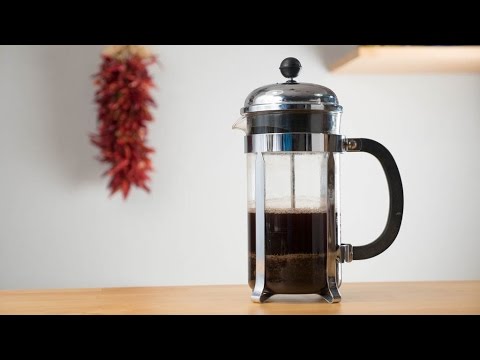
5 Best Coffees For French Press
| Coffee Brand | Type | Roast | Tasting Notes | Pricing |
|---|---|---|---|---|
| Death Wish Organic Medium Roast Coffee | Blend | Medium | Stone fruit Caramel Peanuts Milk chocolate | Check Prices |
| Real Good Coffee Company Ugandan Medium Roast | Single Origin | Medium | Apricot Vanilla Chocolate | Check Prices |
| Intelligentsia El Gallo Organic Light Blend | Blend | Light | Milk chocolate Caramel Cola | Check Prices |
| Café Don Pablo Subtle Earth Organic | Single Origin | Medium-Dark | Chocolate Nuts Caramel | Check Prices |
| Lavazza Super Crema | Blend | Medium | Hazelnut Brown sugar Dried fruit | Check Prices |
Death Wish Organic Medium Roast
Why We Like This: This coffee has many characteristics that should brew well with a French press. The coffee is also USDA-certified organic, which may appeal to health-conscious drinkers.
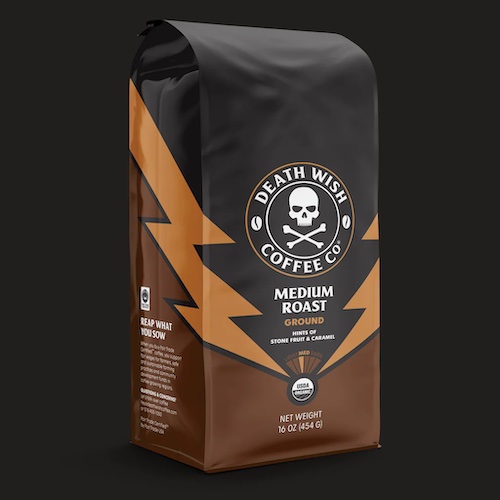
Death Wish Organic Medium Roast
Our coffee is made with the highest-quality arabica + robusta beans that are roasted to bold, never-bitter perfection.
The Death Wish Coffee is a roastery founded in 2012 in Saratoga, New York. They have claimed to make the world’s strongest coffee, with the highest amount of caffeine in it.
Take a sip of the coffee, and you may notice its deep, nutty flavor. This makes sense, as the roast blends Central and South American beans.
There are also hints of stone fruit, caramel, and chocolate. You may accentuate the caramel sweetness and chocolate flavor with a French press. This should make for a hearty, pleasing sip of coffee any time of the day.
Real Good Coffee Company Ugandan Medium Roast
Why We Like This: This single-origin coffee allows you to sample Ugandan coffee and enjoy its rich, creamy undertones. The French press is likely to bring up more chocolatey and vanilla-like flavors.
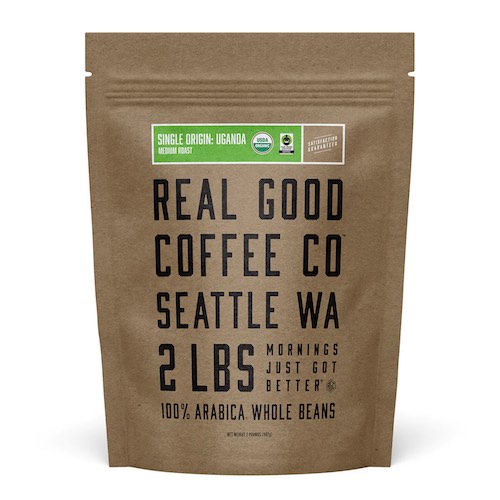
Real Good Coffee Company Ugandan Medium Roast
100% Whole Arabica Beans – Grind at Home, Brew How You Like.
The Real Good Coffee operates from Seattle, Washington. It claims to cut out the fancy marketing gimmick and goes straight into making great coffee.
Their single-origin Uganda medium roast is one smooth, rich coffee. It is easy to sip, with hints of apricot sweetness. There are also rich, creamy undertones. We describe it as vanilla and chocolate.
A French press is likely to accentuate the latter flavors. Your coffee should taste rich, with natural sweetness from the chocolate and apricots.
Intelligentsia Organic El Gallo Light Roast Blend
Why We Like This: Your French press will bring out the natural sweetness in this blend, allowing you to taste caramel, nougat, and coke. It is also a smooth, easy-to-sip coffee that caresses your palate.
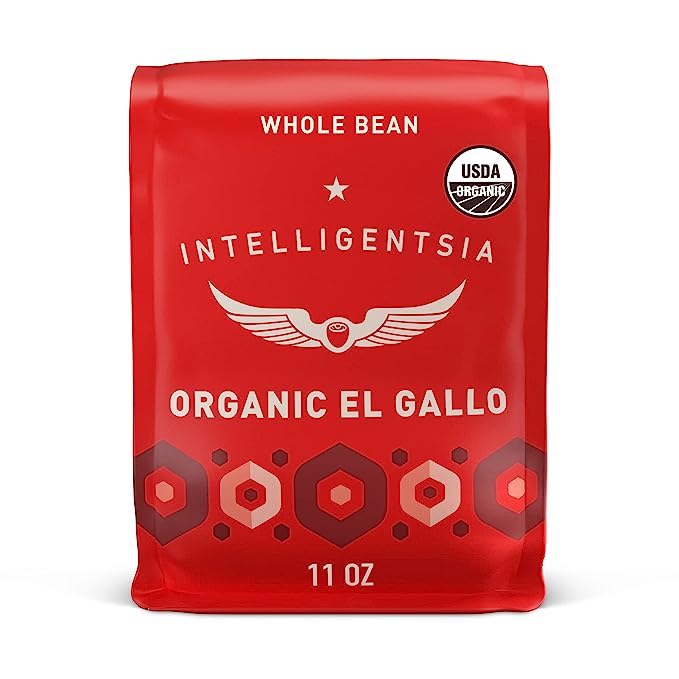
Intelligentsia Organic El Gallo Light Roast Blend
100% Arabica coffee blend with flavors of citrus and stone fruits meet hints of creamy nougat and caramel, making a thoroughly enjoyable first cup of the day.
El Gallo is a blend made from Ethiopian and Mexican coffee beans. Intelligentsia then lightly roasted the beans to preserve the natural sweetness and flavor.
Brew the beans with a French press, and you accentuate the flavors. Take a sip, and you should notice sweet, decadent flavors like chocolate and nougat.
The El Gallo is best enjoyed on lazy weekend mornings, with ice on a hot day. The natural sweetness also makes it great with slightly savory food, like a cheese and egg sandwich.
Café Don Pablo Subtle Earth Organic
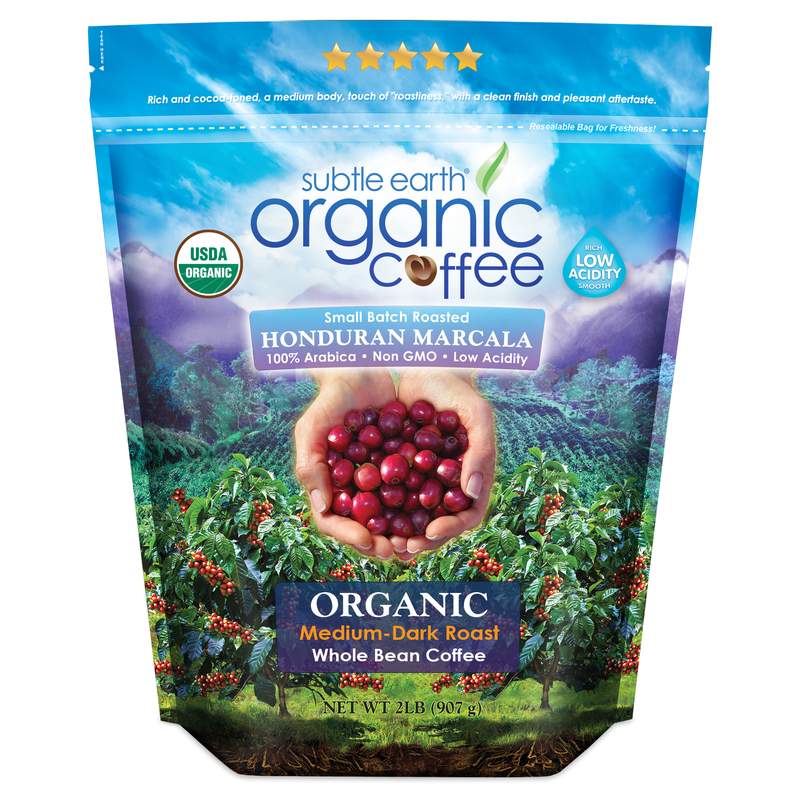
Why We Like It
- USDA Certified Organic
- Low acidity, great for sensitive stomachs
- Rich chocolate and roasted nut profile
Why We Like This: A beautifully balanced medium-dark roast sourced from Honduras and Guatemala, with a flavor profile that was practically made for the French press, rich chocolate, roasted nuts, and a gentle caramel finish.
Café Don Pablo is a small-batch specialty roaster with a focus on USDA-certified organic, single-origin beans. The Subtle Earth is their flagship, and it earns that name. Despite being a medium-dark roast, it avoids the bitter, smoky edge that makes darker roasts risky in a French press.
The flavor profile centers on dark chocolate and roasted nuts, think almonds and hazelnuts, underpinned by a caramel sweetness that lingers on the finish. When brewed in a French press, the metal mesh filter lets through the full body of the bean, making those chocolate and nut notes especially pronounced.
If you prefer a slightly bolder, more substantial cup than a light roast offers, the Subtle Earth is an excellent step up. It pairs well with milk or a dash of cream, which amplifies the caramel notes without masking the complexity underneath.
Lavazza Super Crema
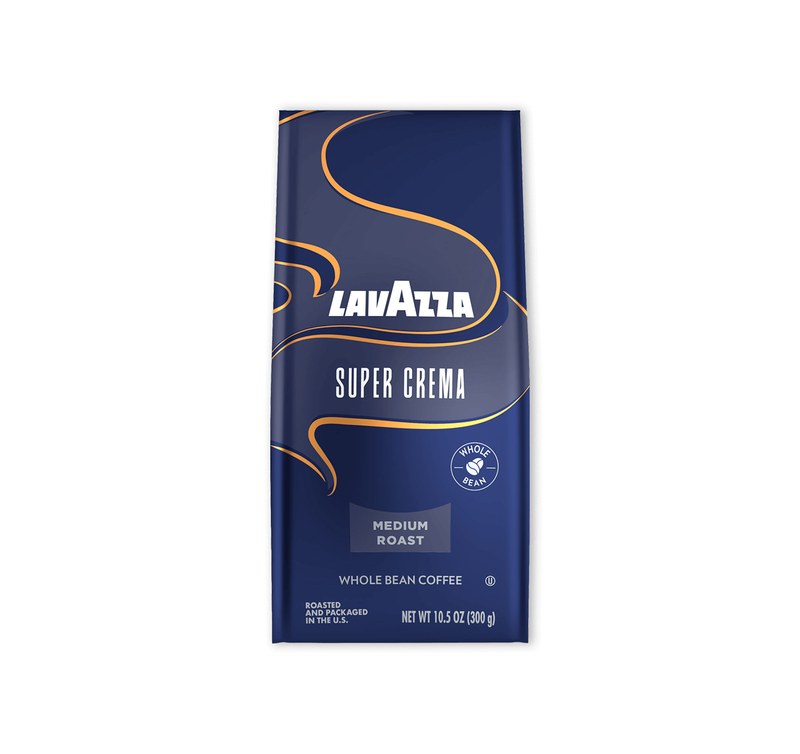
Why We Like It
- Classic Italian blend
- Hazelnut, brown sugar and dried fruit notes
- Works across espresso, drip, and French press
Why We Like This: Lavazza Super Crema is a medium-roast espresso blend that translates beautifully into a French press, delivering hazelnut sweetness, a hint of brown sugar, and a silky dried-fruit finish.
Lavazza is an Italian institution, and the Super Crema is one of their most-loved blends worldwide. It is a mix of Arabica and Robusta beans sourced from Central America and Southeast Asia, medium-roasted to bring out sweetness while keeping the body smooth and approachable.
The tasting notes lean toward hazelnut, brown sugar, and dried fruit, all flavors that respond well to the immersion-brewing style of a French press. The Robusta component adds a little extra body and a mild earthiness that stops the cup from feeling thin. You end up with a rich, rounded brew that is satisfying without being overpowering.
Super Crema is widely available and represents excellent value for a quality Italian blend. If you want a reliable everyday French press coffee with a classic, crowd-pleasing flavor profile, this is a strong contender.
Peet’s Major Dickason’s Blend
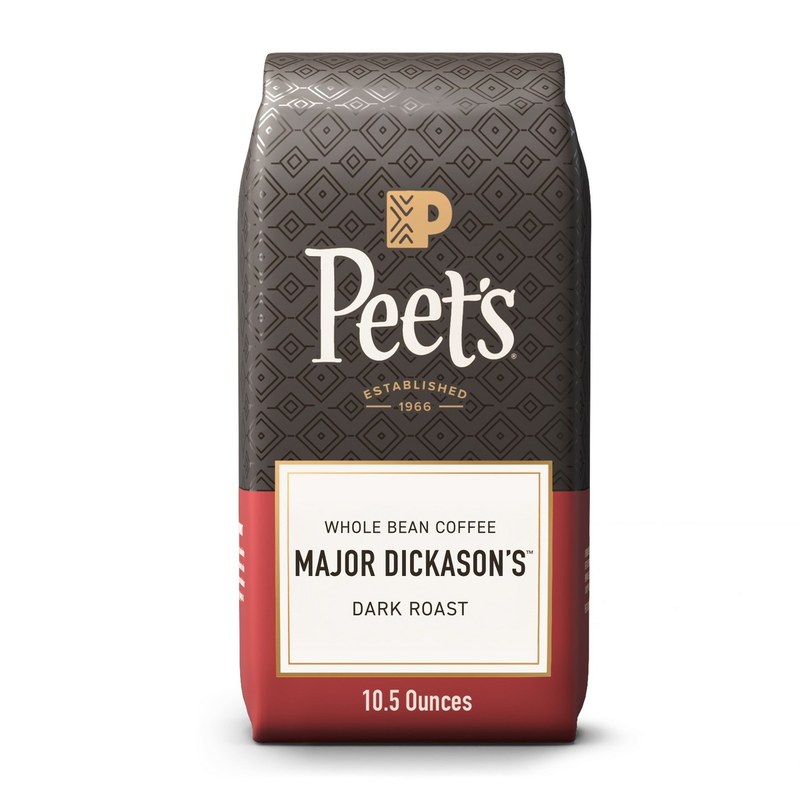
Why We Like It
- Peet’s all-time best-seller
- Complex chocolate and walnut profile
- Full body with no harsh bitterness
Why We Like This: Peet’s most famous blend is a dark roast legend that comes into its own in a French press, the full-immersion brewing method amplifies its complex chocolate, walnut, and dried-cherry notes into something genuinely special.
Major Dickason’s Blend was created as “the most sophisticated blend ever made”, and decades on, it still earns that description. The dark roast multi-origin formula produces a cup with extraordinary depth: chocolate and walnut up front, a hint of dried dark cherry, and a beautifully smooth finish with none of the charred bitterness you sometimes get from dark roasts.
French press is arguably the ideal brew method for this coffee. The metal mesh filter allows the coffee’s natural oils to pass through, enriching the body and making those chocolate and walnut notes feel full and present rather than distant. Brew it with water at 200°F for 4 minutes, and you’ll get a cup that tastes like it came from a specialty coffee shop.
How to Grind Coffee for French Press
Grind size is arguably the single biggest variable you can control when brewing French press. Get it wrong, and even the best beans will produce a gritty, over-extracted cup. Get it right, and the flavors open up exactly the way they should.
For French press, you want a coarse grind, roughly the size of raw sugar or coarse sea salt. The individual grounds should be clearly visible and feel chunky between your fingers. If the grind looks more like fine sand or table salt, it is too fine. Fine grounds pass through the metal mesh filter, leaving sediment in your cup and causing over-extraction that results in bitterness and a harsh, astringent finish.
In terms of ratio, a good starting point is 1:15 to 1:17 by weight, that works out to roughly 55–65g of coffee per litre of water. If you prefer a stronger cup, move toward the lower end of that range. A kitchen scale makes this straightforward, and it is worth the habit if you want consistent results.
How you grind matters too. If you use a blade grinder, pulse in short 5–7 second bursts rather than running it continuously. This prevents the heat from building up and avoids an uneven grind. A burr grinder is the better option, it produces a far more consistent particle size, which translates directly into a more even extraction and a cleaner-tasting cup. Set it to the coarsest or second-coarsest setting and adjust from there based on taste.
Water Temperature and Brew Time
Water temperature and brew time are the two dials most people overlook, yet they have a direct impact on how your French press coffee tastes. A few degrees or an extra minute can be the difference between a bright, balanced cup and something flat or bitter.
The ideal water temperature for French press is 93–96°C (200–205°F). The easiest way to hit this is to bring your kettle to a full boil, then let it sit for about 30 seconds before pouring. Boiling water at 100°C can scorch the grounds, particularly with lighter roasts, and pushes out harsh, bitter compounds that mask the flavors you actually want. A gooseneck or temperature-control kettle makes this step even more precise, but the 30-second wait method works reliably well.
Before you pour, consider pre-heating your French press carafe. Add a small amount of hot water, swirl it around, and discard it. This stops the carafe from pulling heat out of your brew water, which helps maintain a stable temperature throughout the steep and gives you a more consistent extraction.
For brew time, the standard is 4 minutes. Add your grounds, pour the hot water to saturate them evenly, place the lid on with the plunger pulled up, and set a timer. At 4 minutes, press the plunger down slowly and steadily over about 20–30 seconds. If you prefer a stronger, more intense cup, you can extend the brew to 5 or even 6 minutes, but be cautious beyond that, as over-steeping can introduce unwanted bitterness. Use a timer every time; eyeballing the duration leads to inconsistency.
Want to learn more? Read about the 4 types of coffee beans.
Got your beans sorted? Our pick of the best French presses covers Bodum, ESPRO and Frieling, and our step-by-step French press guide dials in technique. Pay attention to roast date freshness, it matters even more for immersion brewing. We have more on buying coffee beans.
Frequently Asked Questions About Best Coffee For French Press
For French press brewing, choose medium or light roasts with sweet notes and deep flavors like chocolate, hazelnuts, or vanilla. Look for coffee from the Americas, Indonesia, or Hawaii.
French press accentuates deeper, darker flavors due to the metal mesh filter. You may have smoky and overly intense coffee if you use a dark roast with a French press.
Use brewing methods that use filter papers. These include drip brew, Chemex, or regular coffee machines. The filter papers usually reduce deep, dark flavors from the coffee. This allows the fruity and floral flavors to stand out more.
For French press, use a coarse grind that looks like raw sugar or sea salt. A grind that is too fine will pass through the metal mesh filter and make your coffee gritty and over-extracted.
Brew French press coffee at 93–96°C (200–205°F). The easiest way is to bring water to a full boil, then wait 30 seconds before pouring.
 Joel Lewis
Contributor
Italian espresso conventions, and what survives the trip to the US.
Joel Lewis
Contributor
Italian espresso conventions, and what survives the trip to the US.