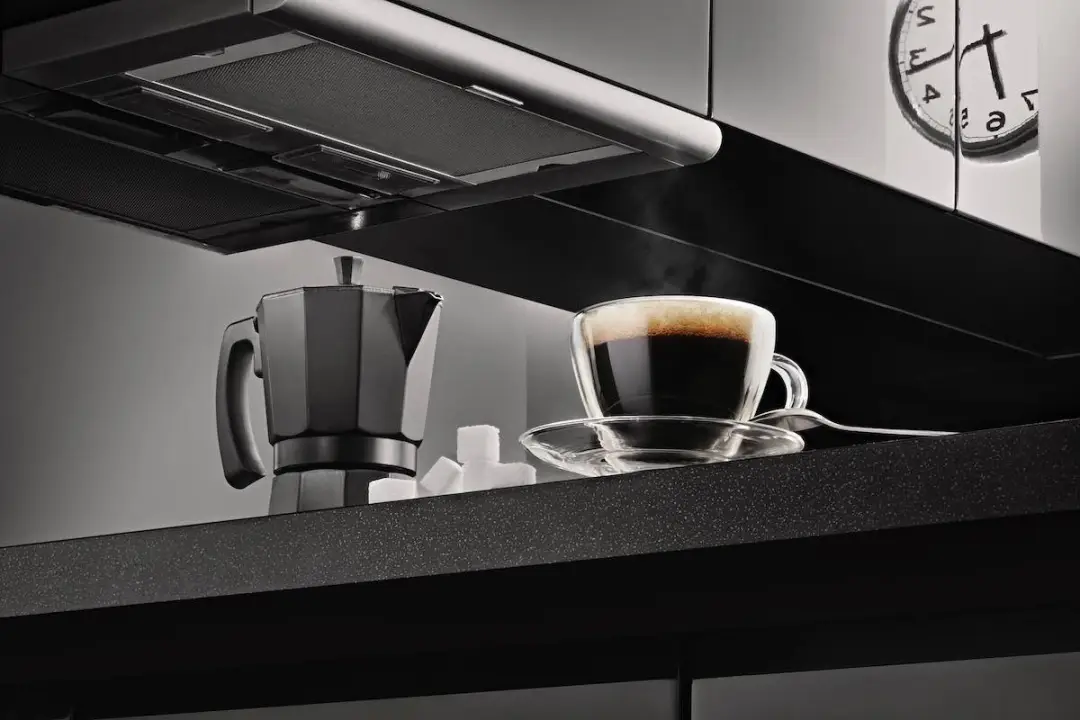
Percolator coffee has been making a quiet comeback over the last few years, and once you’ve had a properly brewed cup from a stainless percolator, it’s not hard to see why. Strong, full-bodied, and unmistakable, it’s the kind of coffee your grandparents drank, made the way it was designed to be made.
But not all percolators are equal. The cheap aluminum ones at big-box stores will scorch your coffee and leave a metallic aftertaste. Stovetop versus electric is a real choice, not a preference. And if you camp, you need something a kitchen percolator can’t do.
We’ve tested and researched the percolator category extensively, and these six picks cover every use case, from the everyday electric brewer that lives on your counter, to the campfire-rated stainless model you’ll take into the woods.
The 6 Best Coffee Percolators at a Glance
- Best electric overall: Presto 02811 12-Cup Stainless Steel
- Best stovetop: Farberware Classic Yosemite
- Best premium electric: Cuisinart PRC-12 Classic
- Best budget electric: Hamilton Beach 40616R
- Best premium stovetop: COLETTI Bozeman
- Best for camping: GSI Outdoors Glacier Stainless 9-Cup
Below, we cover each pick in depth, including who it’s for, what it does well, and what to watch out for. We’ve also included a buying guide and side-by-side comparison further down.
In-Depth Reviews
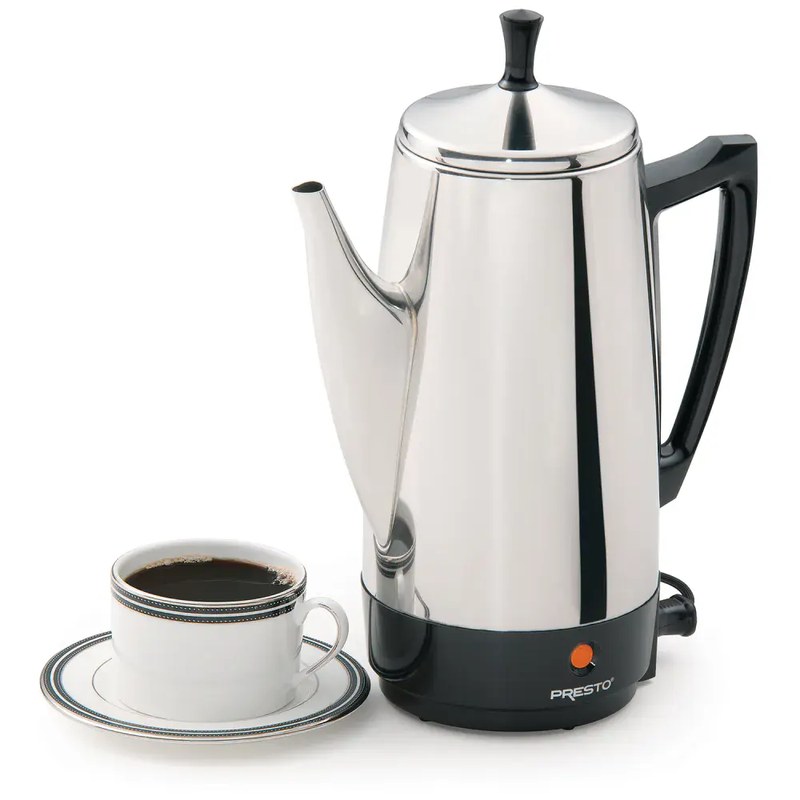
Best electric percolator overall: Presto 02811 12-Cup Stainless Steel
Highlights
- Brews 2–12 cups at one cup per minute
- Stainless steel basket and perk tube (no aluminum)
- Detachable cord for easy serving and storage
- Indicator light when coffee is ready
The Presto 02811 is the percolator we recommend to most people most of the time. It’s been on Amazon for over 15 years, has tens of thousands of reviews, and consistently ranks at the top of the electric percolator category, for good reason.
What sets it apart from cheaper electric percolators is the all-stainless interior. The basket and perk tube are stainless steel rather than aluminum, which matters both for taste (no metallic notes) and longevity. It also lifts off the base for cordless serving, then auto-warms when you put it back.
It’s not flashy, there’s no touchscreen, no programmable timer, no app. Just press and brew. For a $50–$70 percolator that does one thing extremely well, it’s hard to beat.
Best stovetop percolator: Farberware Classic Yosemite
Highlights
- Polished stainless steel, no aluminum or plastic in contact with coffee
- Brews 4–12 cups
- Permanent filter basket (no paper filters needed)
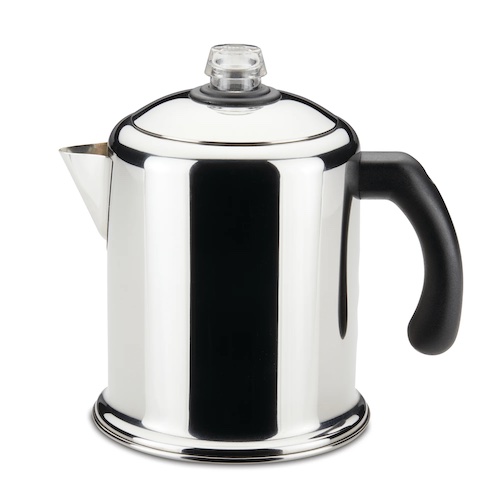
- Glass knob lets you watch the perk
The Farberware Yosemite is the percolator your grandparents probably used, and the reason that matters is consistency. Farberware has been making this same basic design since the 1960s with very little changing. It’s the gold standard stovetop percolator.
The full-mirror polished stainless build feels heavier and more premium than the price suggests. The clear glass knob is genuinely useful, you can watch the colour deepen and pull it off the heat at exactly the strength you want.
It works on gas, electric, ceramic, and halogen cooktops. (For induction, you’ll need a different model, induction-compatible stainless percolators are a niche category.) Dishwasher safe, immersion-rated, and with a permanent stainless filter basket, this is a percolator you buy once and use for decades.
Best premium electric percolator: Cuisinart PRC-12 Classic
Highlights
- Brushed stainless steel finish
- 1000-watt heater for quick brewing
- Detachable cord and stay-cool base
- 3-year limited warranty
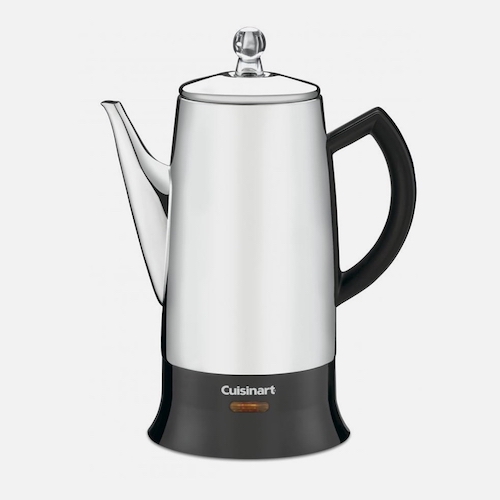
If you want to step up from the Presto without going overboard, the Cuisinart PRC-12 is the obvious upgrade. It’s better-built, brews slightly faster thanks to a 1000W element (versus the Presto’s 800W), and has Cuisinart’s 3-year warranty rather than the standard 1-year.
The brushed stainless finish is more refined than the polished mirror look of the Presto, which suits modern kitchens better. Inside, it’s the same stainless basket and perk tube architecture, no aluminum touching your coffee.
The trade-off is price: the Cuisinart typically runs $90–$110 versus $50–$70 for the Presto. If you make percolator coffee daily, the build quality and warranty justify the upgrade. If you’re a weekend percolator user, the Presto is plenty.
Best budget electric percolator: Hamilton Beach 40616R
Highlights
- 12-cup capacity at a cup-a-minute pace
- Stainless steel basket and stem (dishwasher safe)
- Cool-touch handle and removable cord
- Vintage spout design with measurement marks
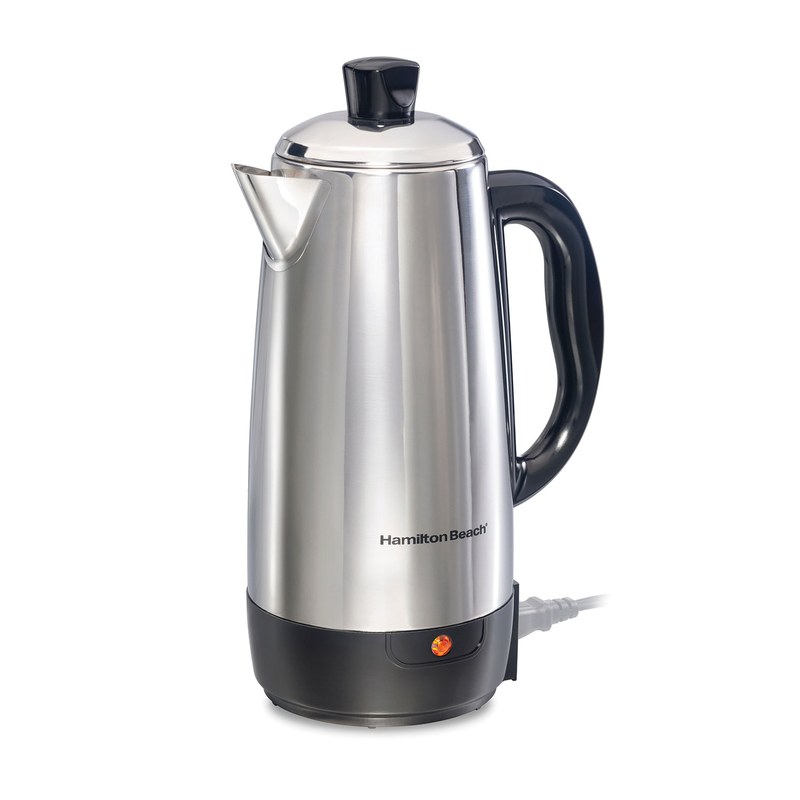
The Hamilton Beach 40616R covers the same ground as the Presto for $10–$20 less, which puts it firmly in budget territory. It’s not as well-engineered as the Presto, the lid sits less snugly, and the indicator light is mounted in a slightly awkward spot, but for the money, you’d struggle to find better.
Like the others on this list, the brew basket and stem are stainless steel rather than aluminum. The vintage-style spout pours cleanly without dripping (a common complaint with cheaper percolators), and the cool-touch handle means you don’t need an oven mitt to serve.
Best for: occasional percolator users, secondary kitchens, RV use, or office break rooms where you want a quick coffee without committing to a fancier brewer. It’s a workhorse machine, not a showpiece.
Best premium stovetop percolator: COLETTI Bozeman
Highlights
- Heavy-gauge food-grade stainless steel, no aluminum or plastic
- 12-cup capacity (60 fl. oz.)
- Wooden cool-touch handle
- Works on gas, electric, ceramic, and campfires
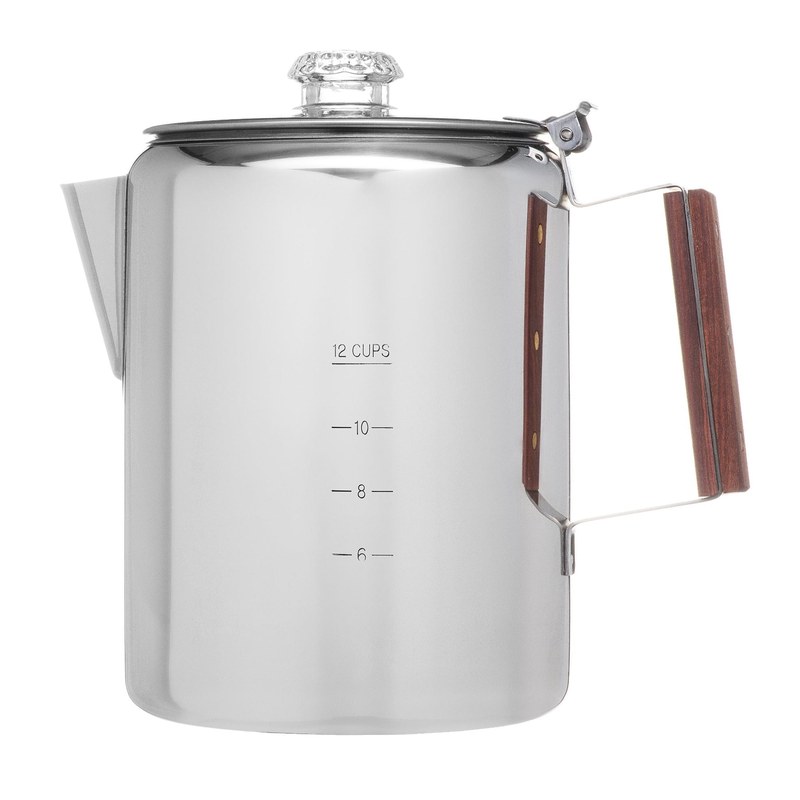
The COLETTI Bozeman is what happens when a small US brand decides to over-engineer a percolator. It’s heavier than the Farberware, fits more cleanly together, and the entire thing, basket, stem, lid, is one continuous-grain stainless build with zero plastic.
The wooden handle is the visible signature, but the real differentiator is the glass top: not a small knob, but a wider glass cap that lets you watch the brew clearly without lifting the lid. It’s also rated for direct campfire use, so it doubles as a serious camping percolator.
It costs roughly twice as much as the Farberware. You’re paying for build quality, US assembly, and the campfire rating. If you camp, hunt, or just want a percolator that looks great on the stovetop, it’s worth the upgrade.
Best for camping: GSI Outdoors Glacier Stainless 9-Cup
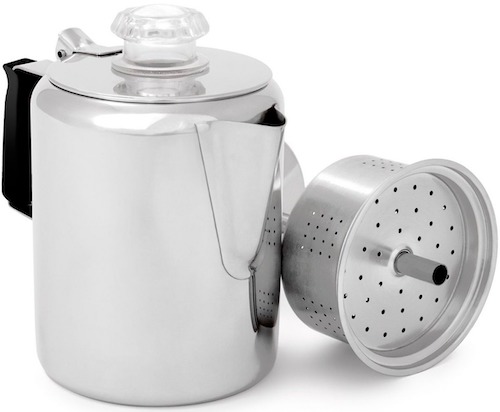
Highlights
- Heavy-gauge 18/8 stainless steel construction
- Heat-resistant silicone handle stays cool
- Hinged lid that won’t get misplaced
- Clear PercView knob to gauge brew strength
If you want a dedicated camping percolator rather than a dual-use kitchen brewer, the GSI Outdoors Glacier is purpose-built. It’s smaller (9 cups versus 12), lighter, and the silicone handle stays cool right up to the moment you pull it off the fire.
The hinged lid is the small detail that camping users obsess over: it won’t bounce off the pot when you’re scrambling to pour, and it can’t get lost in the grass. Combined with the clear PercView knob, it’s the most fuss-free option on this list when you’re brewing on a camp stove or open fire.
It’s dishwasher safe at home, too, so it can pull double-duty as the kitchen percolator on quiet weekends. For people who actually camp regularly, it’s the clear pick over the Coleman aluminum and the Coletti.
How to Choose the Best Coffee Percolator
If you’re new to percolators, here are the four things that actually matter when you’re choosing one. Most other features are marketing.
1. Material, stainless steel, always
The cheap aluminum percolators that flood Amazon’s lower price tiers are a bad idea. Aluminum reacts with hot water and acidic coffee, leaving a metallic taste in every cup, and the soft metal warps and pits over time. Stainless steel is more expensive upfront but lasts decades and tastes neutral. Pay attention to the basket and stem too, some “stainless” percolators have aluminum guts. The Presto, Farberware, Cuisinart, Hamilton Beach, and COLETTI on this list are all all-stainless on the inside.
2. Electric or stovetop?
Electric percolators are more convenient, set it and walk away, and they auto-keep-warm so the second cup is as hot as the first. Stovetop percolators give you more control (you decide exactly how strong to brew by watching the perk colour) and have nothing to break. If you want zero hassle, go electric. If you’re a tinkerer or you camp, go stovetop.
3. Capacity
Percolator “cup” measurements are 5 oz, not the 8 oz you might expect. A 12-cup percolator brews about 60 oz, which is roughly 7 mug-sized servings. For most households, 9–12 cup is the sweet spot. Smaller 4–6 cup models exist but are usually only worth it if you’re brewing for one or specifically need a compact option for camping. If you’re hitting the road regularly, our guide to travelling with coffee beans covers the storage side.
4. Grind size matters more than you think
The most common percolator complaint, bitter, over-extracted coffee, usually comes down to using too fine a grind. Percolators need a coarse grind, similar to French press, because the water cycles through the grounds repeatedly. Use drip-grind or finer and you’ll over-extract every time. Buy whole beans and grind coarse, or specifically buy “coarse-ground for percolator” coffee. The grind alone makes a bigger difference than which percolator you buy.
Coffee Percolator Comparison
| Percolator | Type | Capacity | Best for |
|---|---|---|---|
| Presto 02811 | Electric | 12 cups | Daily home use |
| Farberware Yosemite | Stovetop | 12 cups | Classic stovetop brewing |
| Cuisinart PRC-12 | Electric | 12 cups | Premium daily use |
| Hamilton Beach 40616R | Electric | 12 cups | Budget / occasional |
| COLETTI Bozeman | Stovetop / campfire | 12 cups | Stovetop + campfire |
| GSI Outdoors Glacier | Stovetop / camp stove | 9 cups | Dedicated camping |
What Coffee Should You Use in a Percolator?
The best coffee for a percolator is a medium-to-dark roast, coarsely ground. Percolators cycle hot water through the grounds repeatedly, which over-extracts finer grinds and makes the resulting coffee bitter. A coarse grind keeps the brew clean and balanced.
If you’re shopping at a grocery store, look for bags labelled “for percolator” or “coarse ground”, Folgers, Maxwell House, Eight O’Clock, Café Bustelo, and Community Coffee all sell coffee that works well in a percolator. For specialty options, whole-bean blends like Lavazza Super Crema, Peet’s Major Dickason’s, and Stumptown Hair Bender all percolate beautifully when ground coarse at home.
One rule worth memorising: the lighter the roast, the longer the brew time you need. If your light-roast percolator coffee tastes thin, leave it on the heat for an extra two or three minutes. If your dark-roast brew tastes bitter, pull it earlier, dark roasts extract faster and benefit from a shorter perk.
The Bottom Line
For most coffee drinkers, the Presto 02811 is the clear winner. It brews 12 cups of consistently good percolator coffee for around $50–$70, and the all-stainless interior means it’ll outlast almost everything else in your kitchen.
Want stovetop instead? Pick the Farberware Yosemite for everyday use, or upgrade to the COLETTI Bozeman if you want one percolator for the kitchen and the campfire.
Heading outdoors? The GSI Outdoors Glacier is purpose-built for camp life, silicone handle, hinged lid, and a brew quality that puts every camping French press we’ve tried to shame.
FAQs About Coffee Percolators
See everything we have on coffee gear.
For most people, the Presto 02811 is the best coffee percolator. It’s an all-stainless 12-cup electric percolator, brews at one cup per minute, and consistently has the highest customer satisfaction in the category. For stovetop fans, the Farberware Classic Yosemite is the gold-standard pick.
Electric percolators are more convenient, they auto-shut-off and keep coffee warm, and they brew at a consistent temperature. Stovetop percolators give you more control over brew strength and have nothing electrical to break, but they need supervision. For daily home use, electric wins on convenience. For camping, stovetop wins because it works on a fire.
The most common cause is grind size, percolators need a coarse grind, similar to French press. Drip-grind coffee will over-extract because percolators cycle the water through the grounds repeatedly. Other causes: brewing for too long (10–12 minutes is plenty), using too much coffee per cup, or using poor-quality water. Try a coarser grind first.
Folgers Classic Roast, Maxwell House Original Roast, Café Bustelo, Eight O’Clock The Original, and Community Coffee all work well in a percolator. The key is to buy whole bean and grind coarse at home, or buy a bag specifically labelled for percolator or coarse-ground. Avoid anything labelled “fine grind” or “espresso grind”, it’ll over-extract.
For a medium roast, 8–10 minutes after the water starts perking. For a dark roast, 6–8 minutes is plenty (dark roasts extract faster and over-perk easily). For light roasts, 10–12 minutes. The colour of the perk through the glass knob is a more reliable guide than the timer, pull it off when the perk runs a deep amber-brown.
Not at all, they just produce a different style of coffee than drip or pour-over. Percolator coffee is fuller-bodied, slightly more bitter, and stronger-tasting because the water cycles through the grounds multiple times. If you find the result over-extracted, the fix is almost always a coarser grind and a shorter brew time, not a different brewing method.
 Austin Barker
Founder & Lead Editor
Seven years behind a bar before starting Brewing Coffees. Writes most of the equipment coverage and tests every machine on this site in an ordinary home kitchen.
Austin Barker
Founder & Lead Editor
Seven years behind a bar before starting Brewing Coffees. Writes most of the equipment coverage and tests every machine on this site in an ordinary home kitchen.