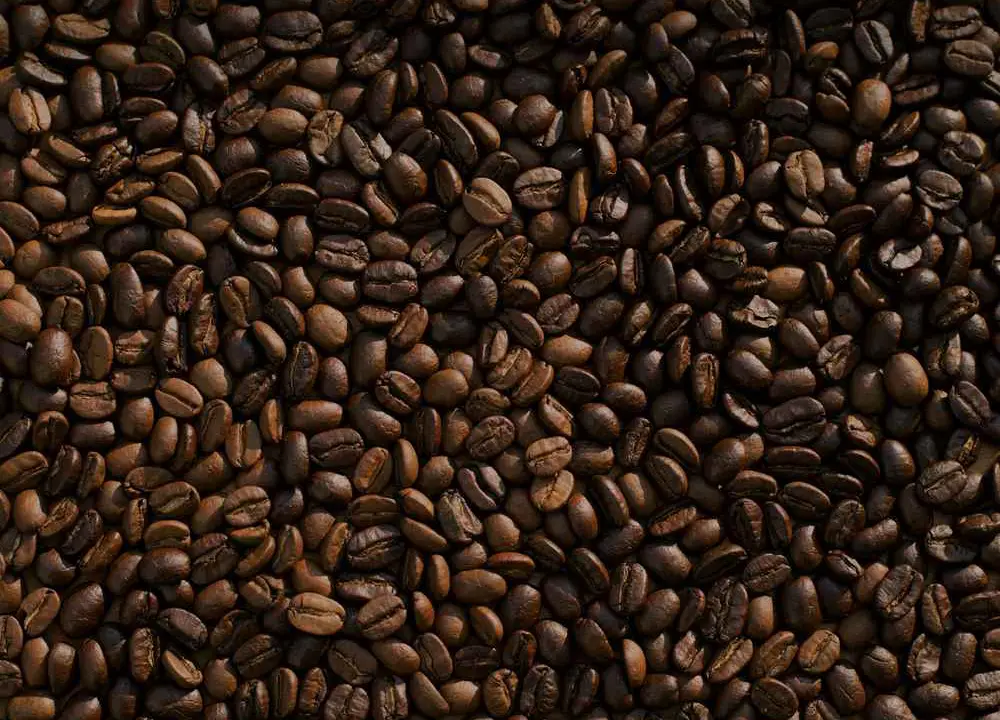
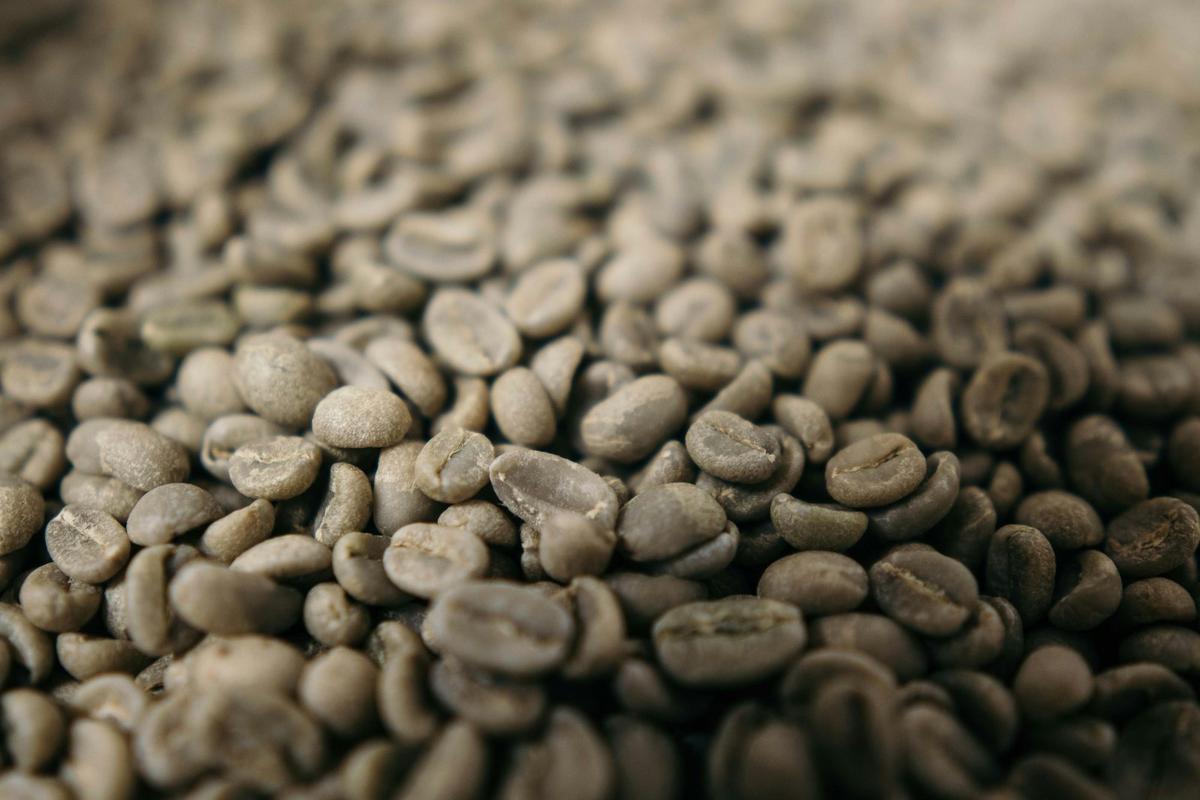
Decaf coffee is made by removing 97% or more of the caffeine from green (unroasted) coffee beans, using one of four processes: the Swiss Water Process, the carbon dioxide (CO2) process, the methylene chloride process, or the ethyl acetate process. The beans are then dried and roasted normally. The decaffeination always happens before roasting, once a bean is roasted, it’s too late to strip the caffeine out cleanly.
Most coffee drinkers have no idea which method made their decaf, and even less idea that some of those methods involve industrial solvents while others use only water or pressurised CO2. The processes are not interchangeable, they differ in cost, flavour outcome, and how much of the bean’s sugars and oils survive the treatment. Here’s exactly how each one works, which is considered the best, and what to look for on the bag.
What is decaf coffee, exactly?
“Decaffeinated” doesn’t mean caffeine-free, it means that 97% or more of the caffeine has been removed from the beans. To carry the “decaffeinated” label legally in the US, EU, and most other markets, the coffee must have at most 0.10% caffeine by mass (or 0.30% if it’s soluble instant decaf). For comparison, a regular roasted bean is roughly 1.0–1.5% caffeine by mass.
Even fully-compliant decaf is not zero-caffeine. An average 8 oz cup of decaf contains 2–15 mg of caffeine, far less than the ~95 mg in a regular cup, but enough to register if you’re drinking five cups in a row. See our guide to the best decaf coffees you can actually enjoy for brand-level recommendations.
When does decaffeination happen?
Always before roasting, on green (unroasted) coffee beans. Once a bean has been roasted, its cell structure has been altered by heat, oils have migrated to the surface, and the volatile flavour compounds that define a great coffee have set. You can’t strip the caffeine at that stage without destroying everything else.
That’s why every decaffeination process starts the same way: a batch of green coffee beans arrives at a decaffeination plant, is steamed or soaked to swell and soften the beans, then run through one of the four extraction methods below.
The Swiss Water Process (water-only, no chemicals)
The Swiss Water Process is a chemical-free, water-only decaffeination method developed in Switzerland in the 1930s and now operated almost exclusively by a single Canadian company (Swiss Water Decaffeinated Coffee Inc.). It’s the most-trusted process for organic and speciality decaf because no solvents touch the beans.
Here’s how it works:
- A batch of green beans is soaked in hot water, which dissolves the caffeine and the soluble flavour compounds.
- The water (now full of caffeine and flavour) is passed through a carbon filter that is sized to capture caffeine molecules but allow the smaller flavour molecules to pass through.
- The result is “Green Coffee Extract” (GCE), a caffeine-free water that still contains the original coffee’s flavour compounds.
- A fresh batch of green beans is soaked in this GCE. Because the GCE is already saturated with flavour compounds, only the caffeine moves from the new beans into the water (osmotic equilibrium).
- The beans come out 99.9% caffeine-free, with most of their flavour intact.
- The water is filtered again and the cycle repeats.
Pros: chemical-free, certified organic-friendly, preserves flavour better than solvent methods. Cons: the most expensive process, which is why Swiss Water decaf usually costs more on the shelf.
The CO2 (carbon dioxide) Process
The CO2 process, also called “supercritical CO2 decaffeination” or “sparkling water process”, is the newest and most technically sophisticated method. It was developed in Germany in the 1970s and is favoured by large commercial decaf brands because it’s efficient at scale.
- Green beans are pre-soaked in water to soften them and open their cell structure.
- The beans are loaded into a high-pressure extraction vessel.
- Liquid CO2 at around 1,000 PSI and 120°F is circulated through the beans. At these conditions, the CO2 behaves as a “supercritical fluid”, somewhere between a liquid and a gas. It selectively bonds to caffeine molecules while ignoring the larger flavour and oil compounds.
- The caffeine-loaded CO2 is moved to a separate chamber where pressure is reduced. The CO2 evaporates and the caffeine drops out as a powder (which is then sold to soft drink and pharmaceutical companies).
- The CO2 is recompressed and reused.
- The beans are dried and shipped to roasters.
Pros: chemical-free (CO2 is naturally occurring), highly selective for caffeine, preserves flavour very well. Cons: requires expensive equipment, so it’s mostly used by large commercial decaf producers (Illy, Starbucks for some of their decaf, Peet’s).
The Methylene Chloride Process (a.k.a. “European Process”)
The methylene chloride process, sometimes called the “European Process” or “direct solvent” process, uses a chemical solvent to strip the caffeine directly. It’s the cheapest and fastest method, and historically the most common, though it’s slowly being phased out in some markets.
- Green beans are steamed for about 30 minutes to open their pores and bring caffeine to the surface.
- The beans are repeatedly rinsed with methylene chloride (also called dichloromethane), which bonds to caffeine molecules and dissolves them out of the beans.
- The solvent-and-caffeine mixture is drained off.
- The beans are steamed again for several hours to evaporate any residual solvent.
- Beans are dried and shipped for roasting.
Methylene chloride is the same compound used in industrial paint strippers, which makes it sound terrifying, but the residual amounts in finished decaf are tiny (the FDA limit is 10 parts per million; actual residue is usually below 1 ppm, and the compound evaporates entirely at temperatures well below roasting temperature). Still, several speciality brands actively avoid it and label their products “methylene chloride-free” or “non-MC decaf.”
Pros: cheap, fast, well-understood. Cons: chemical solvent, increasingly off-trend with speciality and health-conscious consumers, banned in some markets for some uses.
The Ethyl Acetate Process (“Sugar Cane” or “Natural” decaf)
The ethyl acetate process is the fourth major method, often marketed as “naturally decaffeinated” or “sugar cane process.” Ethyl acetate is a naturally-occurring compound found in fruit (including coffee cherries themselves), though the industrial version used for decaffeination is usually derived from sugar cane fermentation.
- Green beans are pre-soaked in water and steam.
- The beans are rinsed with ethyl acetate (sometimes mixed with water).
- The ethyl acetate binds to caffeine and is drained off.
- Beans are steamed to evaporate residual solvent.
- Beans are dried and shipped.
This process is most associated with Colombian decaf and is commonly labelled “EA process” or “naturally decaffeinated” (because ethyl acetate occurs in nature). It typically preserves more flavour than methylene chloride and is cheaper than Swiss Water or CO2, so it sits as a middle option.
Pros: uses a naturally-derived solvent, preserves flavour reasonably well, mid-priced. Cons: still a solvent process (some consumers prefer chemical-free), label wording (“naturally decaffeinated”) can be misleading.
Comparison: which decaf process is best?
| Process | Solvent | Flavour preservation | Cost | Common uses |
|---|---|---|---|---|
| Swiss Water | None (water + carbon filter) | Excellent | $$$ | Speciality, organic, third-wave roasters |
| CO2 | None (pressurised CO2) | Excellent | $$$ | Large commercial brands (Illy, Peet’s) |
| Ethyl Acetate | Ethyl acetate (naturally-derived) | Good | $$ | Colombian decaf, mid-market |
| Methylene Chloride | Methylene chloride (synthetic) | Moderate | $ | Cheap supermarket decaf, bulk catering |
For speciality coffee, where you actually want to taste the bean’s origin character, Swiss Water and CO2 are the clear winners. For everyday decaf where flavour is less critical, ethyl acetate is a solid middle-ground. Methylene chloride decaf still dominates the cheapest end of the supermarket shelf, and is fine if cost is the priority.
Does decaf coffee actually have caffeine?
Yes, a small amount. The legal threshold for “decaffeinated” coffee is 97% caffeine removal in the US (and 99.9% in the EU). A typical 8 oz cup of brewed decaf contains 2–15 mg of caffeine, compared to around 95 mg in a regular cup.
| Drink | Caffeine (mg) |
|---|---|
| Regular brewed coffee (8 oz) | 80–100 |
| Decaf brewed coffee (8 oz) | 2–15 |
| Regular espresso (1 shot) | ~63 |
| Decaf espresso (1 shot) | ~3–6 |
| Decaf latte (12 oz, 2 shots) | ~6–12 |
For most people that’s low enough to be irrelevant. For people highly sensitive to caffeine or those avoiding it for medical reasons (e.g. pregnancy, certain medications), it’s worth knowing that a 5-cup-a-day decaf habit still adds up to 10–75 mg of caffeine.
Is decaf coffee bad for you?
No, current research suggests decaf has many of the same health benefits as regular coffee (antioxidants, polyphenols, potential reductions in type-2 diabetes risk) without the caffeine. The methylene chloride scare is largely overblown for finished decaf: the solvent residue is far below any threshold where it has been linked to harm, and it’s evaporated entirely during roasting.
That said, if you specifically want to avoid all solvents, choose Swiss Water or CO2-processed decaf. They’ll cost more but the label will tell you exactly how the beans were treated. See our best decaf coffee guide for brand-level recommendations on each process.
Does decaf taste different from regular coffee?
Yes, slightly, though the gap has shrunk dramatically as decaf processing has improved. Twenty years ago, decaf was famously thin, papery, and one-dimensional because aggressive solvent treatment stripped out flavour compounds along with the caffeine. Today’s Swiss Water and CO2 decafs can be surprisingly close to their fully-caffeinated equivalents.
Common differences you might notice:
- Slightly less body. Decaf beans are physically softer than regular beans and produce a slightly lighter mouthfeel.
- Faster oxidation. Decaf goes stale a bit faster than regular coffee. Buy fewer beans more often.
- Slightly muted brightness. Some of the lighter, fruity acidity tends to drop out, especially with solvent processes.
- Slightly darker roast tendency. Many roasters compensate for decaf’s softer flavour by pushing the roast slightly darker.
A really well-made Swiss Water or CO2 decaf from a third-wave roaster, brewed carefully, is genuinely close to a regular cup. The differences are detectable but not dramatic.
How to identify how your decaf was processed
Most bags will tell you, you just have to look. Common label markers:
- “Swiss Water Process” or the SWP logo: Swiss Water decaffeination
- “CO2 Decaffeinated” / “Sparkling Water Process”: supercritical CO2
- “EA Process” / “Naturally Decaffeinated” / “Sugar Cane Process”: ethyl acetate
- “European Process” / no specific method listed: usually methylene chloride (because if it were any of the others, the brand would label it)
- “MC-free” or “Chemical-free”: not methylene chloride, usually Swiss Water or CO2
If a bag of decaf doesn’t specify the process, it’s almost always methylene chloride. Speciality brands almost always advertise their process prominently because Swiss Water and CO2 are a marketing advantage.
Watch: decaf coffee explained
James Hoffmann walks through each of the major decaffeination processes, Swiss Water, CO2, ethyl acetate, and methylene chloride, with the kind of detail that’s hard to summarise on a label.

Frequently Asked Questions About Decaf Coffee
Our full guide to coffee beans goes deeper. For brand-level decaf recommendations across each of the four processes, see our guide to the best decaf coffees you can actually enjoy.
For most people, no, even a 2-3 cup decaf habit only adds up to 10-45 mg of caffeine, well below the 75-100 mg threshold where most people notice effects. But people who are highly caffeine-sensitive, or who drink decaf late at night, can still feel a mild stimulant effect.
It’s the most flavour-preserving and uses no chemical solvents, so for speciality coffee, where bean character matters, yes. For everyday cheap decaf where you’re not tasting subtle notes anyway, the difference is much smaller and probably not worth the price premium.
Decaffeination is an extra industrial step with significant equipment and energy costs. Swiss Water and CO2 in particular use specialised plants. Expect to pay 20-50% more for a quality decaf than the same brand’s regular version.
Not really. You can reduce caffeine slightly by using a coarser grind, shorter brew time, or hotter water for less time, but you can’t strip caffeine from a roasted bean without industrial equipment. Buy properly-processed decaf instead.
Decaf is generally considered safer than regular coffee during pregnancy because the caffeine load is much lower. Most pregnancy guidelines cap caffeine at 200 mg/day, which leaves plenty of room for multiple cups of decaf. As always, ask your doctor for individual advice.
The green beans are decaffeinated first (using one of the four processes above), then brewed into a concentrated coffee, then either freeze-dried or spray-dried to produce instant granules. The decaffeination always happens before instantification, never after.
 Austin Barker
Founder & Lead Editor
Seven years behind a bar before starting Brewing Coffees. Writes most of the equipment coverage and tests every machine on this site in an ordinary home kitchen.
Austin Barker
Founder & Lead Editor
Seven years behind a bar before starting Brewing Coffees. Writes most of the equipment coverage and tests every machine on this site in an ordinary home kitchen.