

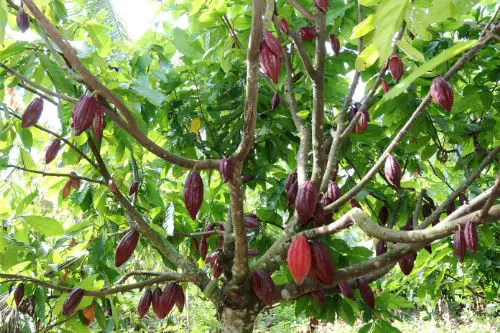
Many people mistakenly believe that coffee and cocoa – used to make chocolate – are the same plant. Or that coffee and cocoa plants are related.
People believe this because the two plants are similar in many ways.
Coffee and cocoa are both widely known as beans (though they are actually seeds), both are used to create delicious food and drink, and they are grown in similar hot climates around the world, including countries in South America, Asia, and Africa.
So, given their similarities – and the fact they go well together – are coffee and cocoa beans related?
Let’s find out more about our two favorite beans.
Are Coffee and Cocoa Related?
Coffee and cocoa plants are not related. They come from different continents and different plants.
Cocoa was first found in South America, whereas coffee originated in Africa.
How Does Coffee Grow?
Coffee beans aren’t actually beans at all. They’re seeds that grow in coffee cherries on small evergreen trees. Coffee belongs to the genus Coffea, with the two most commercially important species being Coffea arabica (arabica) and Coffea canephora (robusta).
Coffee trees are usually planted during the rainy season and grow best when out of direct sunlight.
It generally takes 3-4 years for the plant to grow coffee cherries. White flowers start blooming and fall off when the cherries mature.
When the cherries mature and turn ruby red, the green coffee beans inside the cherries can be harvested.
Once harvested, coffee beans are sold as a bean or turned into ground coffee.
How Does Cocoa Grow?
Cocoa beans come from a fruit tree called the Theobroma cacao tree, which translates to “food of the gods.”
Cocoa beans, or cocoa seeds, grow inside big pods and are surrounded by mucilage, a sweet fleshy white pulp.
The trees thrive in tropical climates and require a good amount of rain and shade. Cocoa trees can grow to 15-25 feet tall, and it takes the tree around five years to mature.
The cocoa pods are shaped like American footballs, and the tree produces about 30-40 pods yearly.
The pods are yellow, orange, green, or red and are usually harvested twice a year.
The beans are removed from the pods and are first dried and then go through a roasting process.
The cocoa powder and cocoa butter can then be extracted from the beans.
The flavor of the cocoa beans depends on where the bean was grown.
The Differences Between Coffee and Cocoa Beans
While coffee and cocoa beans are similar in many ways, they also have their differences.
Some significant differences include:
Number of Calories
Cocoa beans contain quite a few calories, while coffee beans have almost no calories at all.
Of course, both are often mixed with other ingredients – such as milk and sugar – which can significantly increase their calorie content.
Antioxidants
Cocoa beans are much richer in antioxidants than coffee beans.
However, coffee has more antioxidant activity when in liquid form.
Taste
Cocoa beans are very bitter.
This may be surprising as chocolate is so sweet. However, all the sweetness you taste in chocolate comes from the sugar, not from the cocoa bean.
Coffee beans often have a more ‘earthy’ taste and are less bitter than cocoa beans. Coffee beans then get more bitter when roasted.
The darker the coffee, the more bitter it will taste.
The Similarities Between Coffee and Cocoa Beans
Coffee and cocoa come from plants found in tropical regions. They start as beans (or, to be more precise, seeds), and both can be roasted to make a tasty treat!
Some other similarities include:
They’re both stimulants
The coffee bean and cocoa bean come from two very different plants, but they both act as stimulants due to the alkaloids they contain.
Cocoa contains theobromine, while coffee beans contain caffeine.
Theobromine is a milder stimulant compared to caffeine.
Effect on brain function
Both coffee and cocoa keep our brains sharp.
Cocoa contains dietary flavonoids that promote memory and learning and protect us from neuro-inflammation.
Coffee has also been shown to boost memory and learning.
Preparation process
The final processes of drying, fermenting and roasting coffee beans and cocoa beans are pretty similar.
Cocoa and coffee beans are both manually picked, and both take around five years to grow before they can be harvested.
After the beans have been processed, they are dried in the sun, reducing their moisture levels.
Both beans are then roasted to draw out their flavors.
Quick Comparison: Coffee vs Cocoa at a Glance
| Coffee (Coffea arabica) | Cocoa (Theobroma cacao) | |
|---|---|---|
| Plant family | Rubiaceae | Malvaceae |
| Origin | Ethiopia / East Africa | South America (Amazon basin) |
| Growing regions | Tropical belt, 1,000–2,000m altitude | Tropical belt, low altitude (below 600m) |
| Stimulant compound | Caffeine | Theobromine |
| Processing | Dry/wet process → roast → brew | Ferment → dry → roast → grind |
| Uses | Beverage (brewed) | Chocolate, cocoa powder, cocoa butter |
Do Coffee and Cocoa Taste Similar?
Given that coffee beans with chocolate notes are among the most sought-after (particularly dark roasts from Brazil and Colombia), it’s natural to wonder whether the two plants share flavour chemistry.
They don’t, but they interact well. The Maillard reaction, which occurs during roasting in both coffee and cocoa, produces similar families of aroma compounds: roasted, caramel, nutty, and occasionally fruity notes. This shared roasting chemistry is why coffee with chocolate notes feels so familiar and satisfying.
The chocolate flavour you taste in a dark roast coffee isn’t actually from cocoa, it’s from the bean’s natural sugars and amino acids reacting during roasting. But because both coffee and cocoa go through similar roasting processes, they share roasted, caramelized, and bitter taste families that feel complementary.
If you’re looking for coffees that naturally lean into that chocolatey flavour, our guide to the best coffee beans with chocolate notes covers exactly that.
Sustainability Challenges in 2026
Both coffee and cocoa face serious sustainability challenges heading into 2026. Climate change is putting increasing pressure on the tropical regions where these crops thrive. Rising temperatures, unpredictable rainfall, and more frequent extreme weather events are shrinking the areas suitable for growing both plants. Some estimates suggest that up to half of the land currently used for coffee farming could become unsuitable by mid-century.
These environmental pressures, combined with supply chain disruptions and growing global demand, have driven prices for both commodities to record highs. Different coffee bean types have all been affected, with arabica prices reaching levels not seen in decades. Cocoa has followed a similar trajectory, hitting all-time price records in recent years. For consumers, this means higher prices at the checkout for everything from a bag of beans to a bar of chocolate.
On a more positive note, consumer awareness around ethical sourcing continues to grow. More buyers are seeking out certifications like Fair Trade and Rainforest Alliance when choosing their coffee and chocolate products. This shift in demand is encouraging farmers and cooperatives to adopt more transparent and equitable practices throughout the supply chain.
Shade-grown and regenerative farming practices are also gaining traction in both industries. These methods involve growing coffee and cocoa under a canopy of native trees, which helps preserve biodiversity, improve soil health, and capture carbon. While the transition to these practices requires investment and patience, they offer a path toward more resilient farming that benefits both producers and the environment in the long run.
Final Thoughts
The cocoa tree and the coffee plant have given us two of the world’s favorite flavors.
Coffee and Cocoa are delicious individually, but make a great pairing too. For example, a mocha is a type of coffee made from a shot of espresso combined with chocolate powder or syrup, plus milk or cream.
Coffee and cocoa share many similarities – including being grown in many of the same countries – but they are not the same, and they are not related.
We have more on coffee beans.
FAQ – Coffee and Cocoa Plants
No. Coffee comes from the Coffea genus (most commonly Coffea arabica or Coffea canephora), while cocoa comes from Theobroma cacao. They belong to different plant families, originate from different continents, and are not botanically related.
Both coffee and cocoa go through a roasting process that produces similar families of roasted, caramel, and bitter flavour compounds via the Maillard reaction. This shared chemistry makes them naturally complementary, it’s why mocha (coffee + chocolate) is such a universally popular combination.
Often yes. Both crops thrive in the tropical belt between the Tropics of Cancer and Capricorn. Countries like Ghana, Ivory Coast, Ecuador, Peru, and Indonesia grow both. However, coffee typically grows at higher altitudes (1,000–2,000m) while cocoa prefers lower elevations (below 600m).
Coffee has significantly more caffeine. A standard cup of brewed coffee contains 80–100mg of caffeine, while a square of dark chocolate (10g) contains only 10–12mg. Cocoa’s primary stimulant is theobromine, which is milder and longer-lasting than caffeine.
 Joel Lewis
Contributor
Italian espresso conventions, and what survives the trip to the US.
Joel Lewis
Contributor
Italian espresso conventions, and what survives the trip to the US.