Two espresso drinks. Two very different experiences. The americano vs macchiato comparison is one of the most searched coffee questions, and once you understand what’s in each cup, the choice becomes pretty straightforward.
An americano is bold, clean, and milk-free. A macchiato is more nuanced, but “macchiato” actually refers to two distinct drinks that couldn’t be more different from each other. We’ll clear that up right away, then walk you through taste, caffeine, calories, and everything else you need to order with confidence. For the basics of the drink, see what an americano is.
We also have guides on americano vs flat white and flat white vs latte if you want to explore the full espresso family.
What Is an Americano?
An Americano is a shot (or two) of espresso diluted with hot water, typically served in an 8–12 oz cup. It has the depth and complexity of espresso but a volume and strength closer to drip coffee.
The Origin Story
The Americano has a well-known origin story: during World War II, American soldiers stationed in Italy found traditional espresso too strong and concentrated for their tastes. Italian baristas began diluting espresso shots with hot water to mimic the longer, milder coffee Americans were used to back home. The name stuck, caffè americano, the American coffee.
How Is an Americano Made?
To make an Americano, an espresso machine forces pressurized hot water through finely ground coffee to produce one or two shots of espresso. Those shots are then poured into a cup and topped with hot water, usually a ratio of around 1:2 espresso to water, though this varies by café and preference. The result is a drink that retains espresso’s crema and flavor complexity but at a much more approachable strength.
Want to see how the americano compares across the board? Check out our americano vs long black guide, they look almost identical but are made in opposite ways.
What Is a Macchiato?
Here’s the important clarification: “macchiato” describes two very different drinks. The word means “stained” or “marked” in Italian, but what gets stained depends on which version you’re ordering.
Espresso Macchiato (Traditional)
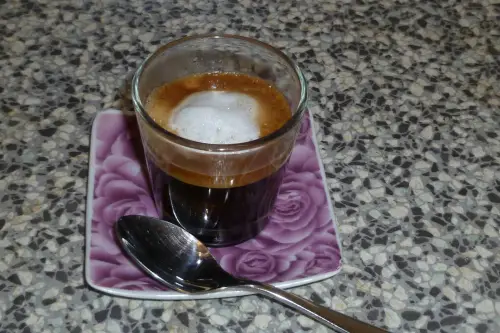
The original macchiato is an espresso “stained” with a small dollop of steamed milk foam, usually just a teaspoon or two. It’s a tiny drink (2–3 oz) served in a demitasse cup. The milk barely tempers the espresso’s intensity; this is still a strong, concentrated drink. Macchiatos date back to Italian café culture of the 1950s and represent a middle ground between a straight espresso and a cappuccino.
Latte Macchiato (Modern / Starbucks Version)
The latte macchiato flips the concept. Here, steamed milk is “stained” by pouring an espresso shot into it, the milk is the base, and the espresso is the addition. You get a layered drink (you can see the espresso sitting on top of the milk) in a tall glass. It’s sweeter, milkier, and closer to a latte than a traditional macchiato, see our macchiato vs latte guide for that direct comparison. This is the version popularized by Starbucks and most American chain coffee shops.
When someone says “macchiato” in the US today, they’re usually referring to the latte macchiato version. In Italy, they’d assume you mean the espresso macchiato.
Americano vs Macchiato: Head-to-Head Comparison
Here’s everything side by side so you can make a quick, informed decision:
| Category | Americano | Espresso Macchiato | Latte Macchiato |
|---|---|---|---|
| Milk Content | None | Tiny dash of foam (1–2 tsp) | Mostly steamed milk |
| Caffeine | ~60–120mg (1–2 shots) | ~60–120mg (1–2 shots) | ~60–75mg (usually 1 shot) |
| Flavor Profile | Bold, clean, slightly bitter | Intense, espresso-forward with creamy edge | Smooth, sweet, milky |
| Size | 8–12 oz | 2–3 oz (demitasse) | 10–16 oz |
| Calories | ~10–15 kcal | ~15–20 kcal | ~100–150 kcal (whole milk) |
| Preparation | Espresso + hot water | Espresso + foam dollop | Steamed milk + espresso shot poured in |
| Best For | Milk-free, bold espresso fans | Espresso purists who want a hint of milk | Those who prefer milky, approachable drinks |
| Variations | Iced, lungo, red-eye | Caramel, vanilla macchiato | Iced latte macchiato, flavored syrups |
Which Has More Caffeine?
This depends heavily on how many espresso shots are used, and that varies by café, size, and your own customization.
A single espresso shot contains roughly 60–75mg of caffeine. Here’s how it typically breaks down:
- Single-shot Americano: ~60–75mg caffeine
- Double-shot Americano: ~120–150mg caffeine (this is the standard in most US cafés)
- Espresso macchiato (single shot): ~60–75mg caffeine
- Espresso macchiato (double shot): ~120–150mg caffeine
- Latte macchiato (single shot): ~60–75mg caffeine
On paper, a standard americano and a macchiato made with the same number of shots have identical caffeine. The milk in a macchiato doesn’t affect the caffeine content. However, because latte macchiatos are often made with a single shot (especially at Starbucks by default), you may end up with less caffeine in a latte macchiato unless you specify a double.
For a full breakdown of espresso shot caffeine, see our guide on caffeine in espresso.
Taste Differences
Taste is where these two drinks diverge most noticeably.
How an Americano Tastes
An Americano is bold, slightly bitter, and clean. Diluting espresso with hot water opens up the flavor, you get less intensity than a straight shot but more nuance. The bitterness is present but not overwhelming, and a well-made Americano can be surprisingly nuanced, with notes of chocolate, caramel, or fruit depending on the beans used.
It’s the go-to drink for people who love the flavor of espresso but find a straight shot too small or too concentrated. It’s also entirely milk-free, making it a natural choice for anyone avoiding dairy or extra calories. If you enjoy the range of coffee drinks on offer, the Americano is one of the most versatile.
How a Macchiato Tastes
The traditional espresso macchiato tastes very similar to a straight espresso, intensely coffee-forward, but with a brief creamy softness from the milk foam. The milk “takes the edge off” without meaningfully diluting the espresso character.
A latte macchiato is a completely different experience: smooth, milky, and subtly sweet, with the espresso providing a backdrop rather than dominating. It’s approachable for those who don’t normally enjoy strong coffee. Modern versions often include vanilla or caramel syrup, pushing them further into dessert-drink territory.
Iced Versions
Both drinks are excellent iced, and Americans love them cold, especially in summer.
Iced Americano
An iced Americano is made by pulling espresso shots directly over ice, then adding cold water. The result is refreshing, bold, and completely milk-free. It’s one of the most popular iced drinks at independent coffee shops, clean, simple, and highly caffeinated. Unlike cold brew (which is steeped for 12–24 hours), an iced Americano can be made on demand in under a minute.
Iced Macchiato
The iced macchiato, particularly in its latte macchiato form, was popularized by Starbucks and is now a staple of American café culture. Cold milk is poured over ice, and espresso shots are added on top, creating a visually striking layered effect. Caramel iced macchiato (caramel drizzle + vanilla syrup + milk + espresso) is one of the bestselling iced drinks in the US. It’s sweet, milky, and photogenic, far removed from the traditional Italian original.
Which Should You Order?
Still unsure? Here’s a quick decision guide:
- You avoid dairy or want a low-calorie option → Americano every time. No milk, ~10 calories.
- You love strong espresso but want just a hint of creaminess → Traditional espresso macchiato.
- You prefer a smooth, milky drink with espresso flavor in the background → Latte macchiato.
- You want maximum caffeine from a single order → Double-shot Americano or double-shot macchiato, same caffeine, different textures.
- You’re ordering something cold on a hot day → Both iced versions are excellent; iced Americano is cleaner, iced macchiato is sweeter.
- You’re new to espresso drinks → Start with a latte macchiato. It’s the most approachable introduction to espresso-based coffee.
Exploring the broader world of espresso drinks? Part of what makes coffee culture in America so exciting is just how much variety is available, from no-nonsense diner drip to carefully crafted single-origin espresso.
Making an Americano or Macchiato at Home
Both drinks start with espresso, so the quality of your shot determines the quality of both drinks. An Americano is straightforward to make at home: pull a double espresso and add hot water to taste, typically doubling or tripling the volume. The long black variation (reverse order: water first, then espresso) preserves the crema and is worth trying once you are comfortable with the basic technique.
A traditional espresso macchiato is even simpler, just a single or double shot with a small dollop of foam or steamed milk spooned on top. No extra equipment needed beyond an espresso machine. The latte macchiato (the taller, layered version common in chain coffee shops) requires steaming more milk, but even this is achievable with a basic steam wand. The Breville Barista Express (affiliate link) includes a built-in grinder and steam wand, everything you need to make both drinks from one machine.
If budget is a concern, a moka pot paired with a handheld milk frother (affiliate link) lets you make a macchiato-style drink at home for well under $50 combined. The moka pot produces a strong, espresso-like concentrate, and the frother adds just enough foam to replicate the macchiato’s milk component.
Want more Americano breakdowns? See vs espresso, vs flat white, and vs latte. More on coffee drinks across the site.
FAQs, Americano vs Macchiato
It depends which macchiato you mean. An americano and a traditional espresso macchiato made with the same number of shots have the same caffeine content. However, a latte macchiato is typically made with just one shot, so a double-shot americano will have more caffeine. In terms of perceived strength (flavor intensity), the espresso macchiato will taste stronger because it’s a much smaller, more concentrated drink.
Yes, both types of macchiato contain milk. A traditional espresso macchiato has just a small teaspoon or two of steamed milk foam. A latte macchiato contains a much larger amount of steamed milk (it’s the base of the drink). An americano, by contrast, contains no milk at all.
An americano has very few calories, around 10–15 kcal, because it only contains espresso and water. A traditional espresso macchiato is similar (15–20 kcal). A latte macchiato made with whole milk can contain 100–150 kcal or more, and flavored versions with syrup can easily exceed 250 kcal.
Both drinks contain espresso and hot water, but the order of preparation matters. A long black is made by pouring espresso over hot water (espresso on top), which preserves the crema. An americano is made by adding hot water to espresso (water on top). The long black tends to have a slightly stronger flavor and a more intact crema layer. Learn more in our americano vs long black guide.
Technically yes, you can add milk to any coffee you like. But adding a significant amount of milk to an americano makes it closer to a latte or flat white. Many people add a small splash of cold milk to an americano to reduce bitterness without fundamentally changing the drink’s character. If you want both espresso and milk in a more balanced way, you might prefer a flat white or latte.
An Americano takes plant-based milk better than a macchiato because the extra water dilutes any off-flavours from non-dairy milk. If you add oat or almond milk to an Americano, it becomes a mild, approachable drink. A macchiato uses so little milk that the plant-based milk flavour is more concentrated and can clash with the espresso. For plant-milk drinks, a latte or flat white gives you more room to work with.
At Starbucks, ordering a ‘macchiato’ will get you a latte macchiato, a layered drink of steamed milk with espresso shots poured over the top. It is quite different from the traditional Italian espresso macchiato, which is just a shot with a spot of foam. If you want something closer to the original, ask for an ‘espresso macchiato’, a double shot with a small amount of foam. The Starbucks Caramel Macchiato is a sweetened latte macchiato with vanilla syrup and caramel drizzle.
 Joel Lewis
Contributor
Italian espresso conventions, and what survives the trip to the US.
Joel Lewis
Contributor
Italian espresso conventions, and what survives the trip to the US.