

Americano vs flat white? How do they compare and which is right for you?
The Americano and the flat white are two of the most frequently purchased coffees available today. The flat white, in particular, has soared in popularity in recent years.
But do you know the difference between these popular coffee drinks?
We’re here to help with the next article in our series of coffee comparisons.
What is an Americano?
Dating back to World War Two, the Americano came about because American soldiers stationed in Italy wanted a drink that tasted like the regular drip coffee they were used to back home. Italian espresso was far too strong and concentrated for their taste, so they began asking baristas to dilute it with hot water. The result was a longer, more approachable drink that reminded them of home-brewed coffee, and the name “Americano” stuck.
This was achieved by adding hot water to an espresso shot, resulting in a drink that tasted like a strong black coffee. Today the Americano is a staple on coffee shop menus worldwide and remains one of the most ordered drinks for those who prefer a bold, black coffee without the intensity of a straight espresso.
How is an Americano made?
The Americano is one of the most straightforward coffees to make. An espresso machine is used to prepare the espresso shots, which are poured into a coffee cup. Water is then heated to the same temperature as the coffee and added to the cup. We cover the ratio and the technique in what an americano is.
Depending on how strong you like your coffee drink, you can add more or less hot water to dilute it. If you want your Americano to pack a punch, using a double-shot of espresso will increase the caffeine.
Water temperature matters more than most people realize. The ideal range is 195–205°F (90–96°C), hot enough to maintain the espresso’s temperature without scalding the drink. Most baristas aim for a 1:2 or 1:3 espresso-to-water ratio, meaning one part espresso to two or three parts water. A 1:2 ratio produces a bolder, more intense Americano, while 1:3 gives a lighter, more diluted cup closer to drip coffee in strength.
What is a Flat White?
A flat white coffee is a double espresso with a thin, flat layer of steamed milk.
The origins of the flat white are unclear, with competing claims to inventing the drink made by baristas in Australia, New Zealand, and the UK.
The flat white is similar to a latte. However, it uses less steamed milk than a latte and is not topped with a thick layer of foam. Instead, the flat white uses microfoam, which is milk that has been steamed to create tiny, velvety bubbles rather than the stiff froth you see sitting on top of a cappuccino.
This microfoam blends directly into the espresso rather than sitting on top of it, giving the flat white its signature smooth, creamy texture throughout the entire drink.
The microfoam technique is what separates a great flat white from a mediocre one. The barista steams the milk to between 131–143°F (55–62°C), which is slightly cooler than a latte, so the natural sugars in the milk sweeten without scorching. During steaming, the barista uses a stretching and swirling technique, introducing a small amount of air early in the process, then folding it in by spinning the milk in a circular motion. This creates the fine, velvety texture that defines microfoam.
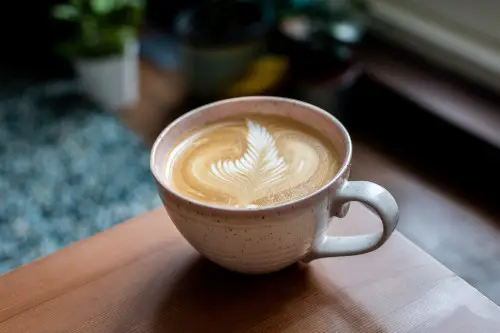
Because the milk is so perfectly integrated, a skilled barista can also use the microfoam to create latte art on the surface of the flat white. Rosettas and tulips are the most common patterns you’ll see poured, and they’re a sign that the milk has been steamed correctly. If the foam is too stiff or too bubbly, latte art simply won’t form, so a beautifully poured flat white is always a good signal that your barista knows what they’re doing.
How is a flat white made?
To make a flat white, you use an espresso machine to make a double espresso. Then, milk is steamed to a temperature between 131°F and 143°F and added to the espresso.
The Difference Between Americano and Flat White Coffee
The key difference between an Americano and a flat white is that the flat white has steamed milk added to espresso, whereas an Americano is hot water added to espresso. This single difference changes the taste, texture, calorie count, and caffeine content of each drink.
At a Glance
| Americano | Flat White | |
|---|---|---|
| Base | Espresso + hot water | Double espresso + steamed milk |
| Milk | None (optional) | Thin layer of microfoam |
| Calories | ~15 kcal | ~120 kcal |
| Caffeine | ~63 mg (single shot) | ~126 mg (double shot) |
| Taste | Bold, bitter, earthy | Smooth, creamy, sweet |
| Serving size | 8-12 oz | 5-6 oz |
| Best for | Black coffee lovers | Those who want strength with creaminess |
Taste
An Americano tastes more diluted than espresso and adding hot water breaks down the crema, giving a more bitter taste. It should taste like a strong, black regular coffee with deep, earthy, and nutty flavors.
The flat white is stronger than a latte because less steamed milk is used, and no foam is added. However, it still offers coffee drinkers a sweeter, creamier drink than many other espresso-based drinks. The double shot of espresso combined with the steamed milk gives the flat white a rich, velvety texture and taste.
Caffeine
An Americano typically uses one espresso shot before being topped with hot water. The amount of water used to dilute the drink will only affect the taste, while the caffeine content remains the same. The caffeine in an Americano is determined by the coffee beans used, and the number of espresso shots added.
A flat white will typically have more caffeine than a traditional Americano because it uses a double shot of espresso. Less milk added to the drink will produce a stronger flavor, but the caffeine content will remain the same.
Calories
An Americano contains roughly 15 calories because it is just espresso and water with no milk or sugar. A flat white comes in at around 120 calories when made with whole milk, thanks to the steamed milk content.
If you are watching your calorie intake, the Americano is the lighter option by a wide margin. Switching to skim milk in a flat white brings the calories down to around 70, but it will still be significantly more than a plain Americano.
Serving Size and Texture
The two drinks are also quite different in size. An Americano is typically served in an 8–12 oz cup, making it a longer drink you can sip over a period of time. A flat white is served in a much smaller 5–6 oz cup, which keeps it concentrated and intense from the first sip to the last.
Texture is another major point of difference. An Americano has a thin, watery mouthfeel, similar to a strong filter coffee. The flat white, by contrast, has a silky, almost creamy texture that coats the palate. This comes entirely from the microfoam, which integrates fully into the espresso rather than floating on top. If mouthfeel matters to you, the flat white wins by some distance.
When it comes to timing, the flat white is best enjoyed immediately after it’s made. Because the espresso and microfoam are fully blended, the drink can separate and lose its texture if left to sit. The Americano is more forgiving, it stays drinkable for longer since there’s no milk component to degrade. If you’re the type who sips slowly or gets distracted at their desk, an Americano will hold up better.
Which Should You Choose?
Choose an Americano if you enjoy the bold, clean taste of black coffee and want a low-calorie drink you can sip over a longer period. It is also the more versatile option since you can customize it with milk, cream, or flavored syrups after the fact. If you usually order drip coffee or black coffee, the Americano will feel familiar.
Choose a flat white if you want something creamy and smooth without the large volume of milk in a latte or cappuccino. The flat white gives you a strong espresso flavor balanced by just enough microfoam to take the edge off. It is a great middle ground between a straight espresso and a milky latte.
If you are still deciding between espresso-based drinks, our comparisons of Americano vs cappuccino, Americano vs latte, and Americano vs espresso can help you narrow things down further.
Can You Make Them at Home?
Both an Americano and a flat white can be made at home, but the key requirement for both is an espresso machine. You cannot replicate either drink with a standard drip coffee maker or a French press. An espresso machine forces hot, pressurized water through finely ground coffee to produce the concentrated shot that both drinks are built on. A burr grinder is also a worthwhile investment since a consistent, fine grind is critical for a well-extracted espresso.
For an Americano, that’s essentially all you need. Once your espresso is pulled, simply heat your water to around 195–205°F and add it to the cup. Many espresso machines have a hot water dispenser built in, which makes this easy. If yours does not, a kettle works just fine. The whole process takes under two minutes once you’re comfortable with your machine.
Making a flat white at home requires one additional piece of equipment: a steam wand or a dedicated milk frother. Most mid-range espresso machines include a built-in steam wand, which is the best option for achieving true microfoam. If you only have a handheld frother, you can get close, but the texture won’t be quite as velvety. Whole milk produces the best microfoam due to its fat content, though oat milk is a popular alternative that steams reasonably well if you prefer a dairy-free option.
When choosing your beans, both drinks work well with a medium to dark roast. A darker roast will bring out the bold, bitter notes that suit an Americano, while a medium roast with some chocolate or caramel undertones can complement the creaminess of a flat white beautifully. Freshly roasted beans ground just before brewing will always make a noticeable difference in quality whichever drink you choose.
Making an Americano or Flat White at Home
An Americano is the easier of the two at home, just pull an espresso shot and add hot water. A flat white requires more milk technique: you need a small amount of velvety microfoam (less foam than a cappuccino, more texture than a cortado) poured at the right ratio over a double ristretto shot.
The key difference in practice is the milk steaming. A flat white’s microfoam needs to be silky rather than airy, achieved by incorporating less air during steaming and finishing with a swirl to break up any larger bubbles. An entry-level espresso machine with a steam wand is sufficient for both drinks.
| Equipment | Why It Helps | Link |
|---|---|---|
| Breville Barista Express | Built-in grinder and steam wand, makes both Americanos and flat whites with full control | View on Amazon |
| AeroPress Coffee Maker | Budget alternative for Americano-style drinks, produces concentrated coffee without an espresso machine | View on Amazon |
There is more to read on coffee drinks.
Browse more Americano comparisons, vs latte, vs espresso, and on the flat white side, cappuccino vs flat white. There is more to read on coffee drinks.
FAQs – Americano vs Flat White
You can add milk, cream, sugar, sweetener, or even flavored syrup to change the taste of your Americano, giving you lots of choices.
The flat white is traditionally a sweeter drink because of the steamed milk, but you can still add different sweeteners or flavors if you want to.
You can make an Americano stronger by adding an additional espresso shot. Alternatively, you can strengthen the flavor by reducing the hot water you use to dilute it.
A flat white traditionally uses double shots of espresso, so it is already a strong option. Reducing the amount of steamed milk can make the drink taste stronger.
To make an Americano or flat white at home, you will need an espresso machine and finely ground coffee beans. You will then be able to create your favorite drink in the comfort of your own home.
An Americano is typically higher in total caffeine, a double-shot Americano contains around 125mg of caffeine diluted in 6–8oz of water, while a flat white uses a double ristretto in around 5oz. However, the flat white tastes more intense because of the smaller volume and the concentrated ristretto shots. So the flat white feels stronger to drink, but the Americano often has more total caffeine.
No, a flat white uses less milk than a cappuccino and has almost no foam. A standard flat white is 5–6oz total, using a double ristretto and around 3–4oz of steamed milk with just a thin layer of microfoam. A cappuccino is usually 5–6oz too, but roughly one-third of that volume is thick foam. The flat white is denser and creamier; the cappuccino is lighter and airier.
 Joel Lewis
Contributor
Italian espresso conventions, and what survives the trip to the US.
Joel Lewis
Contributor
Italian espresso conventions, and what survives the trip to the US.