Coffee is expensive because the beans themselves have become expensive. Green coffee costs have climbed steeply over the last few years, driven by drought in the two countries that grow most of the world’s supply, historically low global inventories, and import tariffs. That cost reaches you at the shelf whether you buy supermarket ground or specialty whole bean.
But that only explains the baseline. The gap between a $6 bag and a $25 bag comes down to something different: the species of bean, where it was grown, and how it was picked and processed.
This guide covers both. First why coffee costs what it does right now, then what actually separates cheap beans from expensive ones, and whether you can taste the difference.
Why Has Coffee Got So Expensive Recently?
The short answer is that supply fell while demand held steady, and the shortfall happened in both of the countries that matter most.
Brazil grows roughly a third of the world’s coffee and supplies most of its Arabica. Successive years of poor rainfall in Minas Gerais, its main growing state, have reduced both yields and bean size. Vietnam, which supplies most of the world’s Robusta, was hit by drought over the same period. When the two largest producers fall short in the same window, there is nowhere else for the market to absorb it from.
Two things made it worse. Global exchange‑monitored stockpiles fell to multi‑year lows, so there was no buffer inventory to release. And US import tariffs on Brazilian goods added a further cost on the way into the country. Arabica futures have traded at several times their pre‑2020 level as a result.
Roasters absorb some of this, but not indefinitely. That is why the price rise has shown up across the whole market rather than only at the specialty end, and why even the cheapest supermarket coffee costs noticeably more than it did.
What affects the price of coffee beans?
As with all products traded internationally on the complex global market, many variables affect the price of coffee beans. However, some of these variables have more of an impact than others.
The six key factors that affect the price of coffee beans are:
- Country and region of origin
- Harvesting and processing
- Weather and climate change
- Certifications
- Increasing demand
- Supply chain issues
Some of these factors directly affect the taste of the coffee beans as well as the price – for example, coffee beans from one region will taste very different to coffee from a completely different region – but others, such as temporary supply chain issues or one season’s weather, will affect the price of the coffee beans but not directly impact their quality.
Country and region of origin
Coffee beans are often cultivated in remote regions of countries such as Brazil, Indonesia, and Ethiopia. These regions can be difficult to reach, and their remoteness can make exporting coffee beans time-consuming and expensive.
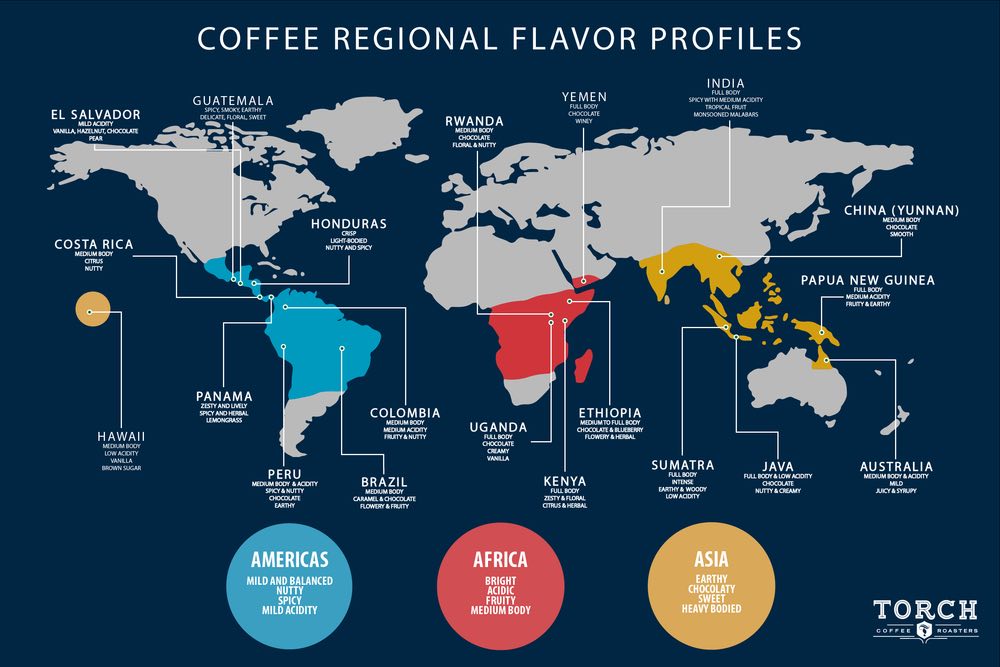
Coffee is grown in these regions because they have the ideal conditions – climate, soil, rainfall, etc. – to grow great-tasting coffee. However, these regions are often relatively small, which limits the amount of coffee that can be grown there.
Coffee beans from remote regions that are famed for producing delicious beans are usually expensive, as demand for the beans is high, but the available supply is low.
Harvesting and processing
The cost of growing, harvesting, and processing coffee beans directly affects their price.
If harvesting and processing coffee beans is a particularly time-consuming process that requires a lot of human labor – for example, manually selecting the best coffee beans to be sold in batches that meet certain quality standards – then the production cost will be higher in comparison to mass-produced coffee beans that are easier and cheaper to harvest and process.
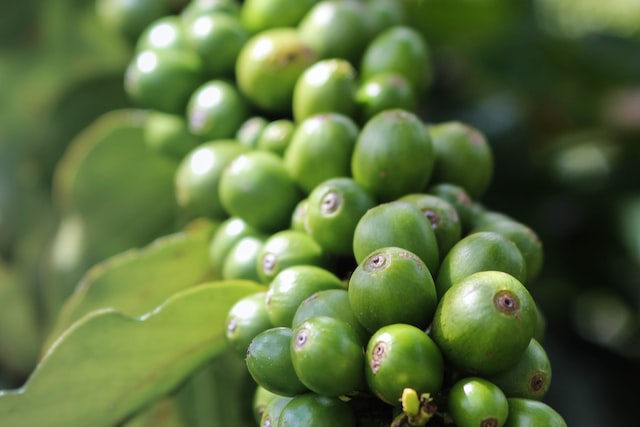
Some of the most expensive types of coffee beans even involve special processing techniques that dramatically increase costs. A prime example of this is civet coffee (also known as kopi luwak coffee).
Civet coffee beans come from coffee cherries that have been eaten and partially digested by a weasel-like creature called the palm civet. The beans are then collected from the civet’s feces. This convoluted process makes civet coffee very expensive, though, interestingly, many coffee lovers believe it’s a gimmick, and that civet coffee does not justify a high price.
Weather and climate change
Like all crops, the amount of coffee beans that farmers can grow is influenced by the weather. Sometimes a coffee farm will have a good season and lots of beans will be produced, while other seasons will yield a smaller crop.
Coffee beans are also grown in regions prone to storms and flooding. Natural disasters can wipe out an entire harvest, and these events are becoming more frequent due to climate change.
This impacts the price of the coffee beans, as the global demand for a certain type of bean will likely be just as high regardless of how many beans were harvested that season. If demand is the same but supply is reduced, the price of the beans will go up.
Certifications
Growing and harvesting coffee in a way that meets strict standards inevitably costs the coffee producers, leading to higher prices.
Examples of such certifications include Fair Trade coffee, where farmers must receive a fair price for the coffee beans they produce, and Rainforest Alliance coffee, which promotes sustainable farming.
Though certifications can increase costs and therefore raise prices for the consumer, they can also boost sales. Many people prefer to buy coffee they know is Fair Trade and better for the environment than uncertified coffee beans.
Increasing demand
The world’s population is increasing, demand for coffee is higher than ever, and that growth looks set to continue.
The global coffee market is forecast to grow at a rate of more than 7% per year until 2025 when it is expected to be worth $145bn.
As coffee suppliers struggle to keep up with this demand, their prices increase. And if a particular coffee bean is in high demand, with no way to significantly increase supply, the price of that type of coffee bean will increase dramatically.
Supply chain issues
If the cost of shipping coffee beans increases – or if issues within the coffee bean supply chain result in less coffee being shipped from certain countries – then the price of those coffee beans will increase to cover shipping costs and to balance supply and demand.
There are all kinds of reasons why supply chain issues can arise, including global demand for freight, political decisions made by the governments of coffee-producing countries, international trade agreements, wars and civil unrest, or – as seen in 2020 – pandemics and travel restrictions.
The Difference Between Cheap and Expensive Coffee Beans
The difference between cheap and expensive coffee beans is that expensive coffee beans are usually in high demand due to their quality, certifications, and limited supply. In contrast, cheap coffee beans are often lower quality, use cheaper labor, and are mass-produced to meet demand.
Expensive coffee does not always taste better than cheaper coffee. Some of the factors that affect the price of coffee beans are not directly related to their flavor.
For example, Fair Trade coffee beans are often more expensive, but the increase in cost is about paying farmers a fair wage rather than a premium for a better-tasting coffee.
Bean Species: The Biggest Single Price Driver
The single biggest factor separating cheap coffee from premium coffee is the species of bean, specifically, whether it is Arabica or Robusta. Understanding this distinction explains most of the price gap you’ll see on supermarket shelves and specialty roaster websites. For the full breakdown of every species, including Liberica and Excelsa, see our guide to the four types of coffee bean.
| Arabica | Robusta | |
|---|---|---|
| Price | Higher ($10–40+/lb) | Lower ($3–8/lb) |
| Caffeine | ~1.5% | ~2.7% |
| Flavor | Fruity, sweet, complex, acidic | Earthy, bitter, stronger |
| Growing conditions | High altitude (600–2,000m), difficult | Low altitude, hardy, easy |
| Yield per plant | Lower | Higher |
| Used in | Specialty coffee, pour-over, espresso | Instant coffee, budget blends, espresso crema |
| Examples | Ethiopian Yirgacheffe, Colombian Supremo, Jamaican Blue Mountain | Robusta from Vietnam, Uganda, India |
Arabica beans make up about 60% of global coffee production but command a premium because they grow at high altitudes in specific climate zones, produce lower yields, and are more susceptible to disease. The result is a more complex cup with bright acidity, floral notes, and sweetness, characteristics you simply don’t get from mass-market budget blends.
Robusta contains nearly twice the caffeine of Arabica, which makes it more bitter and contributes a characteristic harshness. That said, Robusta isn’t always “bad”, high-grade Robusta is used in Italian espresso blends precisely because it produces a thick, persistent crema that Arabica alone cannot match.
Which Brands Use Arabica vs Robusta?
Starbucks uses 100% Arabica beans across its entire range, this is a stated part of their sourcing standards and has been a core brand commitment for decades. When you pay Starbucks prices, you’re guaranteed Arabica, whatever the roast level.
Folgers Classic Roast is a blend of Arabica and Robusta, which is why it has a strong, sharp flavor and a lower price point than specialty beans. The Robusta content keeps costs down and gives the coffee that bold, straightforward character that many everyday drinkers are used to.
Nespresso and Lavazza both use predominantly Arabica, though some Nespresso intenso pods include a proportion of Robusta specifically for crema production. If you want pure Arabica in either range, look for pods or blends labeled “100% Arabica”, these are available from both brands.
Why Are Some Coffees Far More Expensive Than Others?
Beyond the market baseline, a handful of coffees carry a price that looks absurd next to a supermarket bag. In almost every case the reason is that supply is capped by geography rather than by quality alone.
| Coffee | Typical premium | Why it costs more |
|---|---|---|
| Hawaiian Kona | $35–60/lb | Grown only on a narrow strip of the Big Island. US‑based labour and land costs, and a tiny total harvest. |
| Jamaican Blue Mountain | $40–70/lb | A legally defined growing region of a few thousand acres, with certification controlling who may use the name. |
| Panamanian Geisha | $100+/lb | A low‑yielding varietal that wins competitions. Auction lots routinely set world records. |
| Decaf | 20–40% over the same bean | Decaffeination is an extra industrial process, and some beans are lost to it. |
| Instant | varies | Freeze‑drying costs more than roasting alone, though cheaper Robusta is usually used to offset it. |
Kona and Blue Mountain are worth understanding as protected names rather than quality guarantees. Both are frequently sold as blends containing as little as 10% of the real thing, so check the percentage on the bag before paying the premium. For Kona specifically, see our Kona coffee guide.
Decaf is the one most people are surprised by. The bean is not rarer, but the decaffeination process adds a step and some yield loss, which is passed on. Our roundup of the best decaf coffee covers which ones justify it.
Can You Taste The Difference?
There is a correlation between the price of coffee beans and the quality of the coffee they produce. More expensive coffee beans usually do offer a better flavor than cheap coffee beans, though this isn’t always the case.
Some regions have become known worldwide for the delicious coffee beans that can be farmed there. But these regions are often small, with limited amounts of farming land available.
When you pay a high price to buy coffee from these regions, you should expect to taste the difference, as it is the taste of the coffee bean that has driven up demand for that region’s beans in the first place.
However, there is also an element of placebo and even snobbery when it comes to expensive coffee beans. Sometimes, people will be convinced that a type of coffee bean is more flavorful because of its reputation – or even simply because it is expensive – even if they wouldn’t identify that coffee bean as superior in a blind taste test.
Our advice is to try as many different coffees as possible and see which ones you like best. You should weigh up the price of the coffee beans versus how much you enjoy the coffee, then continue to buy whichever beans taste best and falls within your budget.
What to Expect at Different Price Points
Knowing what price tier to target helps you find good value without overspending. The quality jump between price bands is not always linear, and some of the biggest improvements come earlier than you’d expect.
| Price Range (per lb) | Bean Type | Quality Level | Best For |
|---|---|---|---|
| Under $8 | Robusta blend or low-grade Arabica | Commercial/commodity | Everyday drip coffee, large volumes |
| $8–$15 | 100% Arabica, single origin or blend | Good quality | Daily home brewing, espresso |
| $15–$25 | Specialty Arabica, single origin | High quality | Pour-over, French press, coffee lovers |
| $25–$40 | Micro-lot, specialty grade, rare origin | Premium | Discerning drinkers, gifts |
| $40+ | Rare varietals (Jamaica Blue Mountain, Kopi Luwak) | Ultra-premium | Special occasions, collectors |
For most home brewers, the $10–$20/lb range is the sweet spot, you get genuine 100% Arabica beans with traceable origins without paying for collector-level rarity. This is where you’ll find great single-origin Ethiopian, Colombian, and Brazilian options that will noticeably outperform any supermarket budget blend.
Blind taste tests consistently suggest that most drinkers struggle to tell the difference between a well-brewed $15/lb bean and a $40/lb bean, especially with milk drinks. The biggest quality jump is actually moving from commercial Robusta blends to decent Arabica, not from good Arabica to exceptional Arabica. So if you’re currently buying the cheapest option, upgrading to mid-range Arabica will have a far greater impact on your morning cup than going from mid-range to ultra-premium.
Our Recommendations: Best Value Coffee Beans
If you want a reliable bean that sits in the sweet spot between quality and price, 100% Arabica blends from established Italian roasters consistently over-deliver for the money. Lavazza Super Crema is one of the most widely recommended mid-range options, a medium roast Arabica-Robusta blend with hazelnut and brown sugar notes that tastes noticeably better than commodity supermarket coffee without the cost of specialty single-origins.
Beyond the beans themselves, one of the most impactful upgrades you can make is switching from a blade grinder to a burr grinder. A blade grinder chops beans unevenly, producing both over- and under-extracted particles in the same cup, this is a bigger source of bad coffee than bean quality in most households. A Baratza Encore burr grinder produces a consistent grind at every setting, which means even moderately priced beans will taste significantly better than expensive beans ground in a blade grinder.
Want to learn more? Read about the 4 types of coffee beans.
Want to spend smarter? Our best non-oily coffee beans picks deliver freshness without a premium price, and the guide to whether beans should be oily explains what that sheen actually tells you. Roast date often matters more than the price tag. We have more on coffee beans.
FAQ – Cheap vs Expensive Coffee Beans
The most common source of a difference in price is the country of origin.
They can make a difference both in the way they’re produced and taste. For instance, coffee beans can be Fair Trade, Rainforest Alliance marked as well as the ecological aspect of production. But make no mistake, the taste could also be better as a general rule of thumb is that more expensive coffee offer better flavor.
There is a correlation between the price of coffee beans and the quality of the coffee they produce. More expensive coffee beans usually do offer a better flavor than cheap coffee beans, though this isn’t always the case.
You should try! That’s the truth. You’ll need to try coffee beans from different countries of origin and price range. For any person that drink more than one coffee a day though, the answer will most likely be yes.
Starbucks uses 100% high-quality Arabica beans across all its core products and has done so as a stated sourcing commitment for decades.
Well-priced 100% Arabica beans from Brazil or Vietnam in the $8–$12/lb range offer excellent value. Avoid blends that don’t specify the bean type, these are often Robusta-heavy and will produce a harsher, more bitter cup.
Yes, grind consistency has at least as much impact on cup quality as bean quality. A cheap burr grinder used with mid-range beans will outperform a blade grinder used with expensive specialty beans. Blade grinders chop unevenly, producing particles of different sizes that extract at different rates, resulting in a mix of over and under-extracted coffee in the same cup. If you are spending money on better beans, pair them with a burr grinder to actually taste the difference you are paying for.
For many home brewers, yes. Even an expensive coffee bean tastes flat and stale if it was roasted months ago. A modestly priced bean from a local roaster with a recent roast date (within the last 2–4 weeks) will often taste better than an expensive bag sitting on a supermarket shelf for 6 months. Look for a roast date on the packaging, not just a ‘best by’ date, and aim to use beans within 4 weeks of roasting for the best flavour.
 Joel Lewis
Contributor
Italian espresso conventions, and what survives the trip to the US.
Joel Lewis
Contributor
Italian espresso conventions, and what survives the trip to the US.